

Makeready
Makeready notes cover feeder set-up, packing checks, dampening changes and how to keep presses running through power cuts.
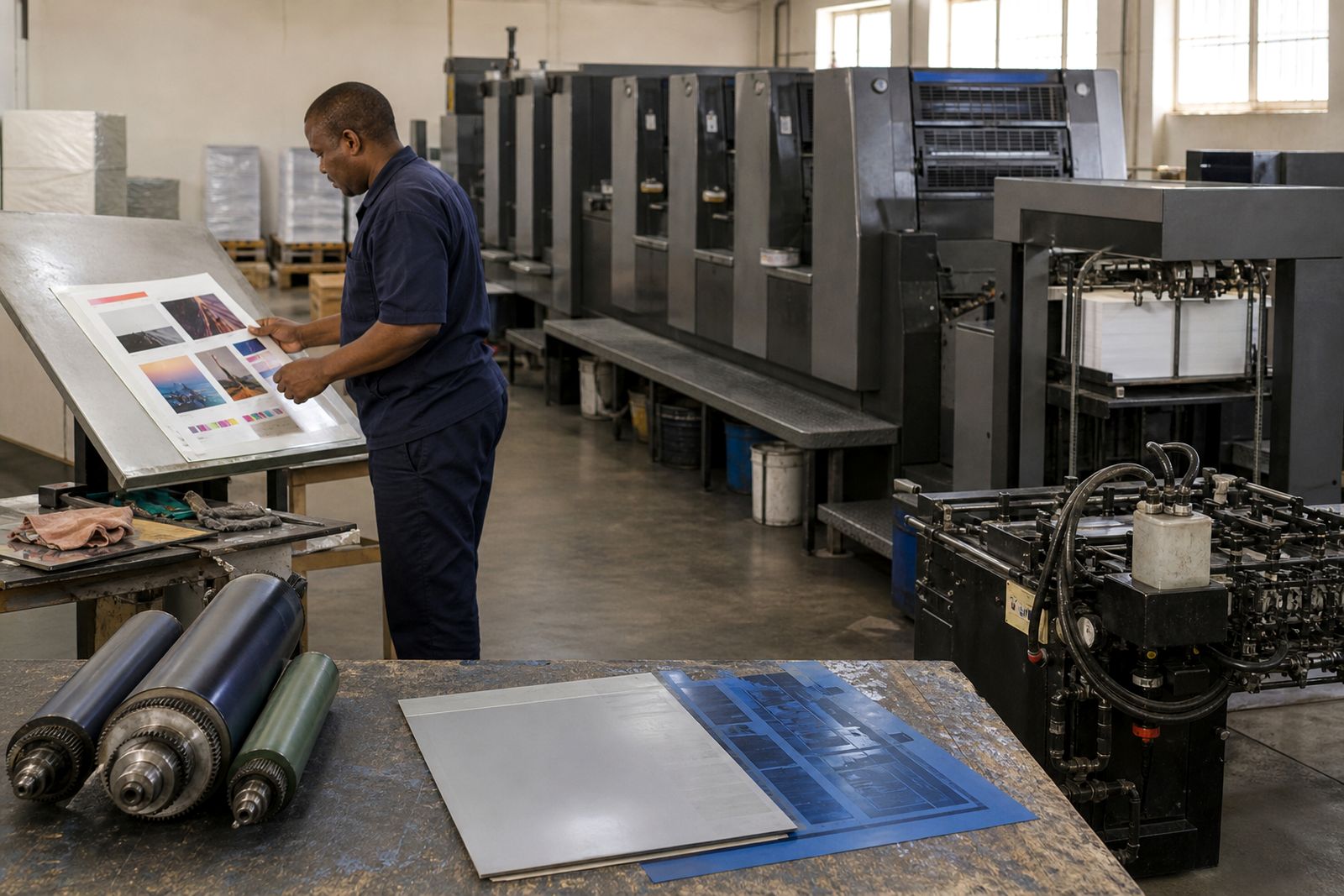
Press-start checks for makeready
Press leads can use our contact form to ask for makeready notes on feeder set-up, packing checks, gripper marks and dampening shifts seen in South African print rooms.
Packing and register notes
Makeready work starts with the sheet route, the packing stack, and a clean register check. For commercial print rooms and carton rooms, the first good sheet usually comes from steady feeder set-up, even packing, and careful attention to gripper edge marks.
These notes cover practical checks for four-colour and perfecting presses, from plate clamp seating to underlay packing and colour bar readbacks. If you are working through a changeover, it helps to keep the conversation focused on what can be seen at the delivery and what can be adjusted at the unit.
- Feeder set-up on thin stock and heavier board
- Packing checks and gripper marks
- Perfecting notes and first sheet checks
- Delivery edge marks on short runs and repeat work
For deeper notes on timing and fit, see packing gauges that stay honest, perfecting gripper notes, and photograph the first good sheet.
Dampening, colour and drying
Dampening and ink balance can shift quickly across South African conditions, especially when coastal humidity or dry Highveld air changes through the week. Good makeready notes help keep fount solution, wash chemistry, colour bars, and ink keys aligned with the stock and the run length.
When the sheet is moving, watch the colour bar, the response at the ink keys, and the way the blanket carries the image across the unit. On jobs such as brochures, flyers, annual reports, school workbooks, pharma leaflets, wine labels and folding cartons, the aim is the same: a stable sheet that stays consistent through the run.
- Dampening shifts on humid mornings and dry afternoons
- Colour bars used as a practical check, not a guess
- IR dryers and soft powder on the delivery
- CTP plates, plate clamps, blankets and packing in one routine
See dampening on Highveld mornings, colour bars before lunch, and IR drying versus soft powder.
Power windows and spares planning
Power cuts change the way many sheetfed plants plan makeready. A useful routine is to use the available power window for the steps that matter most, then protect the restart with a clear checklist for feeder heads, plate clamps, wash-up, and delivery settings.
Spare parts and care kits also matter when a press is being kept ready for commercial work. A small, organised review of spares can save time when a unit needs attention, especially when a run must move from sample to approval without losing the sheet.
These notes are useful for production teams working from the coast, the Highveld, or anywhere a busy commercial press room has to keep moving. If you need help narrowing the right note set for your stock or job mix, send a message through the contact form and ask for a quote via the contact form.
- Make-ready inside a power window
- Quarterly spares review for active presses
- Sample day discipline and showroom handoff notes
- Stocks, humidity, and the first good sheet
Related notes include make-ready inside a power window, quarterly spares review, and showroom handoff sentences.
Makeready
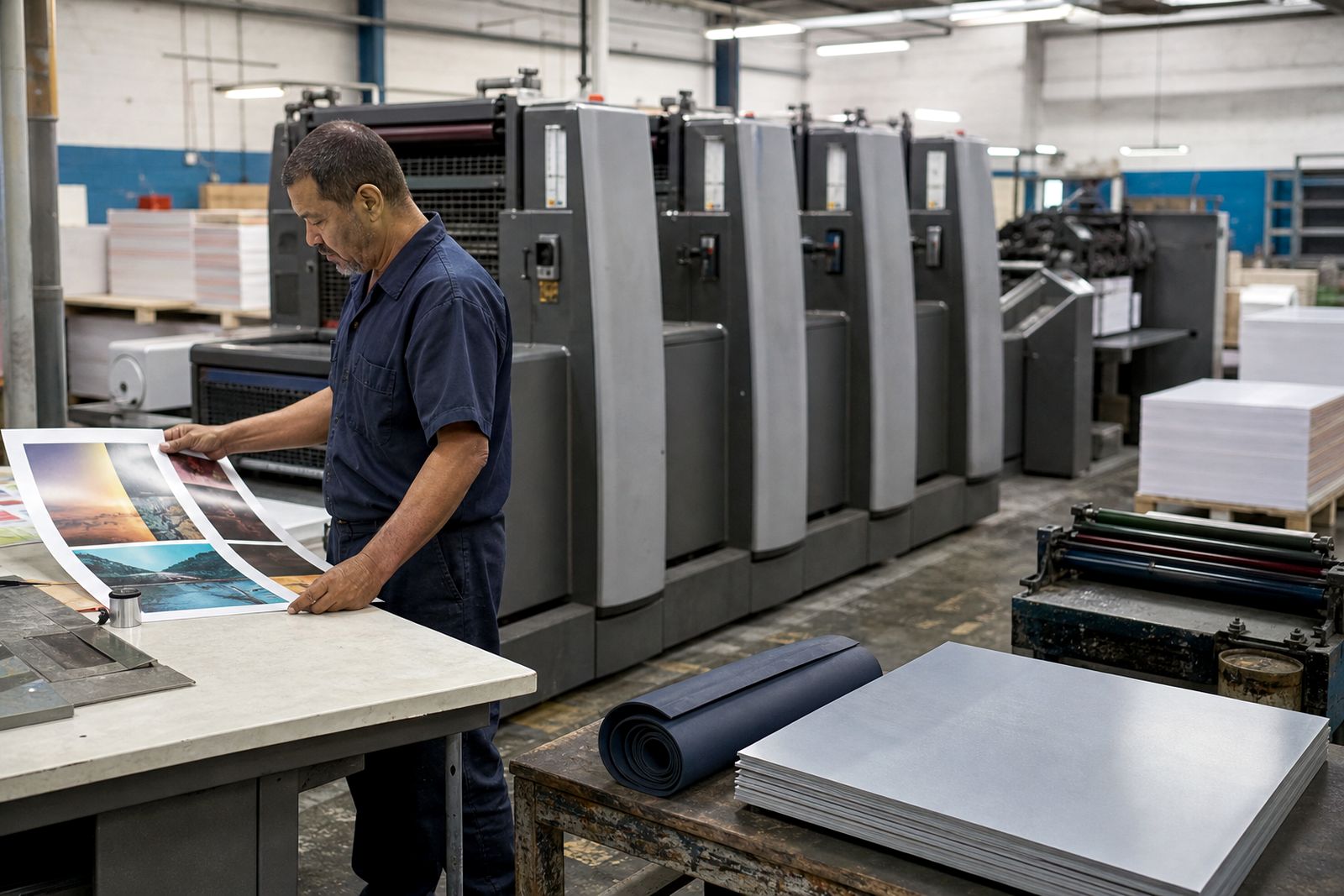
Alcohol substitute notes
Continuous dampening counters still need a written chemistry card.
Read more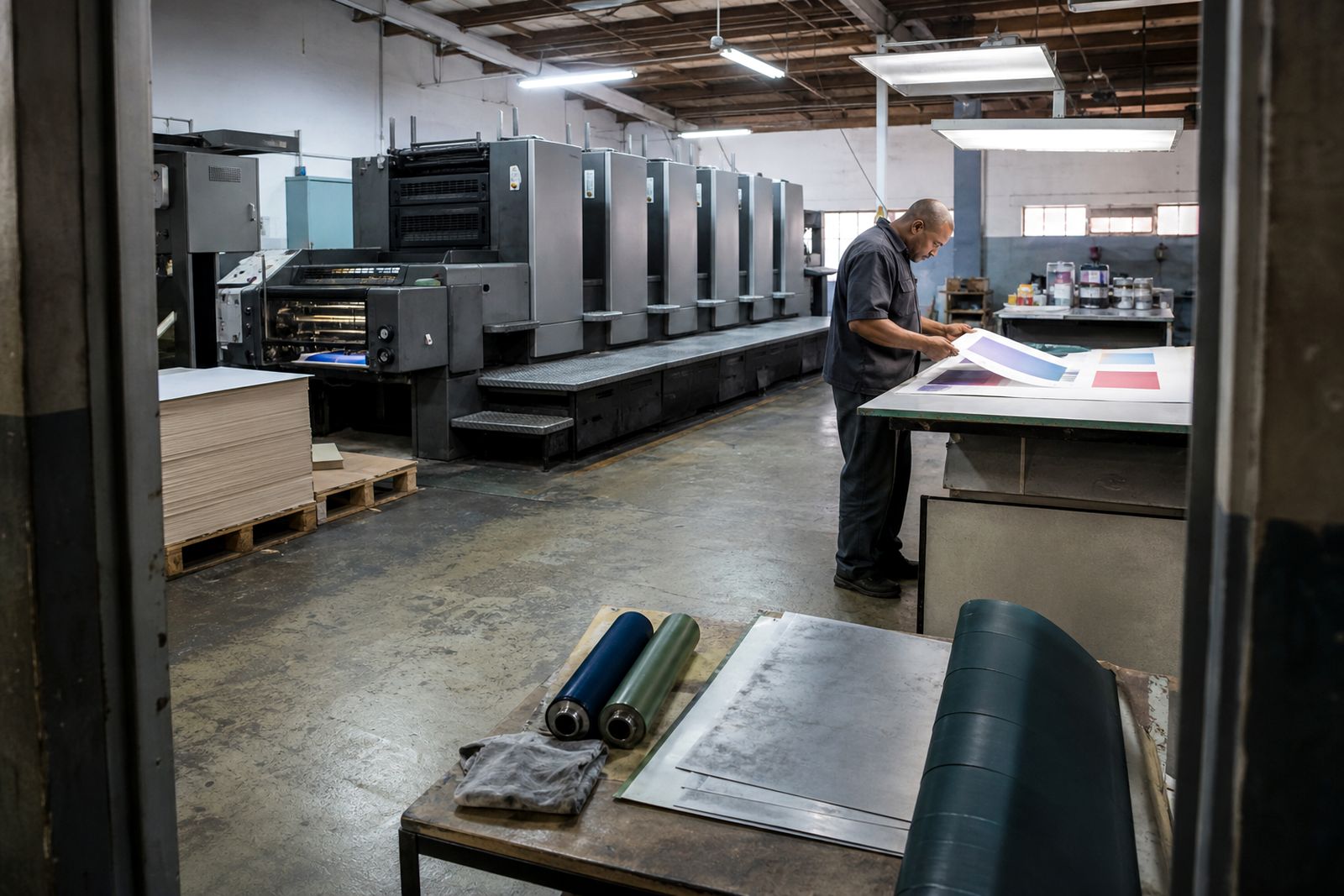
Coastal blankets overnight
Humidity softens packing feel before the first unit turns.
Read more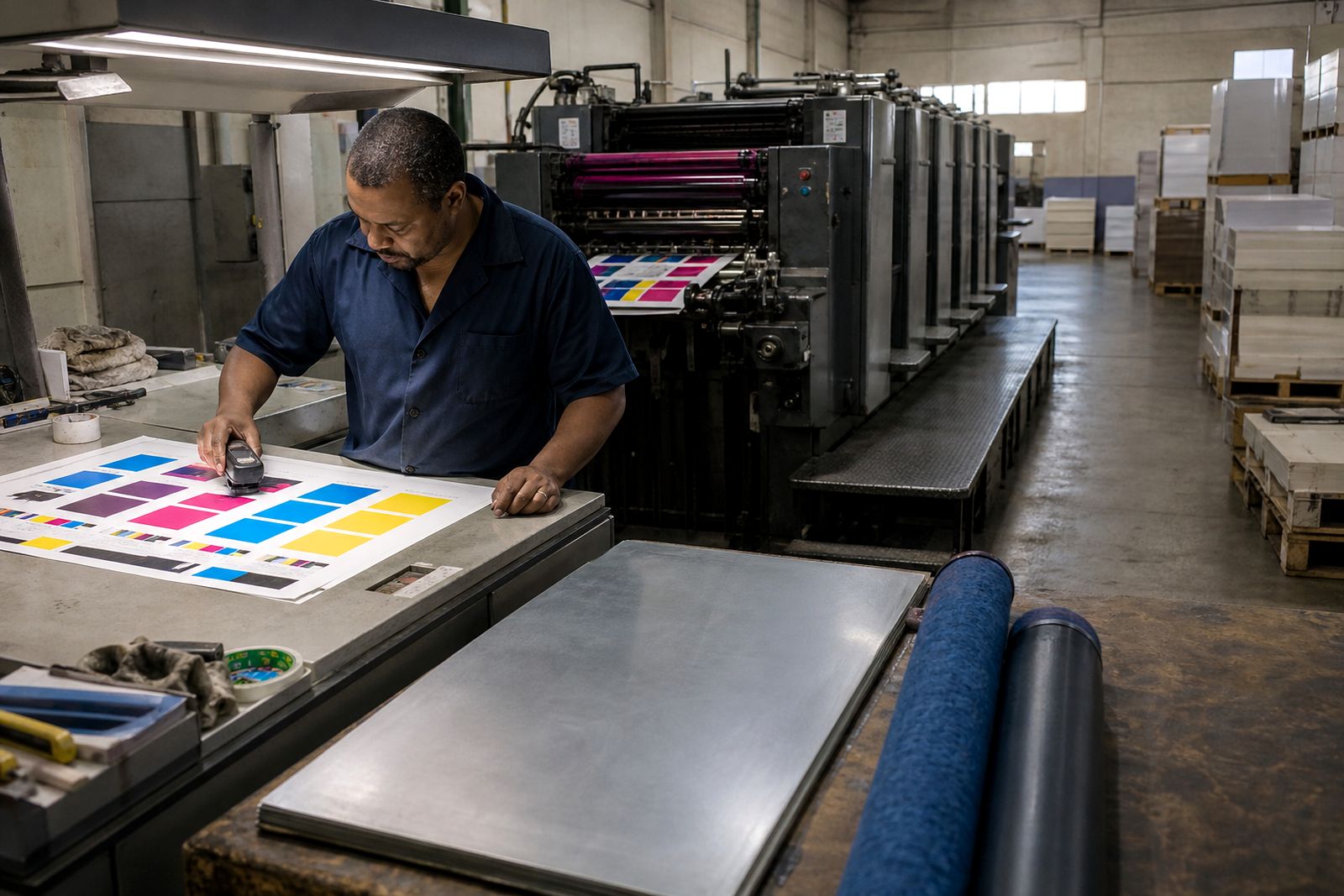
Colour bars before lunch
Density checks mid-morning catch drift before the flyer pile grows.
Read more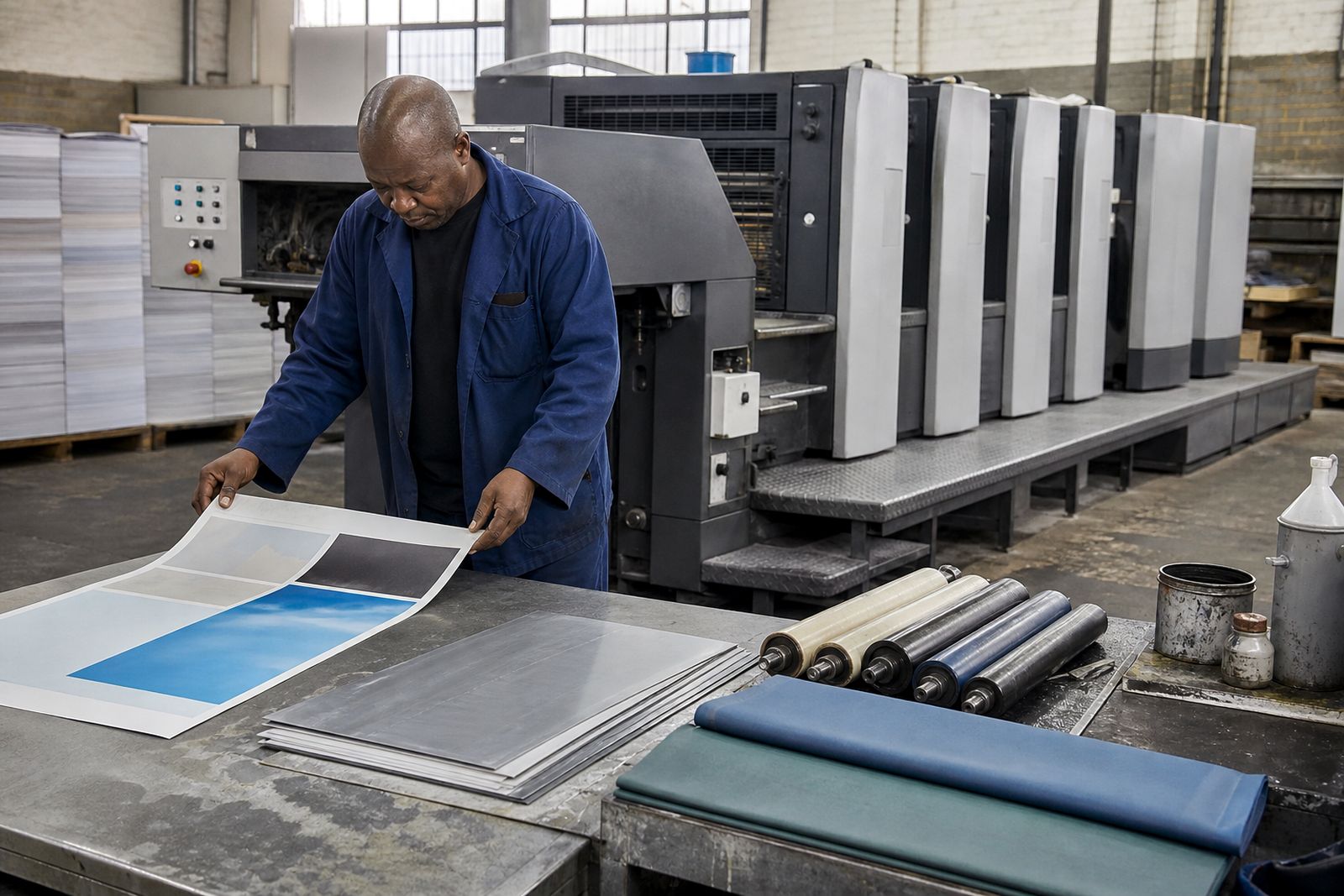
Dampening on Highveld mornings
Dry air changes water balance faster than coastal crews expect.
Read more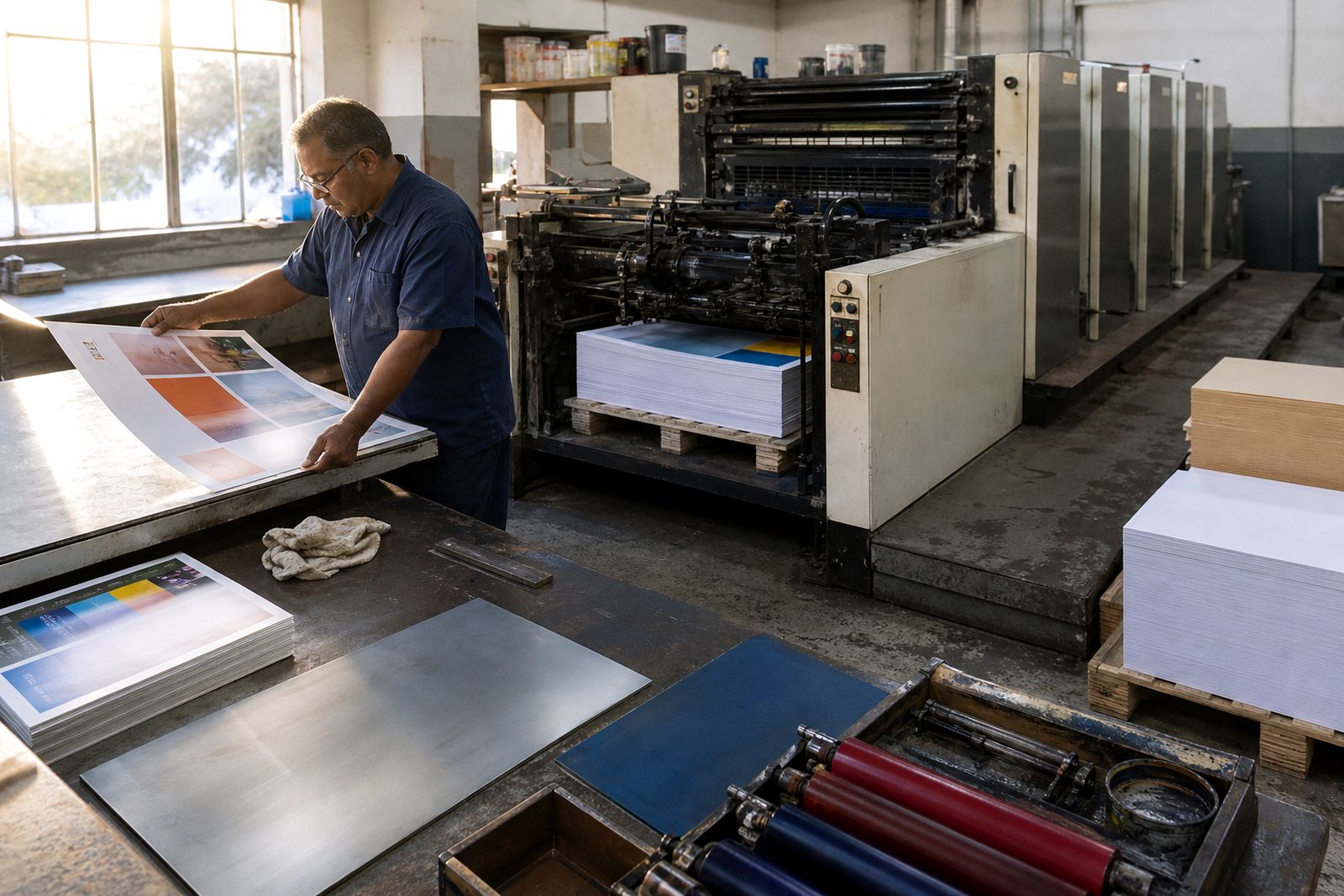
Delivery edge marks
Jogger pads and stack guards save coated edges on long runs.
Read more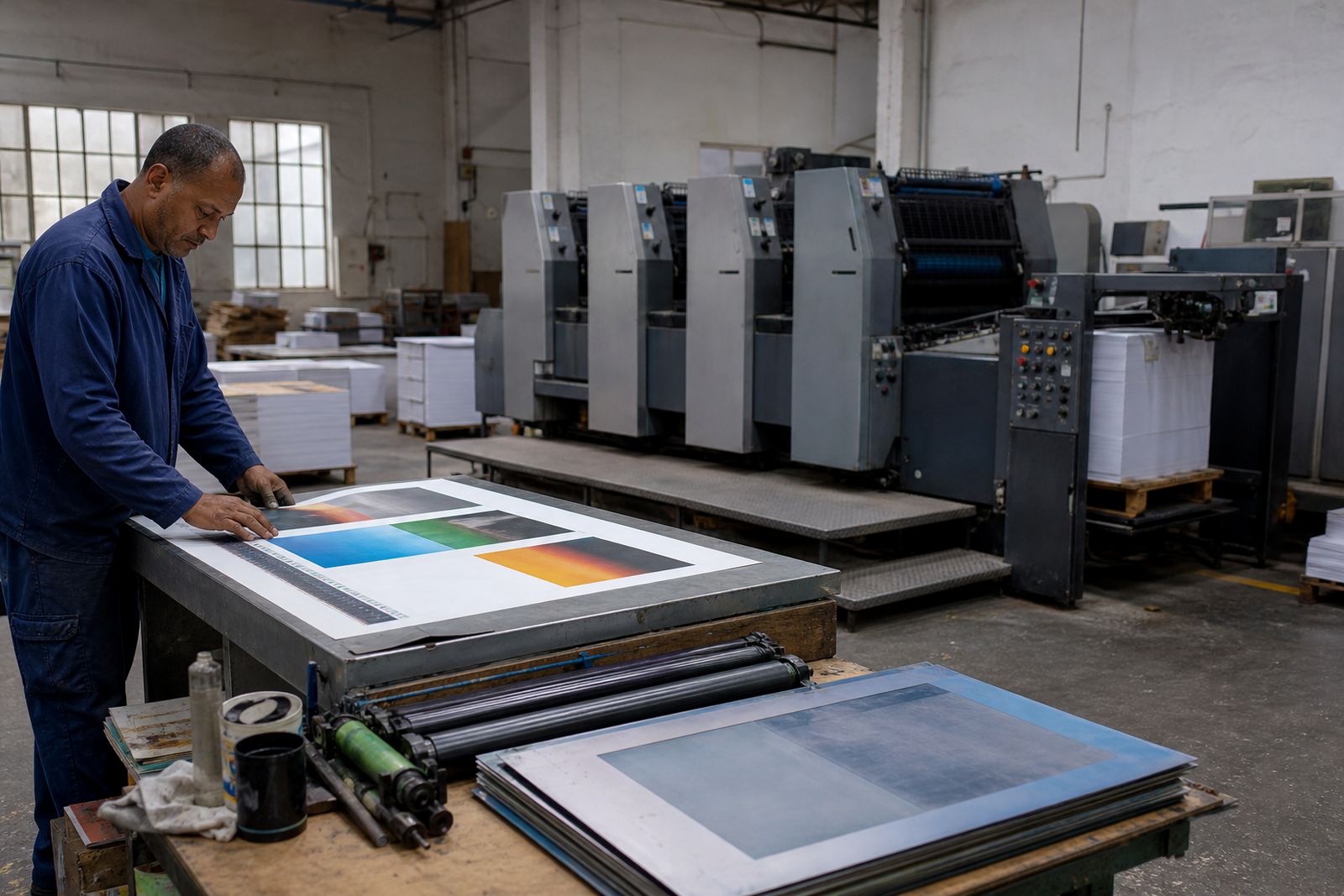
Export form pads
Multi-part sets need dampening balance that does not ghost.
Read more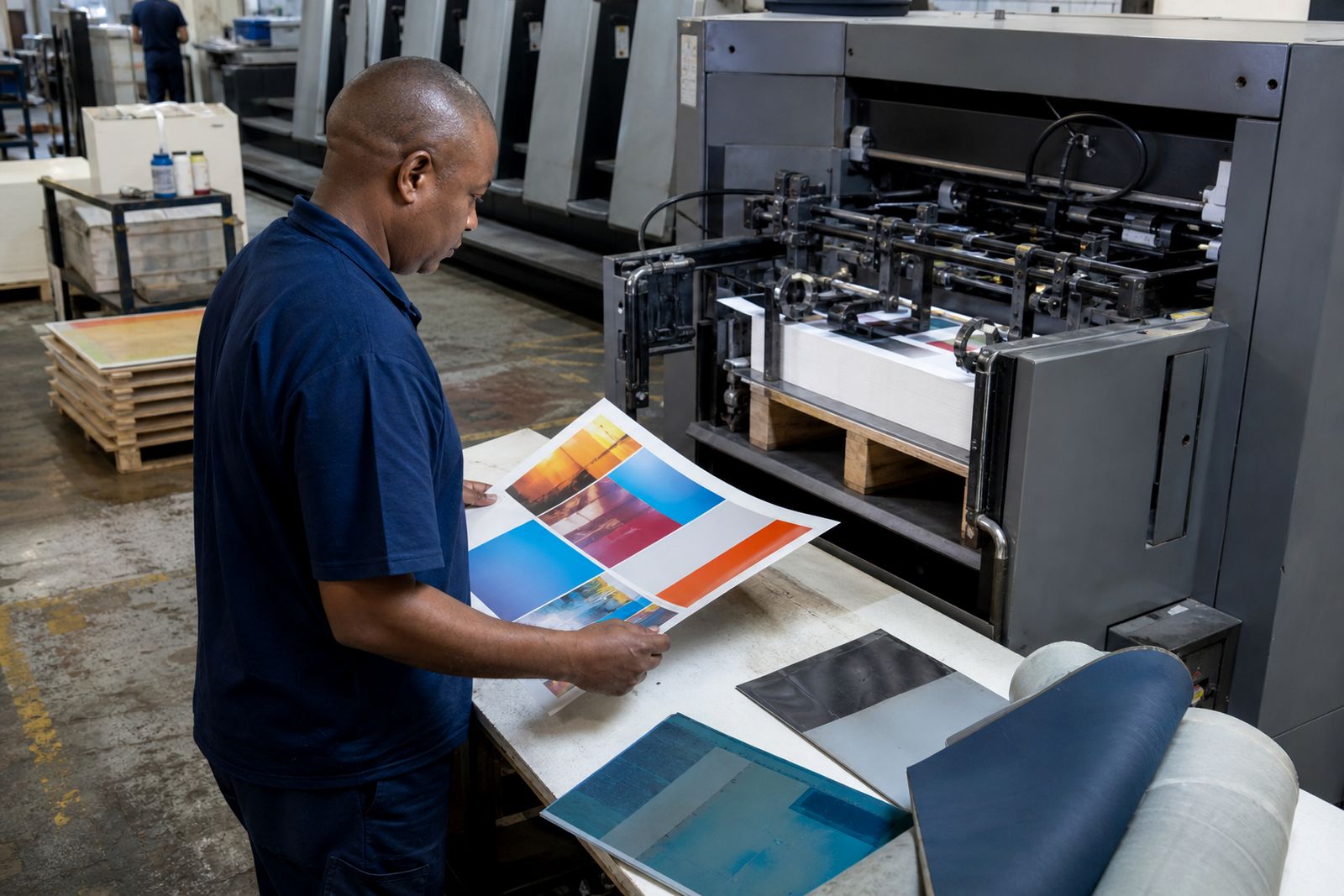
Feeder heads on thin stock
Stationery doubles when suckers stay hard on 80 gsm.
Read more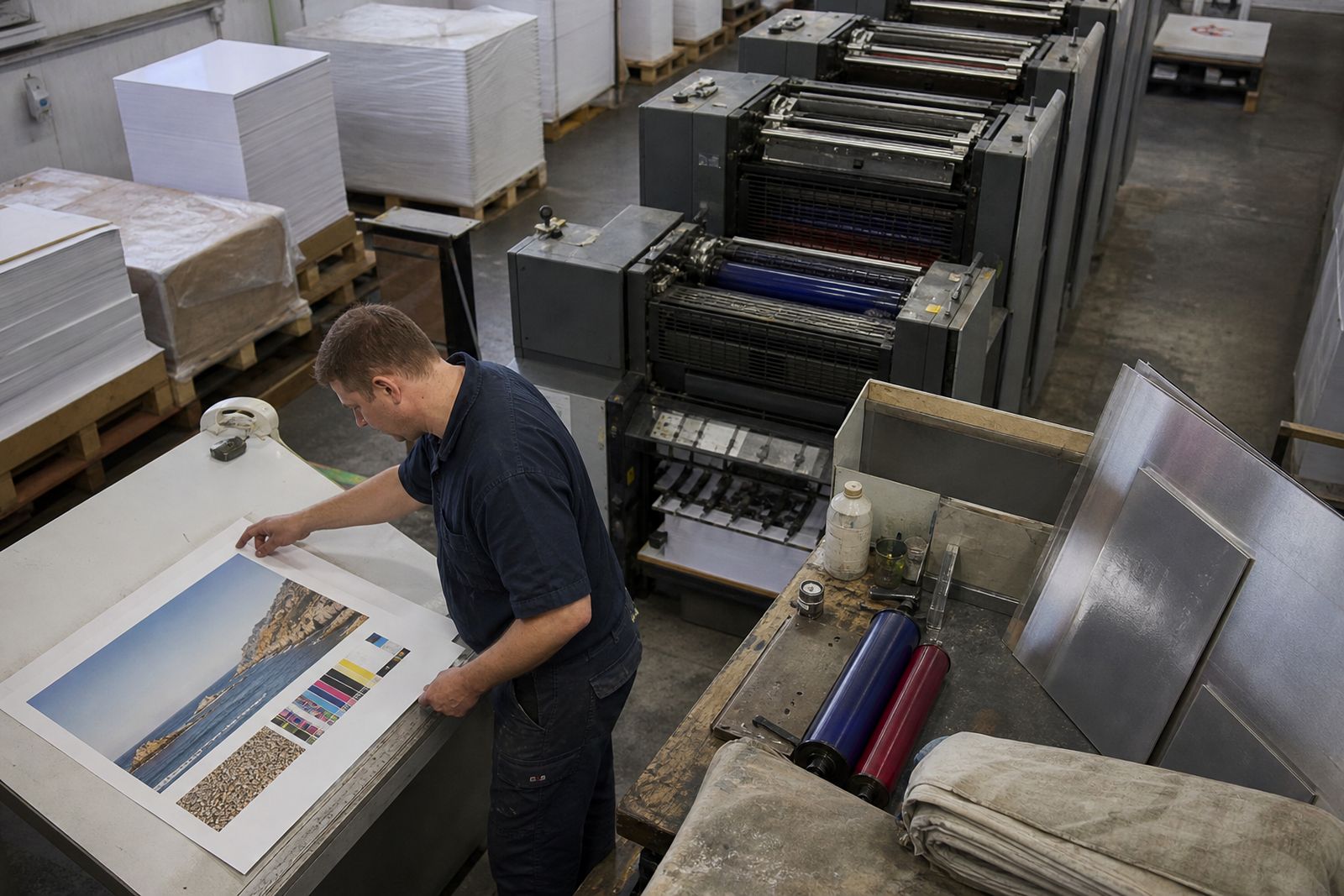
Photograph the first good sheet
Before rate climbs, pin a photo with the colour bar visible.
Read more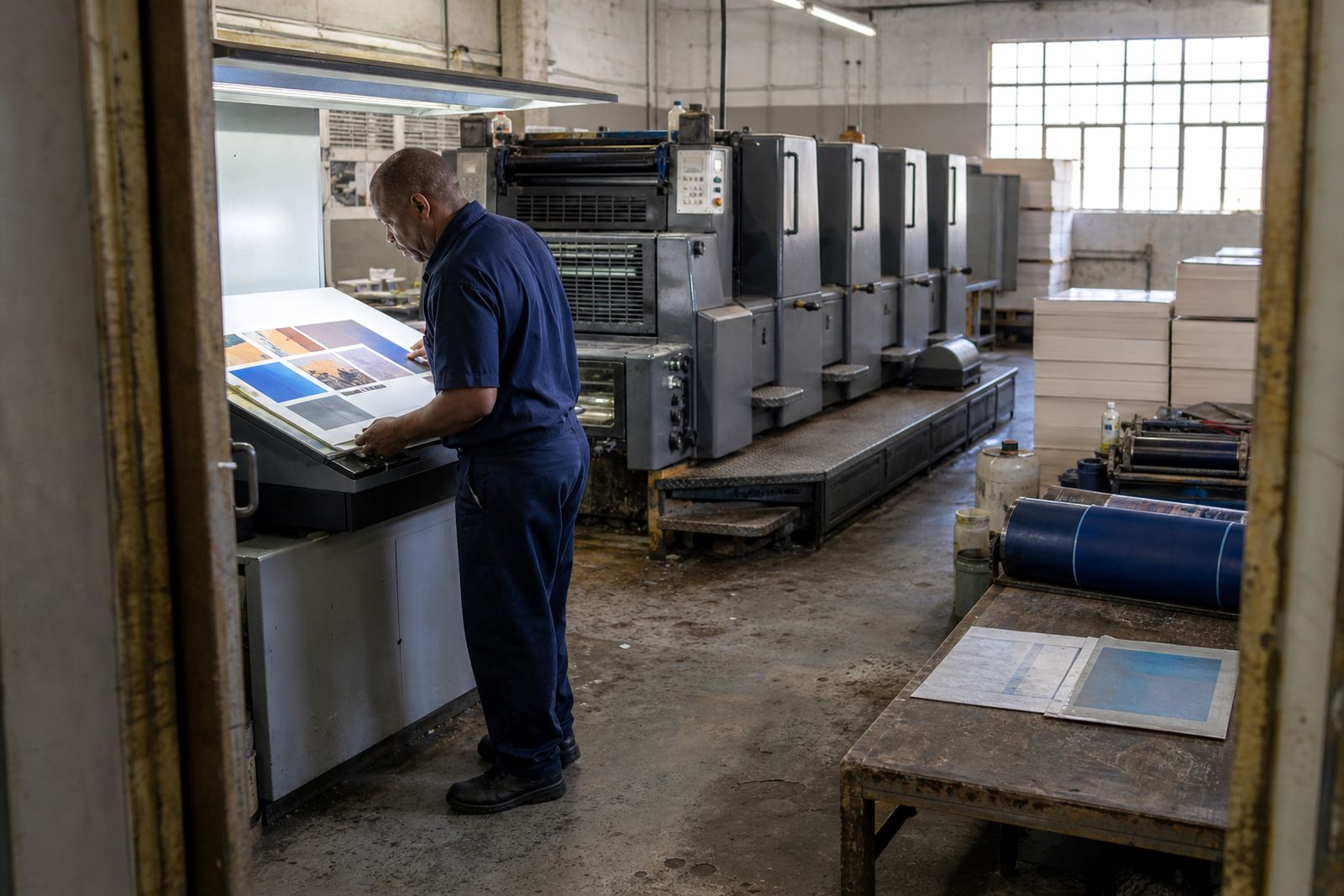
Ink key logs that survive shifts
Write the key moves or the next lead restarts from zero.
Read more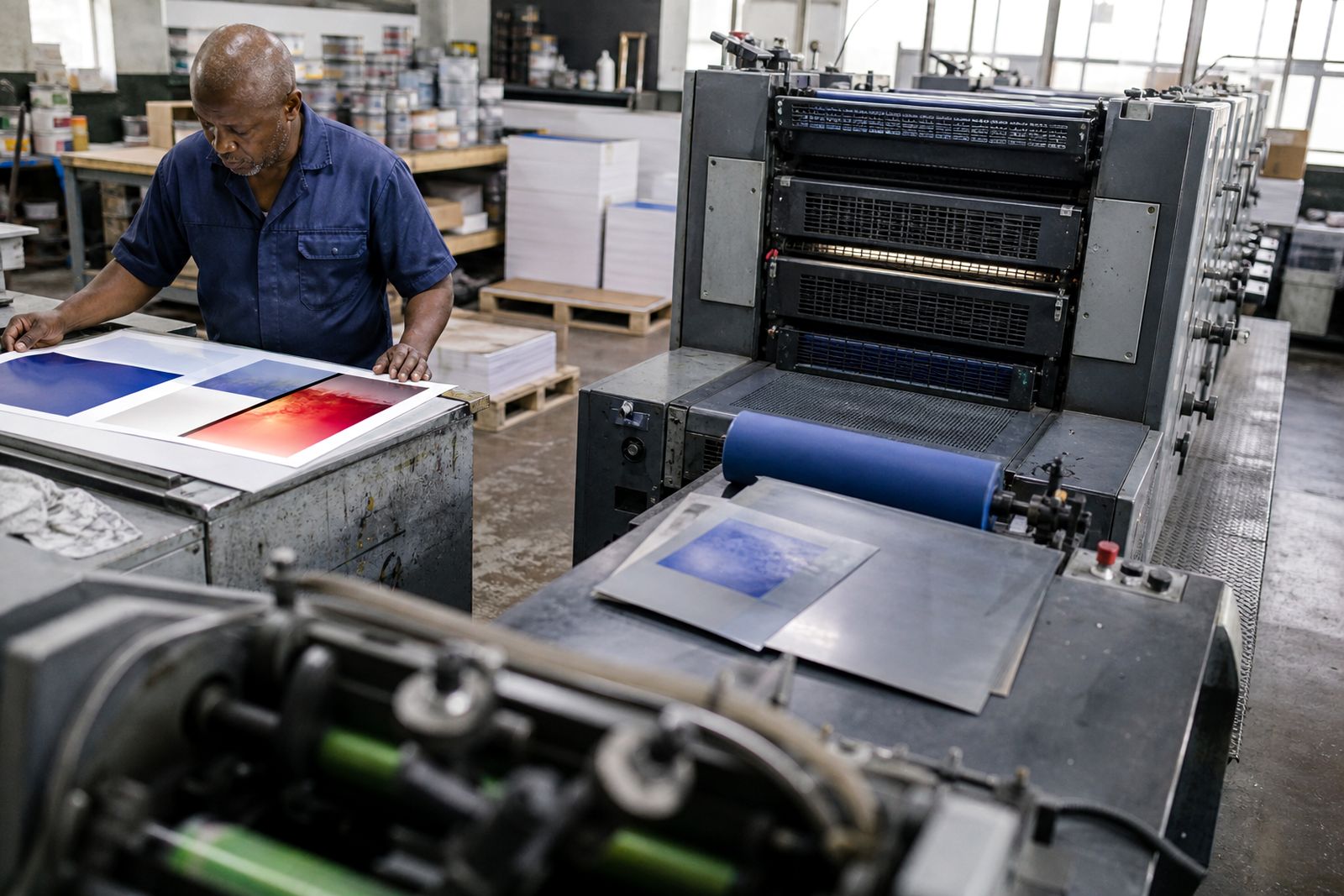
IR drying versus soft powder
Heavy solids need a clear choice, not both at full blast.
Read more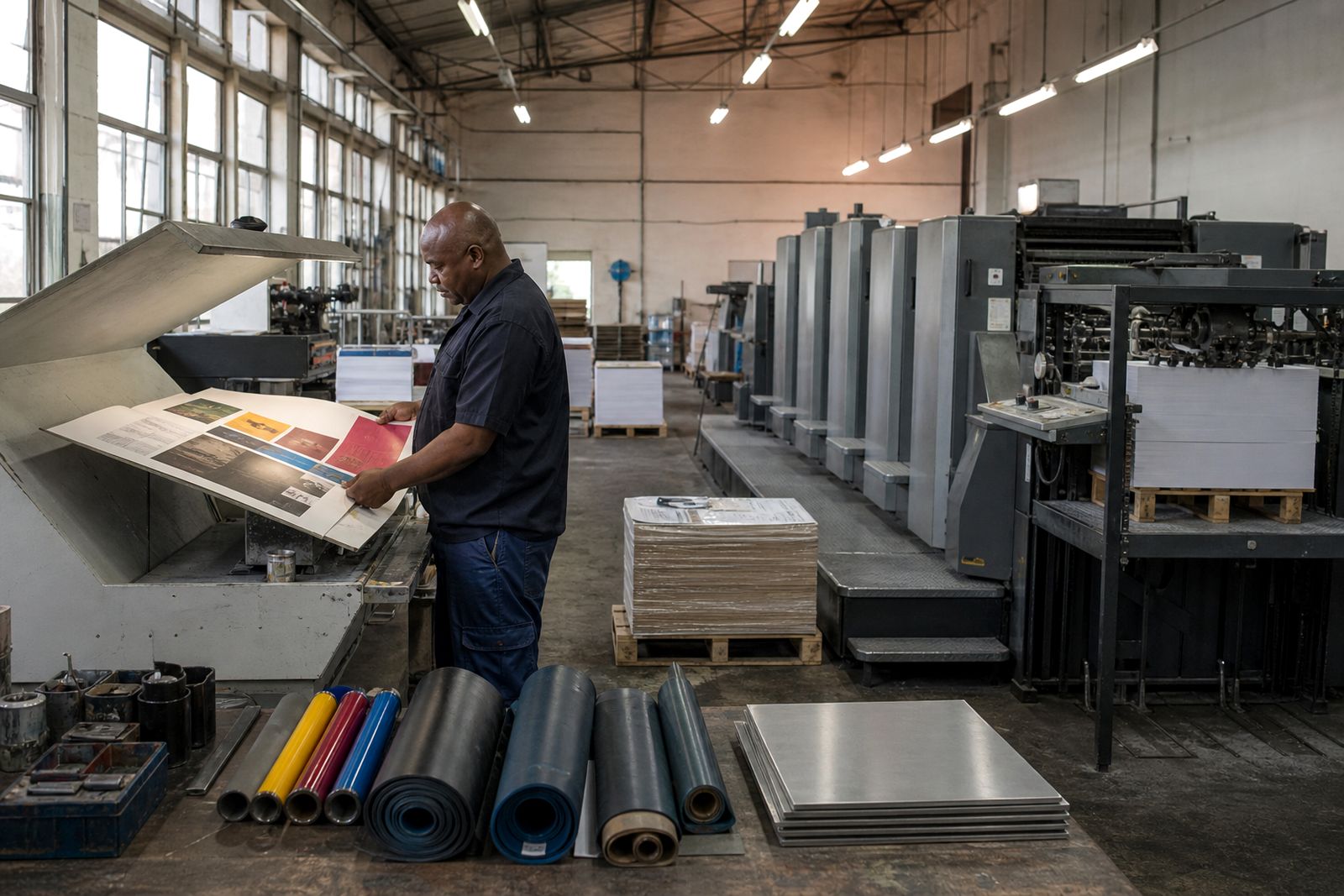
Make-ready inside a power window
Compress checks when Eskom cuts the afternoon short.
Read more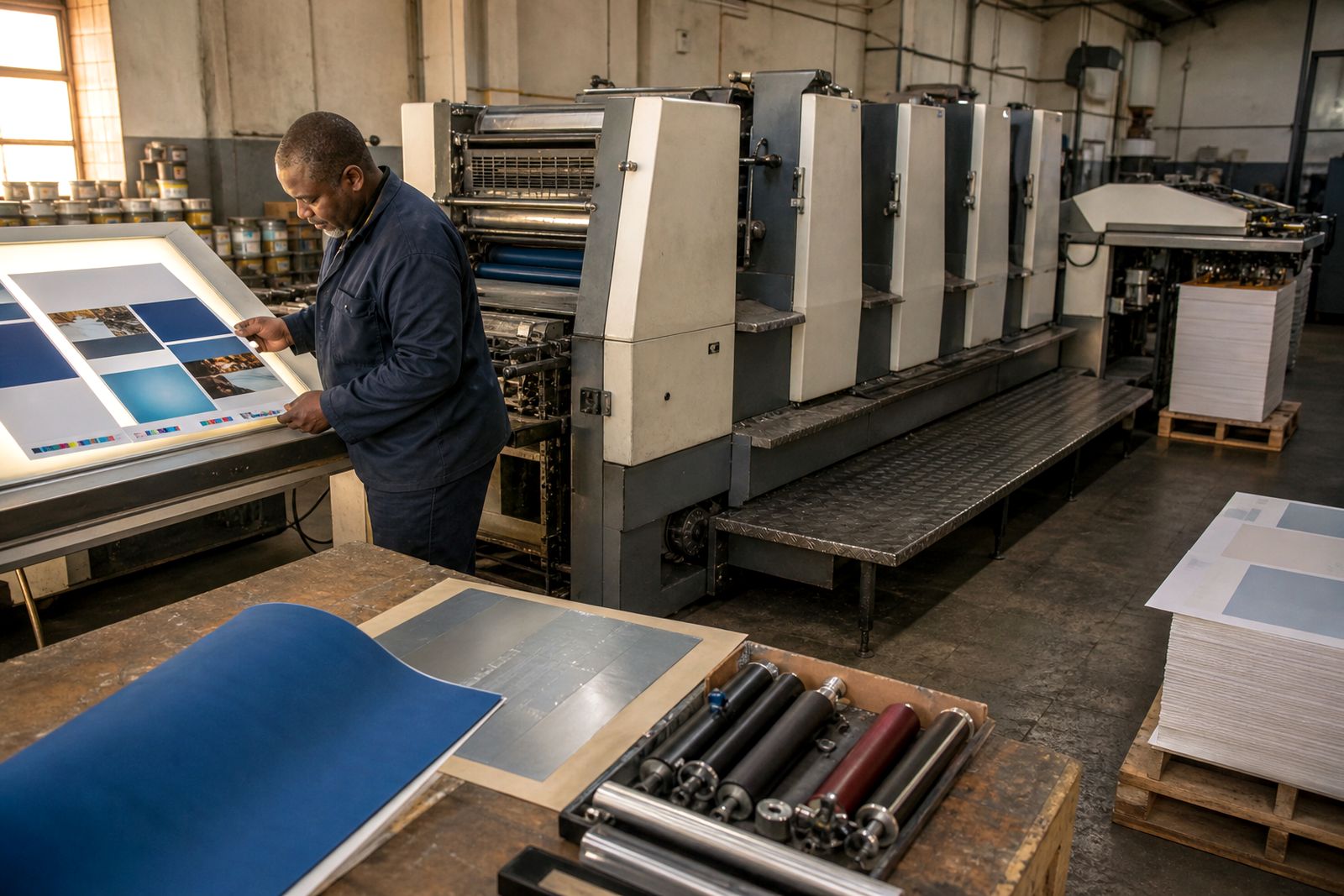
Municipal rush make-ready
Tender notices reward lamp rails and pre-staged plates.
Read more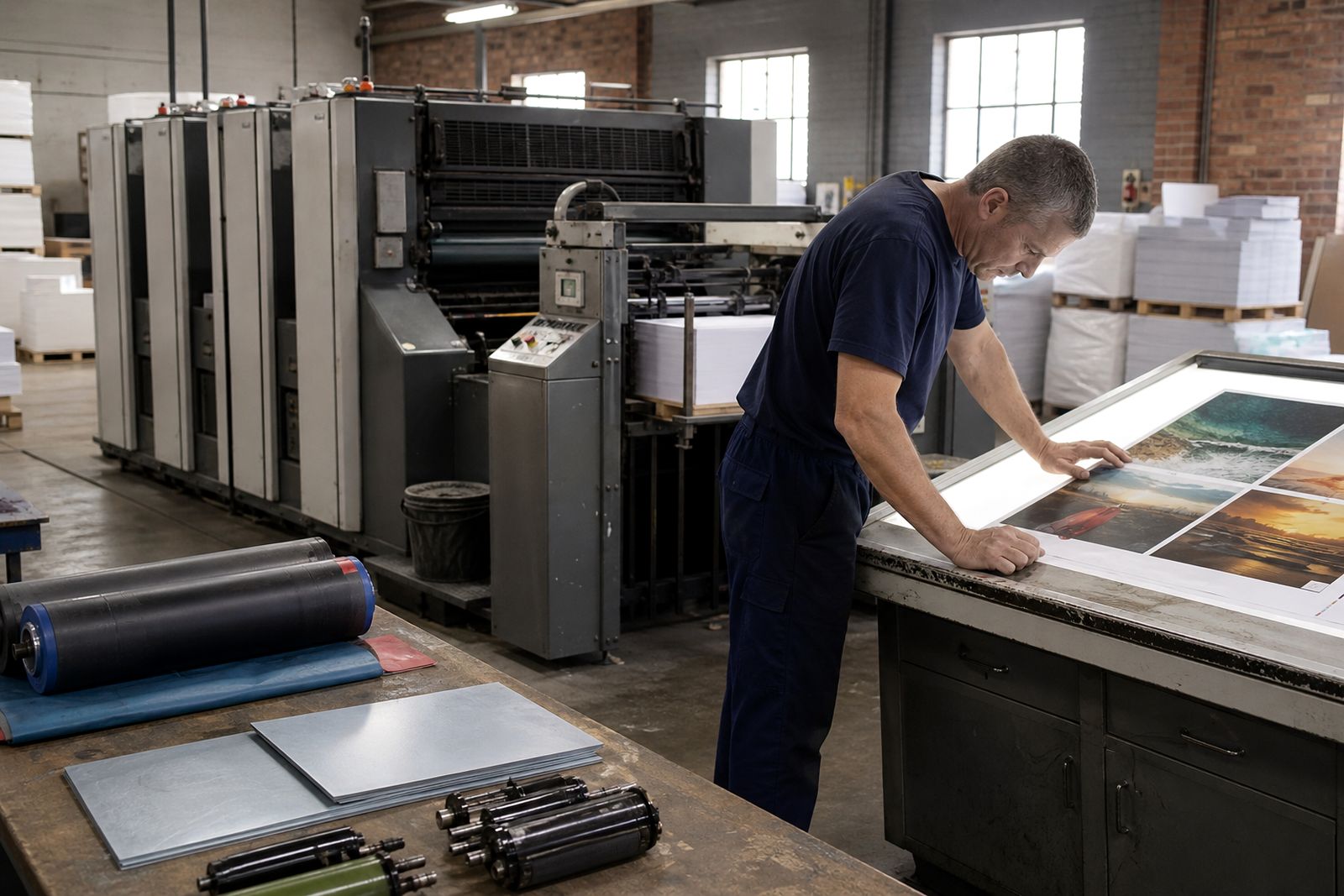
Packing gauges that stay honest
Blanket packing drifts when nobody logs the gauge number.
Read more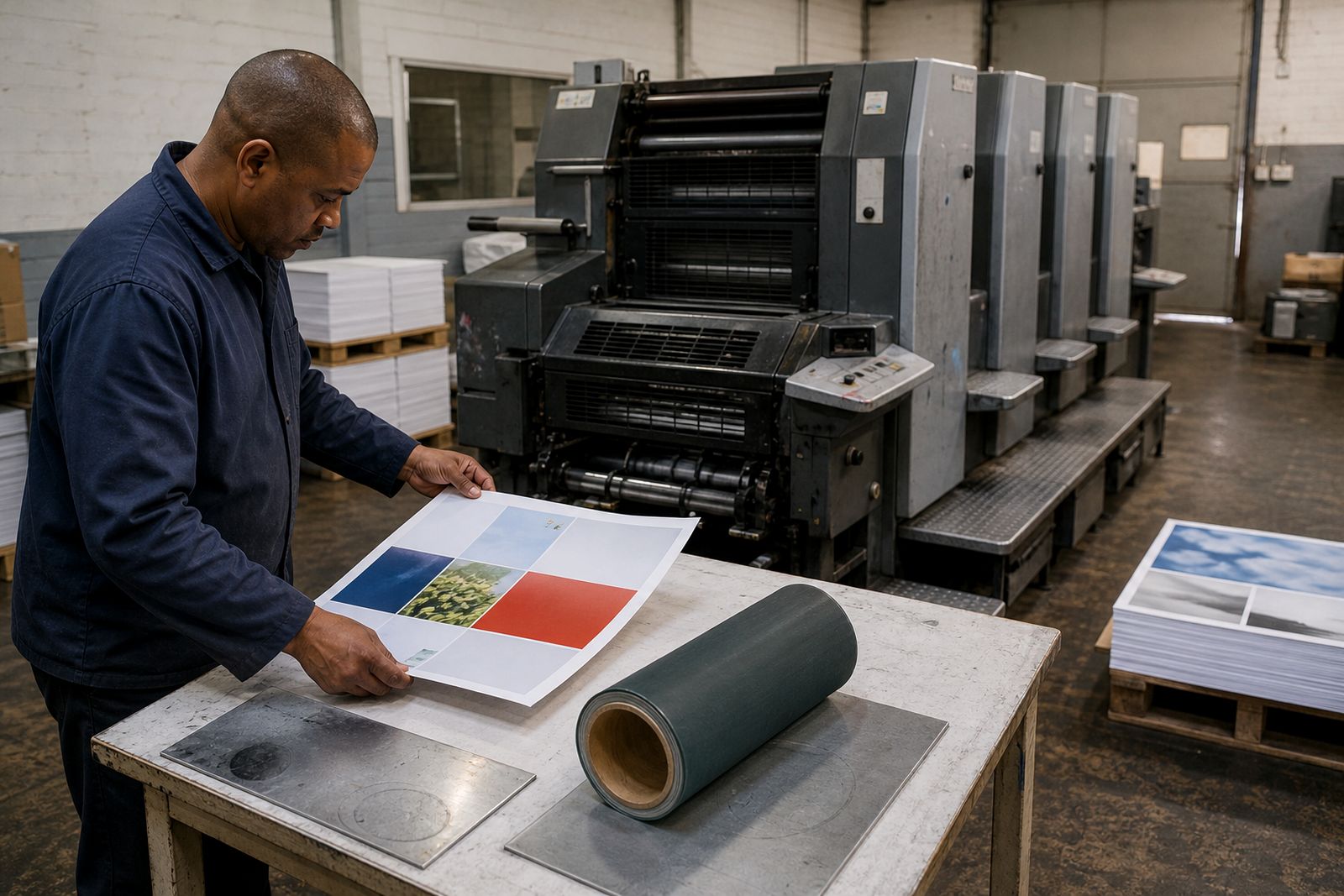
Perfecting gripper notes
Double-sided brochure scrap often starts at the gripper, not the plate.
Read more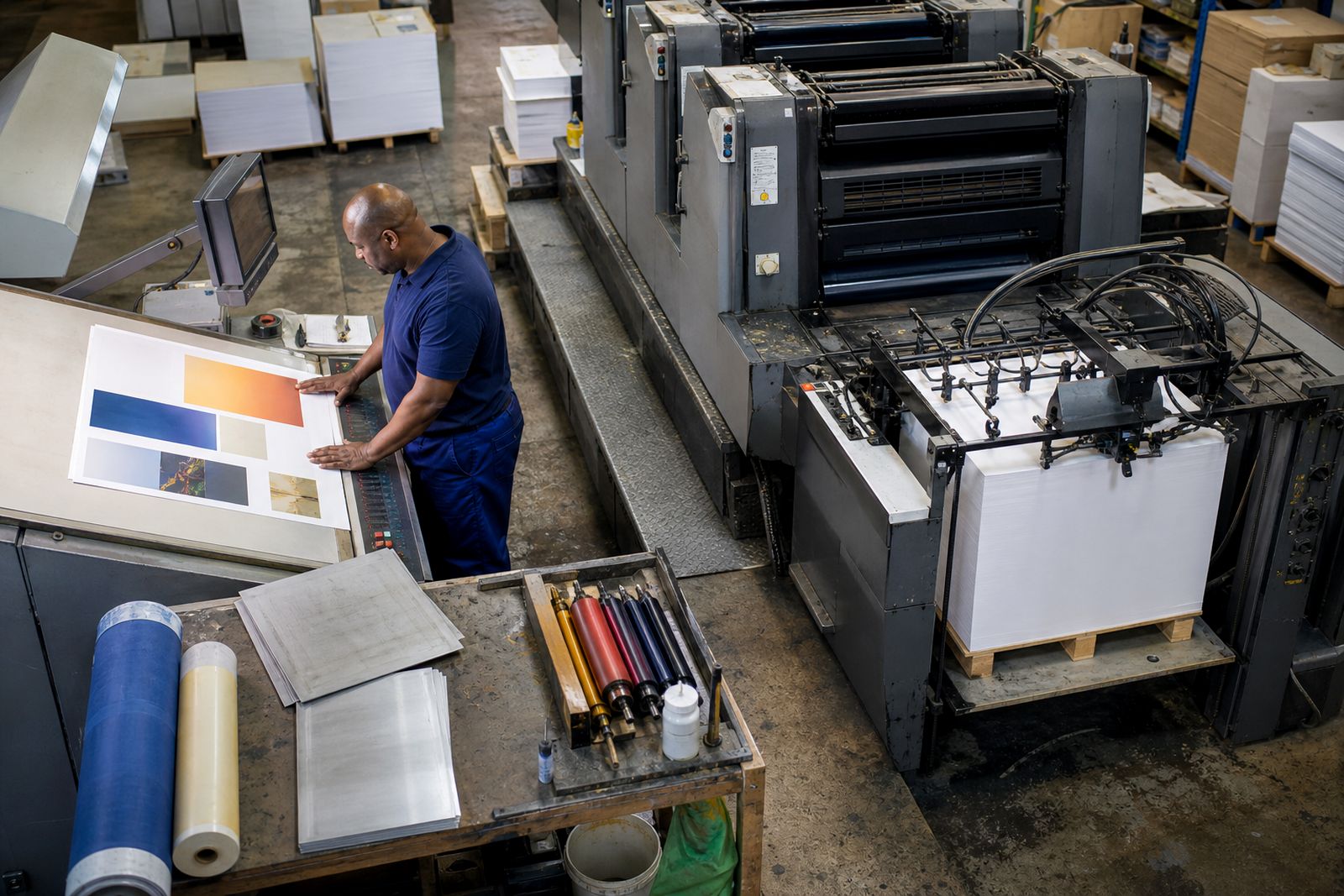
Pharma type that stays readable
Leaflet density is not a brand mood. It is a compliance floor.
Read more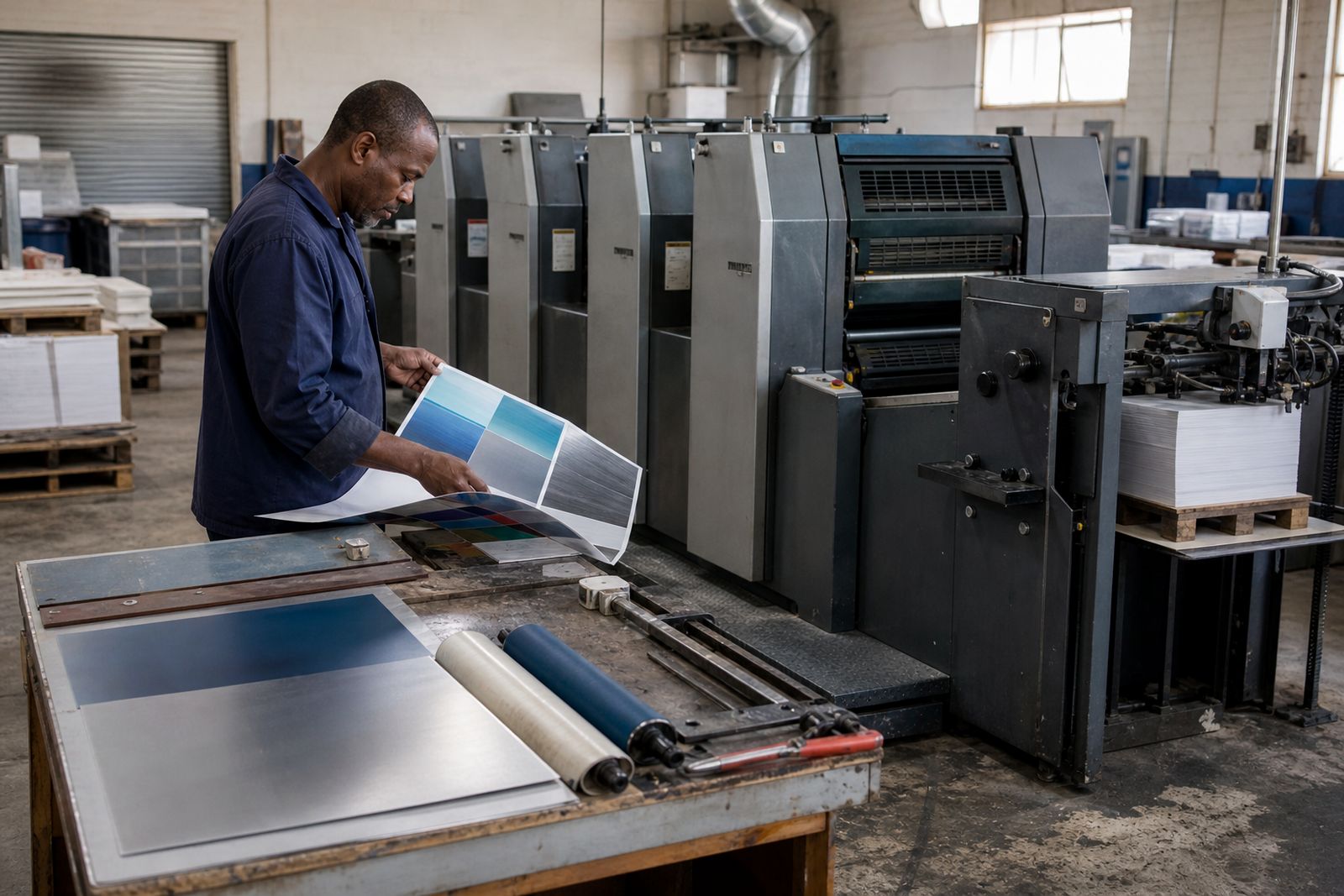
Plate clamp swaps mid-SKU
Short-run agencies change plates faster than clamps forgive.
Read more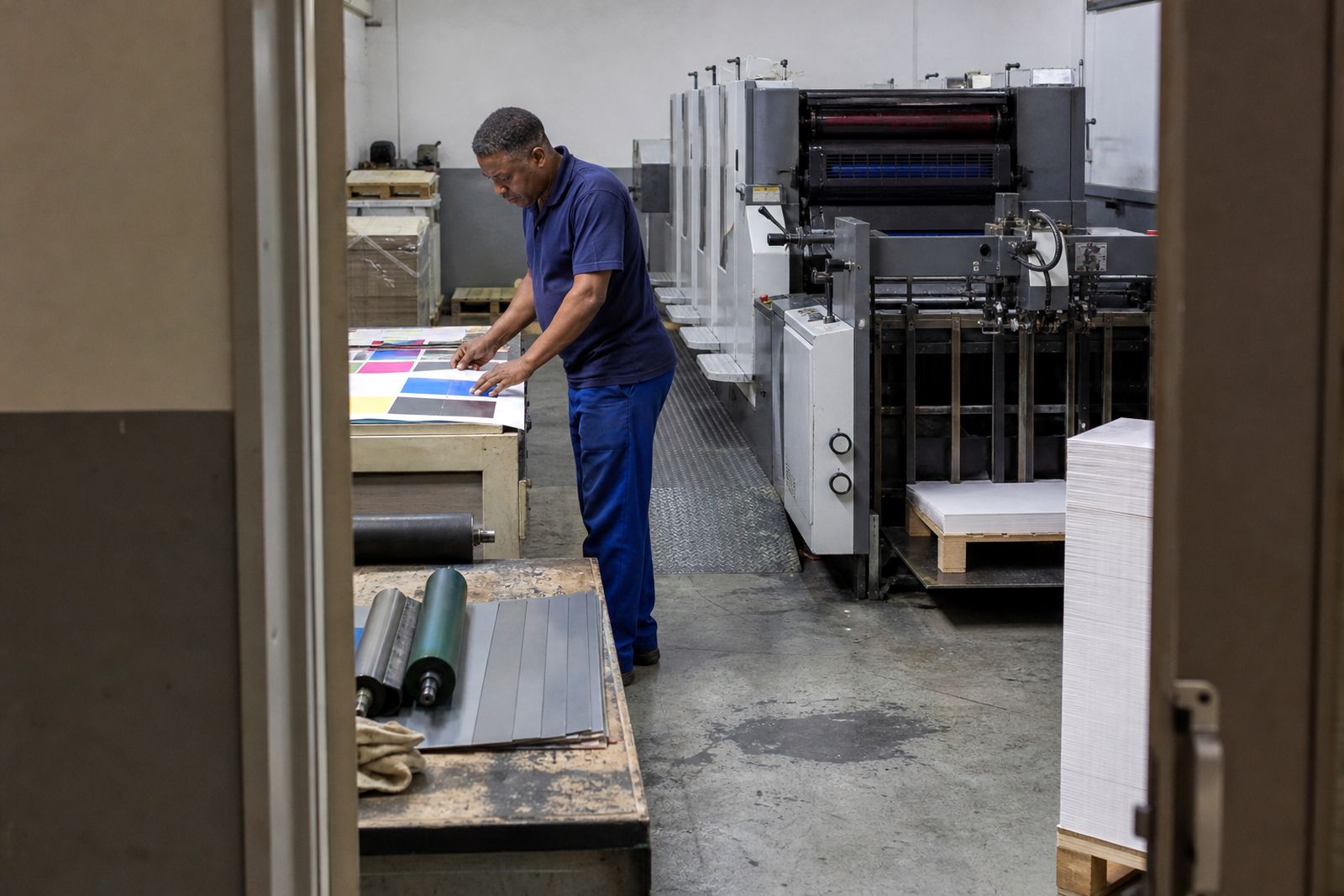
Register setup for short runs
Agencies change SKUs faster than register pins forgive.
Read more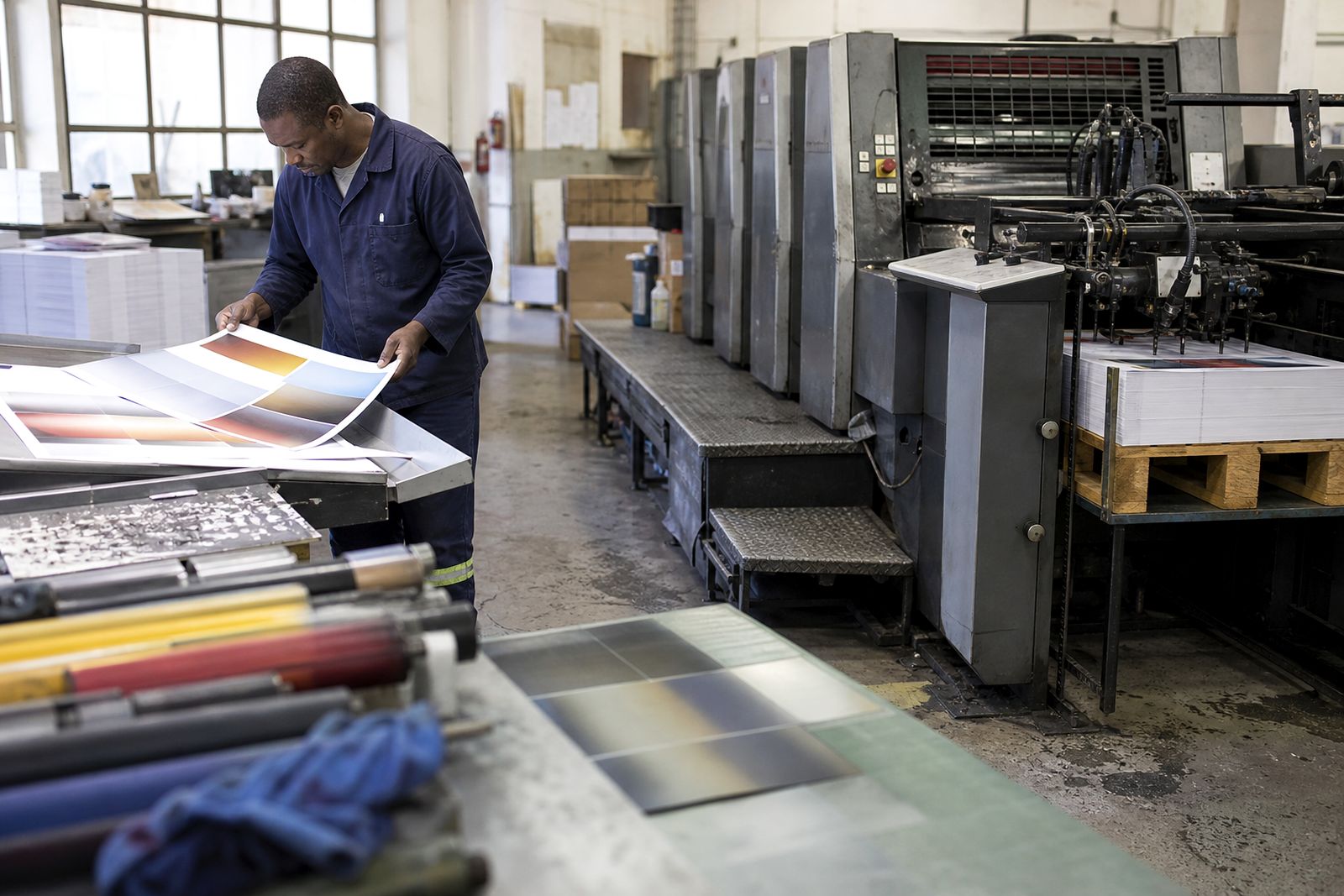
Reject pocket label
First twenty sheets must not re-enter the good stack.
Read more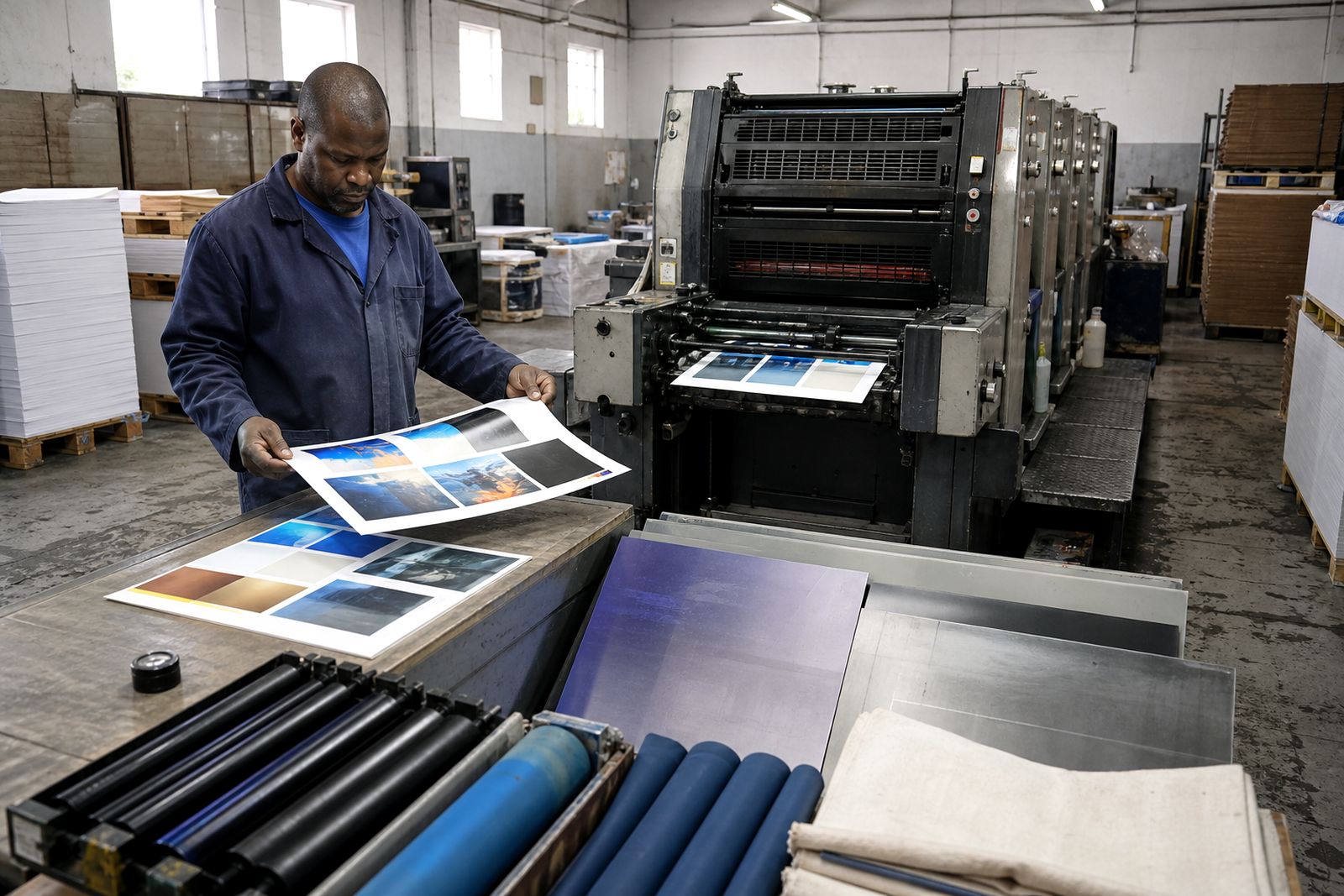
Friday flyer discipline
Spare kits and feeder checks beat heroics on drop day.
Read more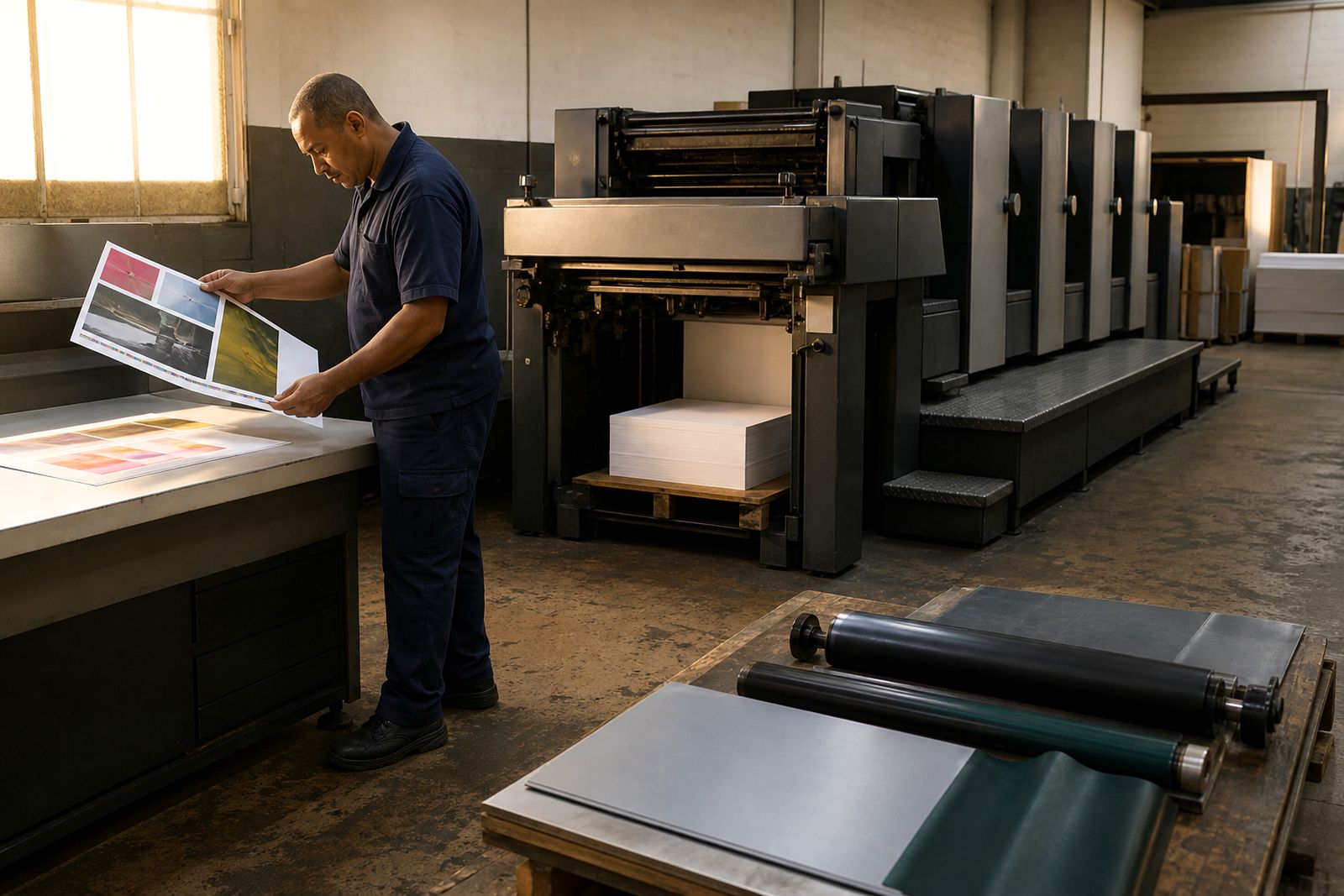
Sample day discipline
One SKU, one colour bar, one photo. Agencies hate waiting twice.
Read more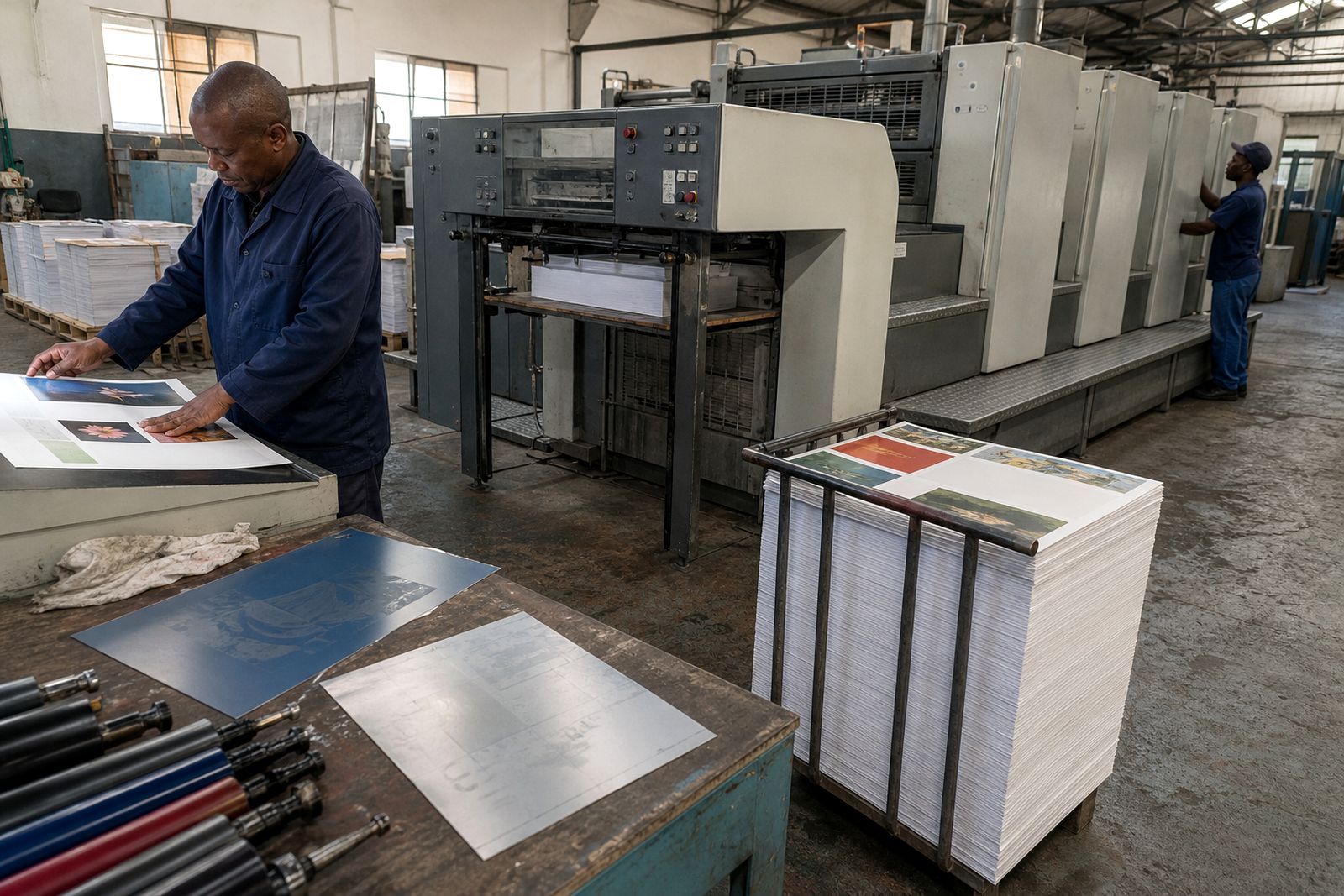
School workbook volume weeks
Delivery guards matter more when stacks climb past a metre.
Read more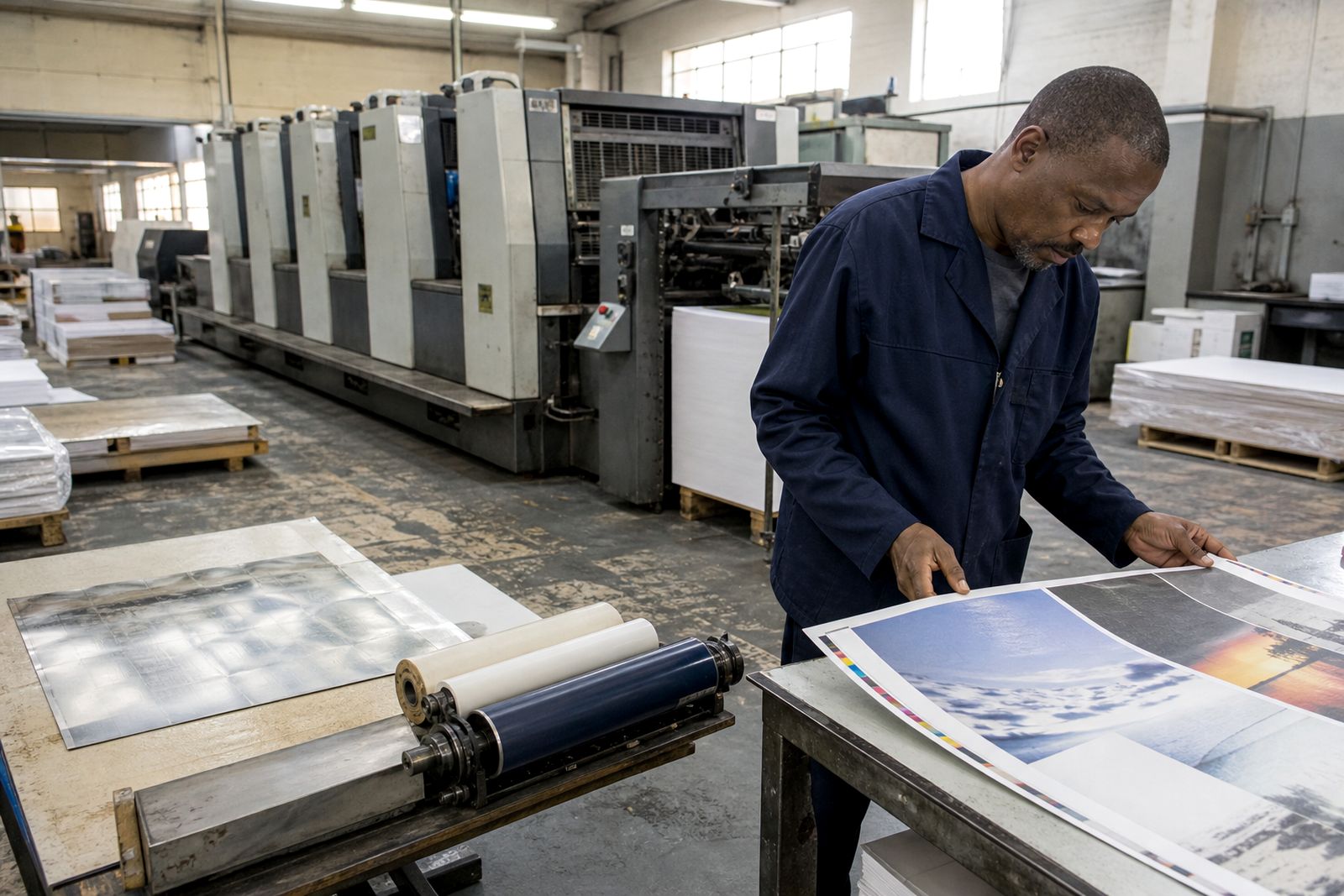
Showroom handoff notes
Mall hours fail when the ticket hides unfinished checks.
Read more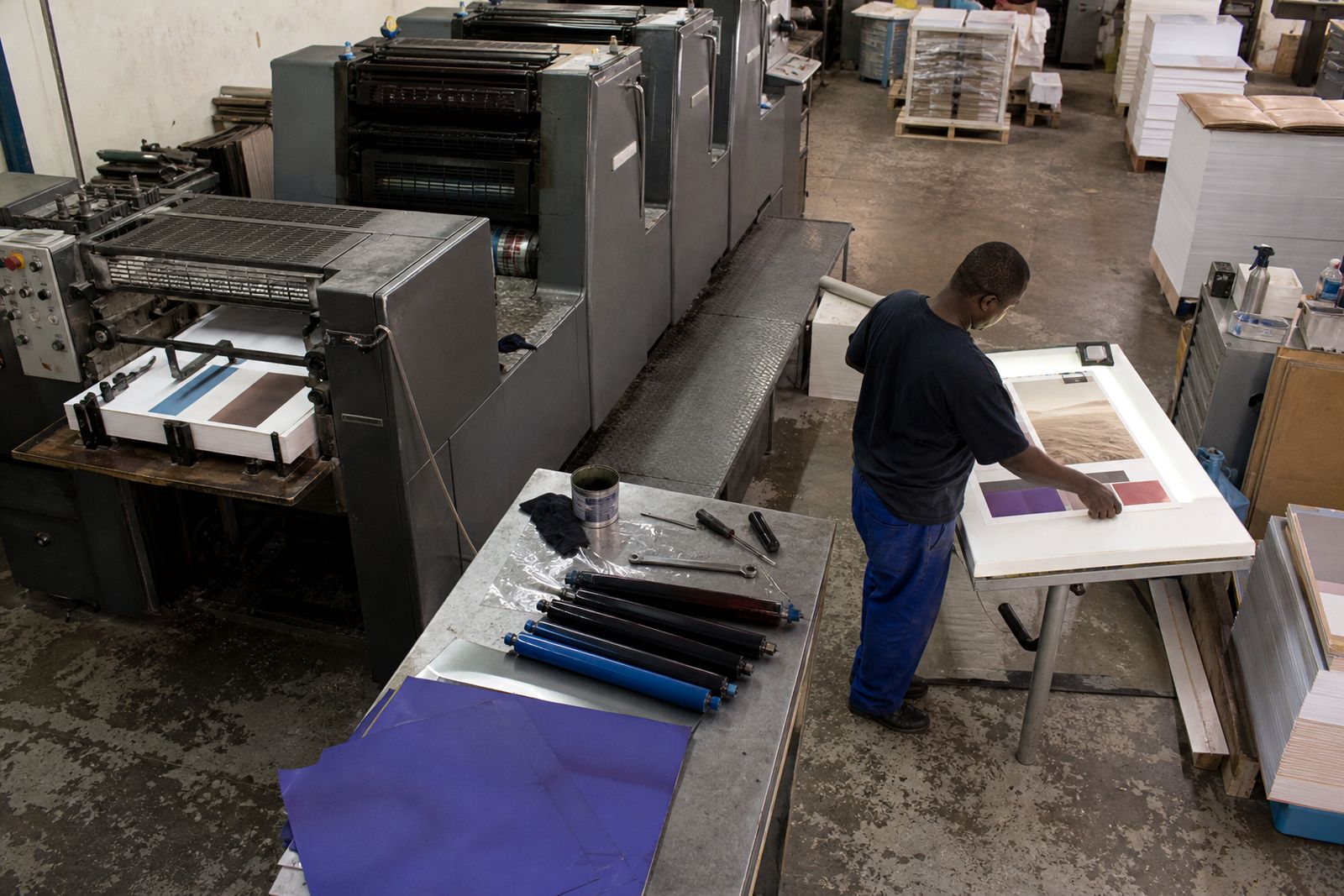
Quarterly spares review
Blankets and suckers age quietly until Friday fails.
Read more
Wet-strength wine labels
Western Cape labels fail when blankets pack soft for paper.
Read moreWhat our Offset Printing customers say
Verified Google reviews
Tell us what your press room is running
Send a note through our contact form with your press make and format, the stocks and run lengths you handle, the plates, chemistry or blankets you use and your town, and we will come back with practical advice and a quote.
Open the contact form