

Delivery edge marks
Jogger pads and stack guards save coated edges on long runs.
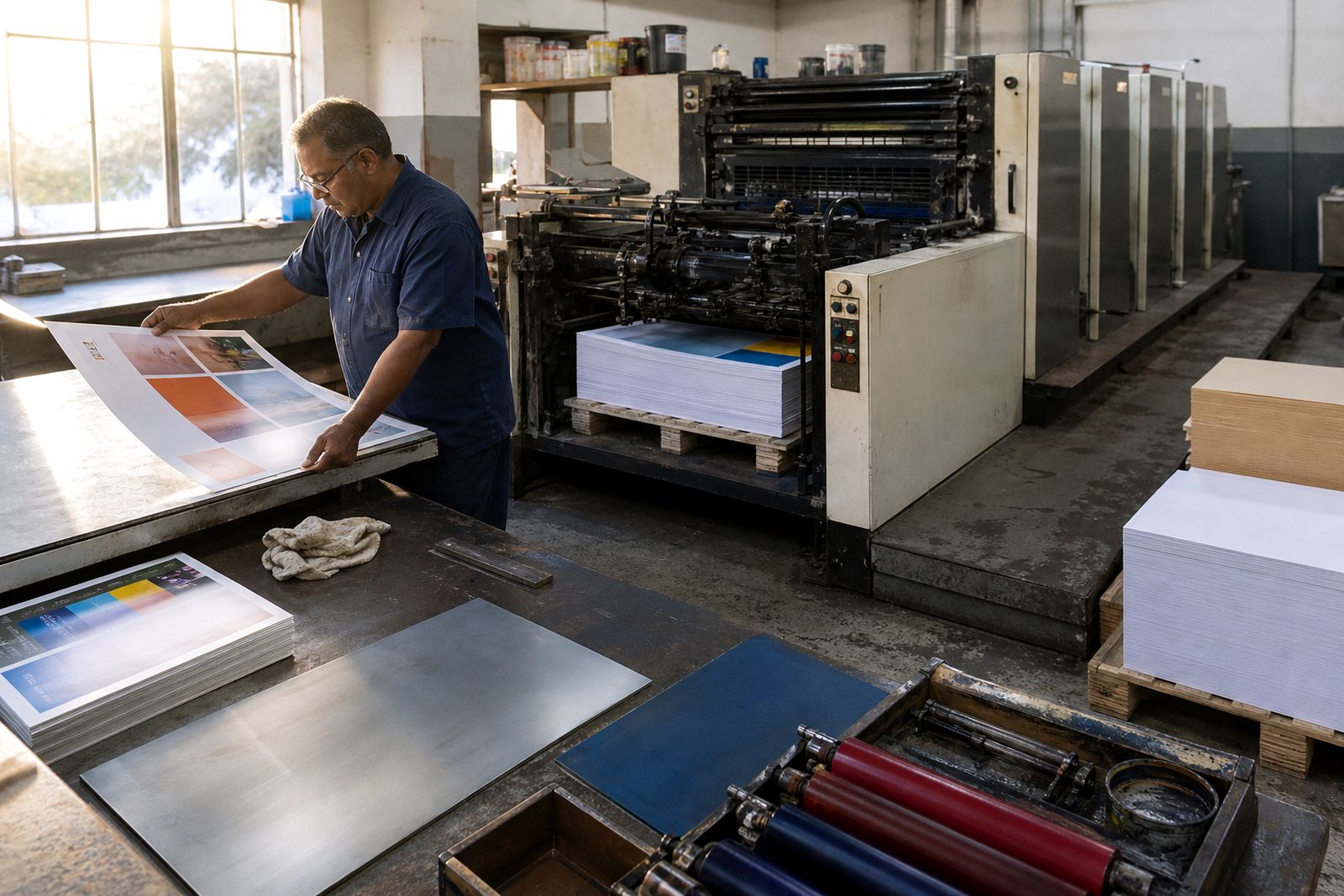
Delivery edge reference on stack
Marking the delivery edge on pull sheets helps the next shift keep gripper and tail orientation straight. On coated work, that small pen mark also stops stack joggers from turning sheets and bruising the wrong edge.
A delivery edge mark is a simple cue placed on the finished stack or control sheet to show which edge lands first at delivery. In busy South African print rooms, especially where the same size sheet can run portrait on one job and landscape on the next, that mark prevents mix-ups during jog, palletising and guillotine prep. It matters most on gloss and silk stocks where edge rub shows quickly once the pile builds.
Use the mark when operators need to track where the sheet is taking the most contact in the delivery pile. If set-off powder, fan air, or stack height needs adjustment, knowing the delivery edge makes the fault pattern easier to read. Keep it tied to the job card so repeat work starts with the same delivery orientation.
Crews in Midrand and Pinetown often describe edge damage differently, even when the pile shows the same polished line. One will call it delivery scuffing, another will blame the jogger side. A clear delivery edge note gives everyone one reference point before settings get changed on the wrong end of the sheet.
Checks before the pile builds
Mark the first approved sheet and place it where feeder, press and finishing staff can all see the same orientation. Then watch the first few hundred sheets for edge shine, curl, or powder build-up on that side of the stack. Where long runs are planned, fit jogger pads or stack guards early rather than after the coated edge starts marking.
- Delivery edge marked on first good sheet
- Jogger side matched to approved orientation
- Stack guards fitted on coated runs
- Pile height checked before edge polish starts
- Job ticket notes delivery orientation clearly
When power cuts interrupt a run, keep the marked control sheet with the pallet so restart crews do not guess the delivery side. After power returns, compare the fresh pile against the earlier edge condition before increasing speed. The rejected stack should stay separately labelled to stop rubbed sheets being mixed back into saleable work.
Related pages for run planning
For equipment layouts, see Units. For sheet travel and handover points, use Runs. Printable pressroom references sit under Resources, and specific delivery questions can go through the contact form.
If you need a second opinion, describe the marked edge and the delivery pile when you get in touch. Montague Gardens can read a stack problem better when the note covers powder level, edge rub and pallet condition together. Coastal plants should mention humidity, because damp air changes how coated sheets settle in delivery.
Showroom discussions at Clearwater, Cresta, Pavilion, and Tyger Valley work best when you bring the actual stock and a marked sample sheet. The delivery edge on the sample tells the conversation far more than a trimmed mock-up.
What our Offset Printing customers say
Verified Google reviews
Also worth a look
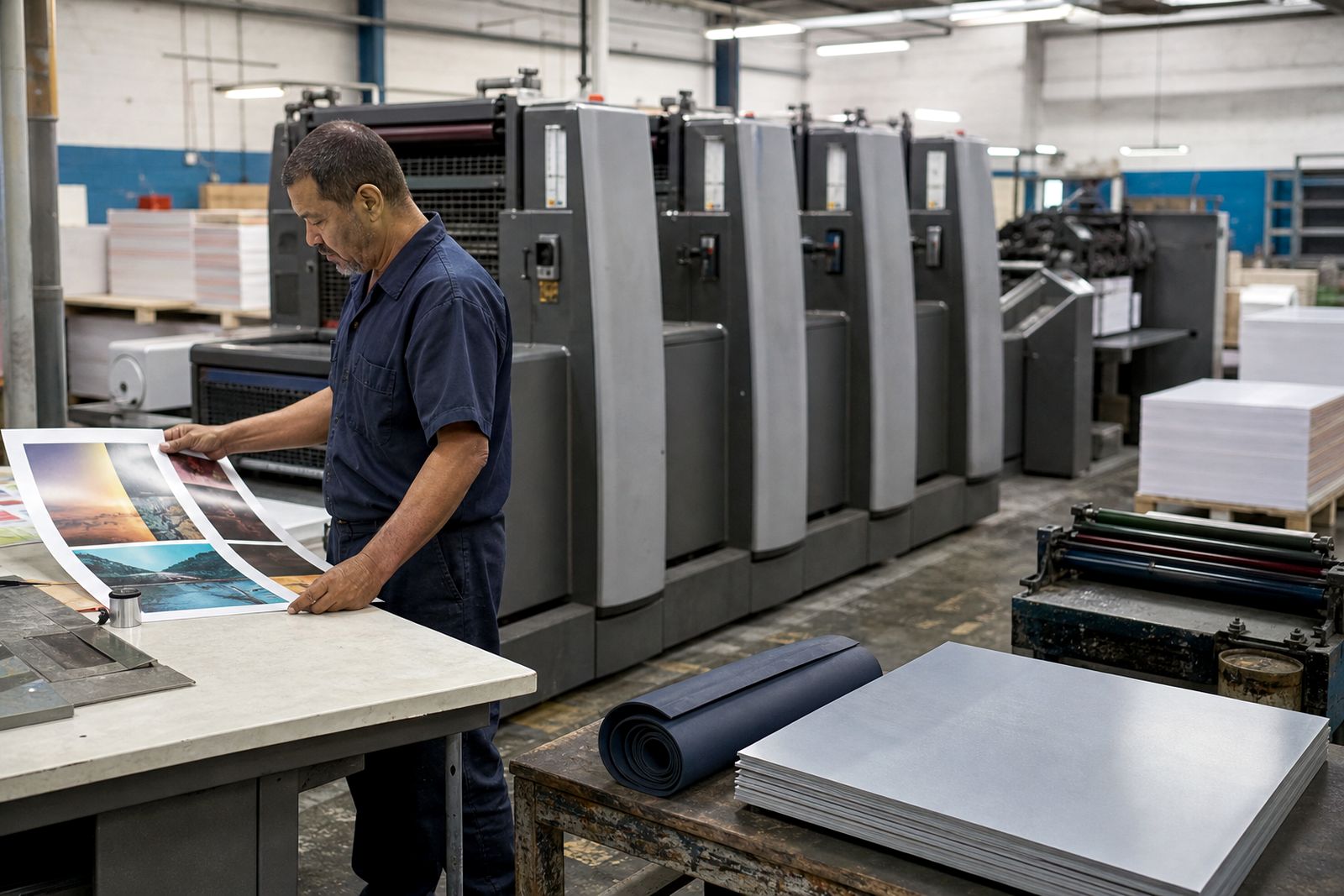
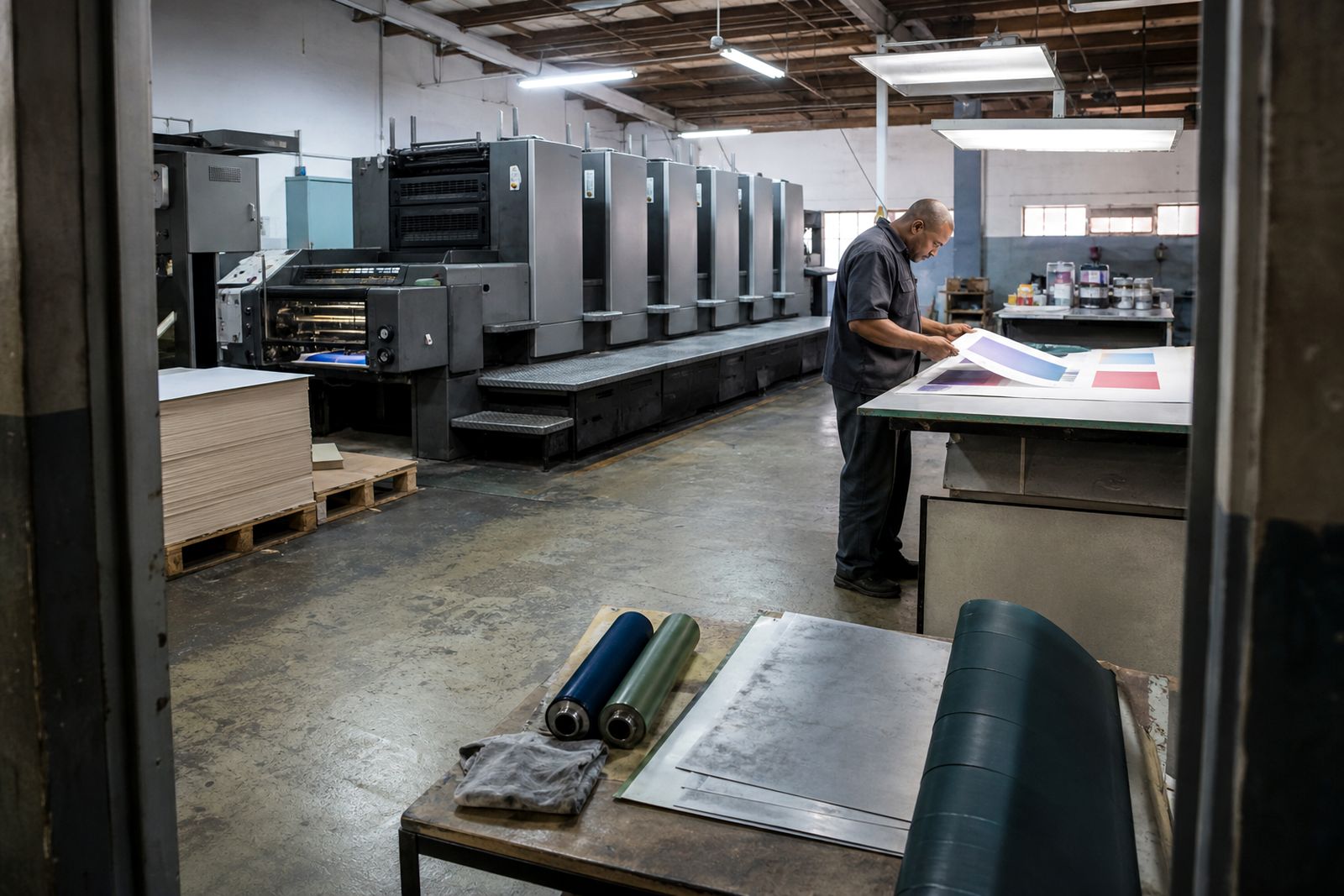
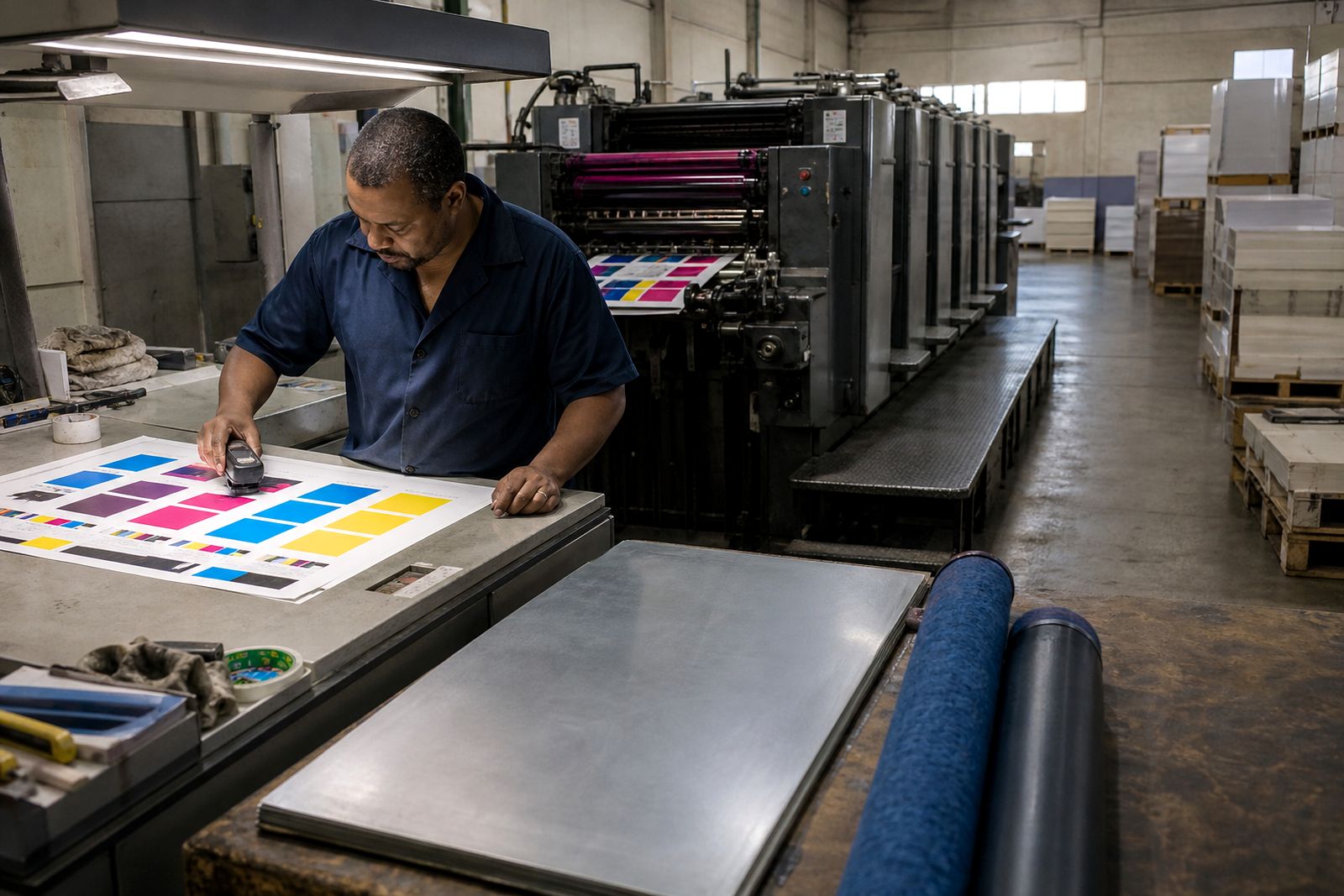
Tell us what your press room is running
Send a note through our contact form with your press make and format, the stocks and run lengths you handle, the plates, chemistry or blankets you use and your town, and we will come back with practical advice and a quote.
Open the contact form