

Friday flyer discipline
Spare kits and feeder checks beat heroics on drop day.
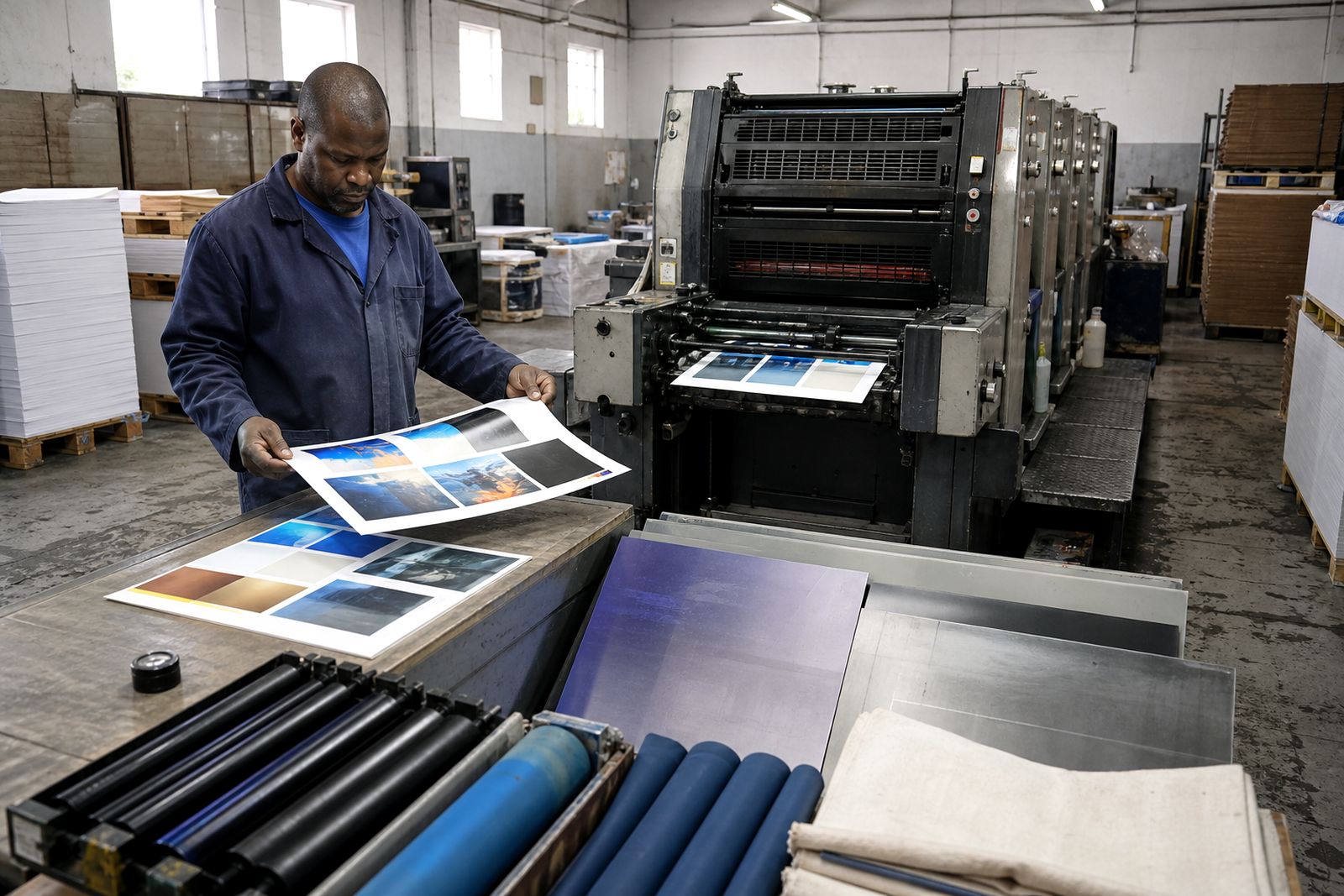
Friday insert window control
Friday flyer discipline is built around supermarket insert work where the truck booking matters as much as the image. It was written for crews checking feeders before dawn, with notes on 45 to 60 gsm stocks, spares at the delivery end, and the marks that must match from unit to unit. On drop day, the useful questions are whether the suckers are lifting evenly, whether side lay is holding, and whether the first signed sheet reflects the approved sequence.
Most Friday waste comes from tiny setup drift repeated over several pallets. A changed pile height, a feeder wheel set too hard, or a blanket wash not fully cleared can push spoilage up before anyone says a word. Keep the job bag, the unit layout, and the run card together for the retailer version on press.
The wording came out of handovers where one crew blamed paper stretch and the next blamed register at the lay edge. In Midrand and Pinetown, the same flyer fault was being logged under different names, which made repeat fixes harder. This note uses one set of bay terms for fan-out, feeder marking, scum, and image bounce so the night shift inherits facts, not opinions.
Drop-day checks before first pile
Start with the spare kit, not the console. Count feeder suckers, separator feet, spray powder, wash-up cloths, and the marked packing pieces before plates are hung. Then confirm unit order, pull one clean sheet through at slow speed, and compare bars, fold direction, and retailer version code before the run is released.
- Feeder spares counted and signed off
- Approved first sheet tagged to version
- Register drift noted by unit number
- Next shift brief written on bay card
- Makeready sheet clipped to job bag
When power interruptions hit the afternoon plan, protect the evidence first. File the signed sheet, jot the last good density read, and mark the live pallet with the exact version and quantity. In coastal plants, recheck paper edges after the stop because damp air can change feeding on light flyer stocks.
Linked pages for this run
Open Units for press configuration, Runs for retailer sequence planning, and Resources for press-side cards that can be printed and clipped to the bay. Use the contact form if the unit count, stock weight, or delivery format needs confirming before commenting on a setup note.
A single photo of the feeder head or colour bar is more useful than a long chain of messages. Montague Gardens teams can pick up a stopped Friday job faster when the note states what changed, which unit moved, and which pallet was affected. If the plant sits near the coast, say that plainly, because storage and pile conditioning differ from inland rooms.
Clearwater, Cresta, Pavilion, and Tyger Valley examples should be discussed against live flyer stock, not a mock-up. Bring the printed sample, the paper spec, and the run order used for the insert drop. That makes feeder setting, fan control, and delivery pile behaviour easier to compare.
What our Offset Printing customers say
Verified Google reviews
Also worth a look
Tell us what your press room is running
Send a note through our contact form with your press make and format, the stocks and run lengths you handle, the plates, chemistry or blankets you use and your town, and we will come back with practical advice and a quote.
Open the contact form