

Photograph the first good sheet
Before rate climbs, pin a photo with the colour bar visible.
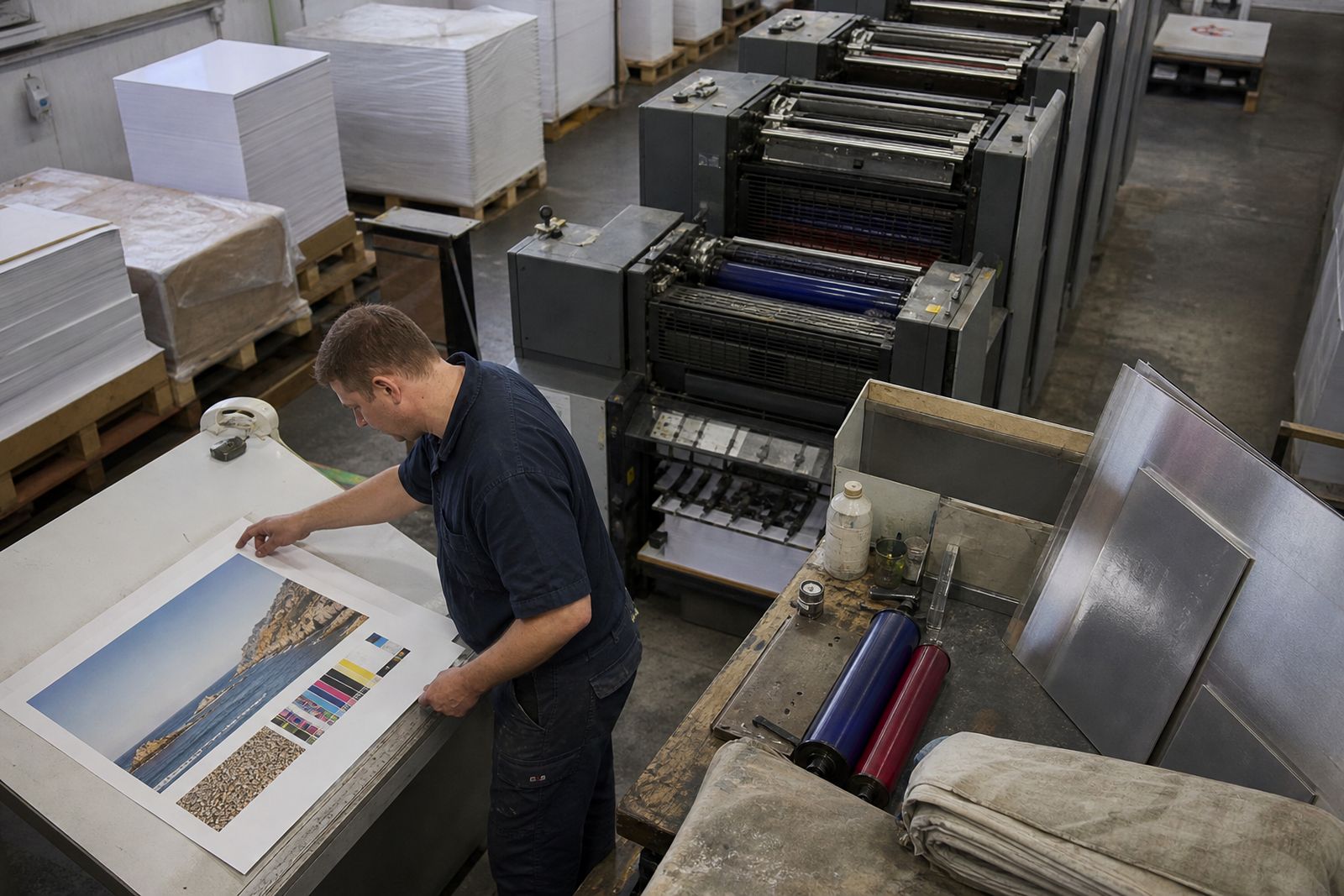
First-sheet photo at pass-off
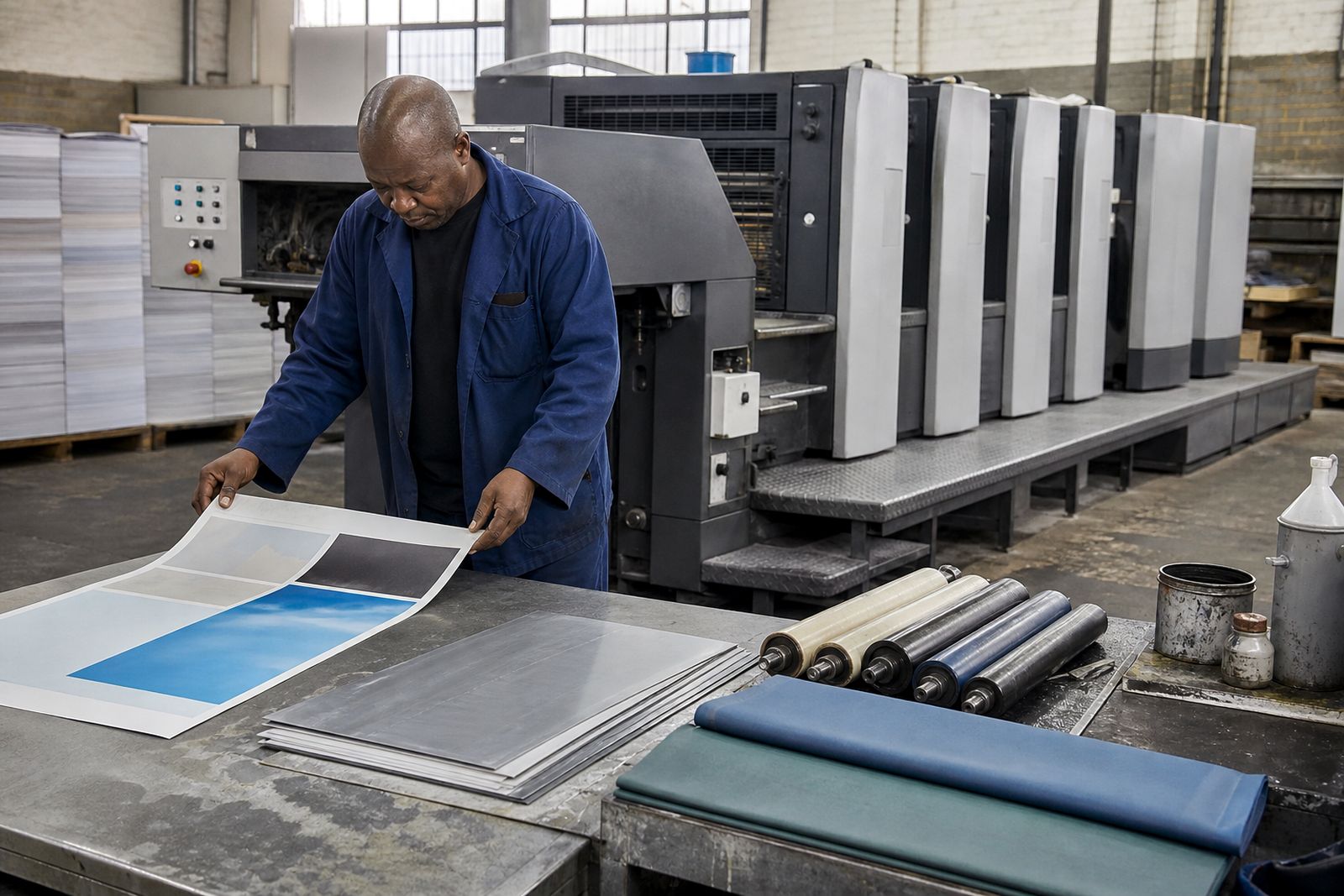
Record the first approved sheet with a clear image of the colour bar, gripper edge and job ticket reference. That photo gives the 05:30 lead a visual start point before densities drift, blankets are washed, or stock is changed.
"Photograph the first good sheet" covers the exact moment a sheet is signed off for running. Sets out what must appear in frame: the full sheet, colour bar, trim marks, and enough edge detail to identify register and sheet travel. Press leads use the image later against density notes, feeder settings, and any mark-up added during the shift.
In many South African print rooms, the approved sheet is lifted out, passed around, and then lost under newer pulls. A dated photo stops that reference from disappearing when a night shift inherits the job or a unit is stopped for maintenance. Keep it with the shift date so the next crew can compare live sheets against the same visual standard.
This note matters most when two crews describe colour differently but the sheet itself tells the truth. A photograph taken under the same inspection light shows whether the cyan bar was clean, whether trapping looked right, and whether the gripper margin was acceptable at sign-off. Midrand and Pinetown teams may use different words, yet both can work from one stored image.
What the camera must capture
Take the photo as soon as the sheet is passed, before speed increases and handling marks start. Place the sheet flat, keep glare off the solids, and include the colour bar in full rather than cropping to the image area. If the job has a known risk such as set-off, hickeys, or weak grey balance, add a second close shot of that section.
- Full sheet with colour bar visible
- First sheet photo stored with the shift date
- Gripper edge and lay side shown
- Job number or pallet tag included
- Approved time written on the ticket
When power cuts interrupt production, save the approved-sheet image before phones die or files are misplaced. Name it with the shift date, press, and job number so it can be found without opening every folder. Keep rejected pulls separate from the passed stack so an old spoilage sheet is not photographed by mistake after power returns.
Next reference points for press crews
Use Units to match the photo routine to the press layout, Runs for handover steps during longer jobs, and Resources for printable bay cards.
One sharp sheet photo is more useful than a long explanation with no visual reference. Montague Gardens crews can trace a handover faster when the approved pull, time, and exception are visible from the start. For coastal plants, note the humidity conditions as well, because paper movement and ink behaviour may differ from inland runs.
At Clearwater, Cresta, Pavilion, and Tyger Valley, bring an actual passed sheet if you want to discuss what should be visible in the image. A live sample makes it easier to judge bar placement, edge detail, and whether the photo angle is hiding a register issue.
What our Offset Printing customers say
Verified Google reviews
Also worth a look
Tell us what your press room is running
Send a note through our contact form with your press make and format, the stocks and run lengths you handle, the plates, chemistry or blankets you use and your town, and we will come back with practical advice and a quote.
Open the contact form