

Coastal blankets overnight
Humidity softens packing feel before the first unit turns.
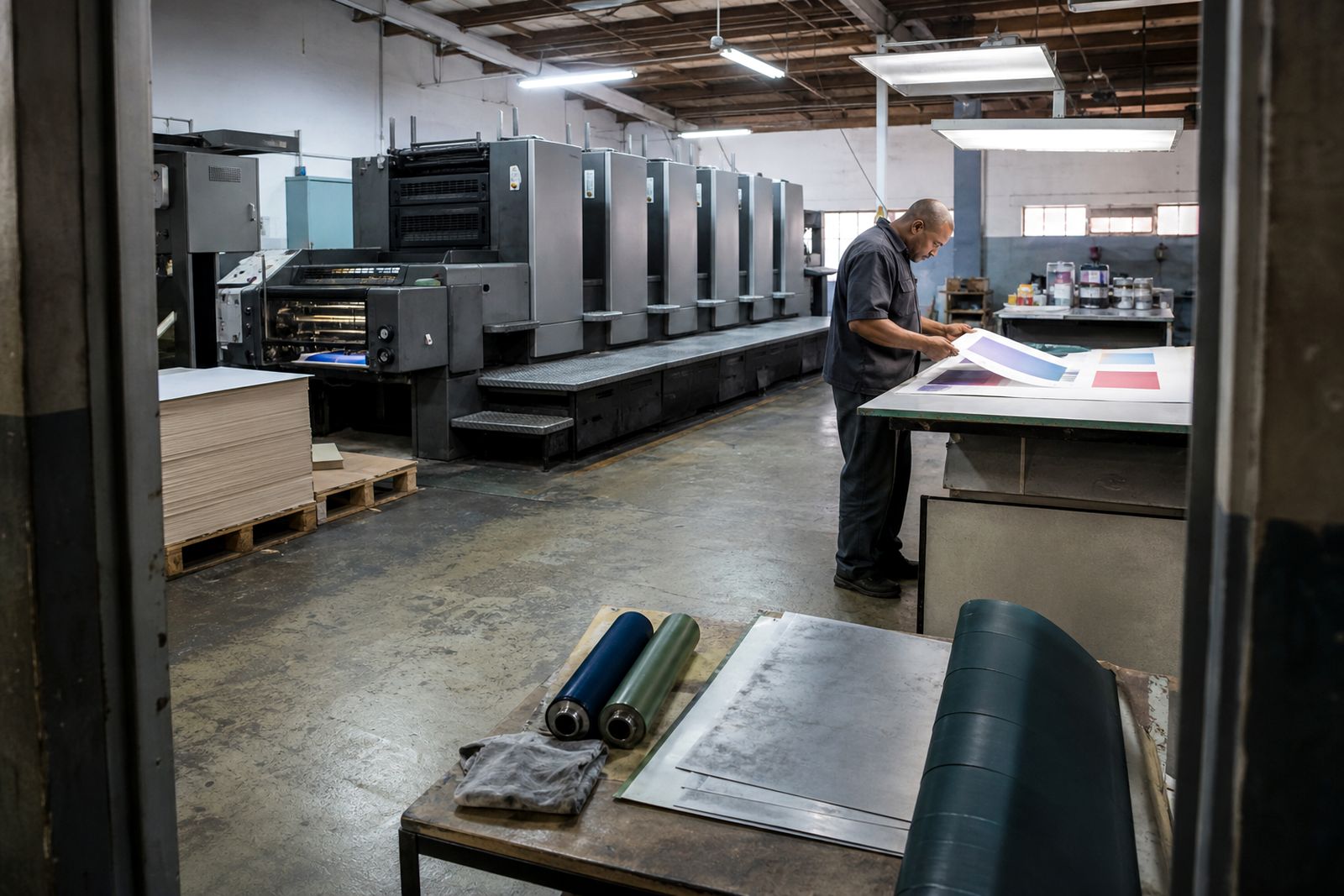
Blanket storage before sea air rises
Night checks for blanket face, packing set, and morning impression before coastal starts.
Coastal blankets overnight deals with what happens between wash-up and first pull in Durban, Gqeberha, and Cape Town. Moist night air can leave the blanket face slightly fuller by dawn, especially where packed units sit closed until the day crew arrives. These notes are for press leads who need a quick check on squeeze, packing feel, and water pick-up before ink keys are touched.
A unit that ended well on evening shift can open with a different kiss on the sheet after a damp night near the coast. That change often shows first as scumming on the edge, weak solids, or a patchy trap on Unit 2 rather than an obvious blanket fault. Keep this note with the makeready card for jobs that stand overnight on the press.
Crews in Montague Gardens and Pinetown often describe the same morning waste in different ways after humid weather. One lead blames impression creep, another blames soft packing, yet both are seeing overnight moisture affect the blanket and underpacking. Use one shared wording for the bay card so the handover records what changed on press, not just what the pile looked like.
First-turn checks at 05:30
Before the first unit turns, open the nip and feel for any change in blanket firmness across the width. Then run a dry sheet through, check bearer contact and edge marking, and only bring dampening up once the packing reading matches the previous shift note. Where blankets were washed late, keep that wash note separate from impression comments so morning faults are not written off too quickly.
- Blanket type and packing noted by unit
- Overnight condition recorded before first ink
- Edge scum or weak trap marked
- Handover names last wash-up time
- Makeready note attached to job ticket
If power cuts breaks the restart, record the blanket condition before motors stop and the unit cools further. A phone photo of the first acceptable sheet helps, but the written note on packing, water setting, and room feel matters more next morning. Preferred practice is to mark reject piles clearly so test sheets from restart do not drift back into saleable work.
Useful follow-on pages for press leads
Check Units for blanket and cylinder context, Runs for jobs that stand overnight, and Resources for printable bay cards. Use our contact form if the note needs supplier input on packing feel or blanket storage.
Keep the message short and say whether the fault shows at the blanket edge, the bearer stripe, or on the first marked sheet. Montague Gardens can continue the discussion more accurately when the handover states whether the unit stood clamped, washed, or stripped before the night break. If the plant is on the coast, say that plainly because night humidity changes how blankets sit by morning.
At Clearwater, Cresta, Pavilion, and Tyger Valley, bring a marked sample sheet and the bay card wording used on shift. The useful comparison is the actual fault on stock, not a design mock-up. That makes it easier to discuss whether the problem started in packing, water balance, or overnight blanket handling.
What our Offset Printing customers say
Verified Google reviews
Also worth a look

Tell us what your press room is running
Send a note through our contact form with your press make and format, the stocks and run lengths you handle, the plates, chemistry or blankets you use and your town, and we will come back with practical advice and a quote.
Open the contact form