

Quarterly spares review
Blankets and suckers age quietly until Friday fails.
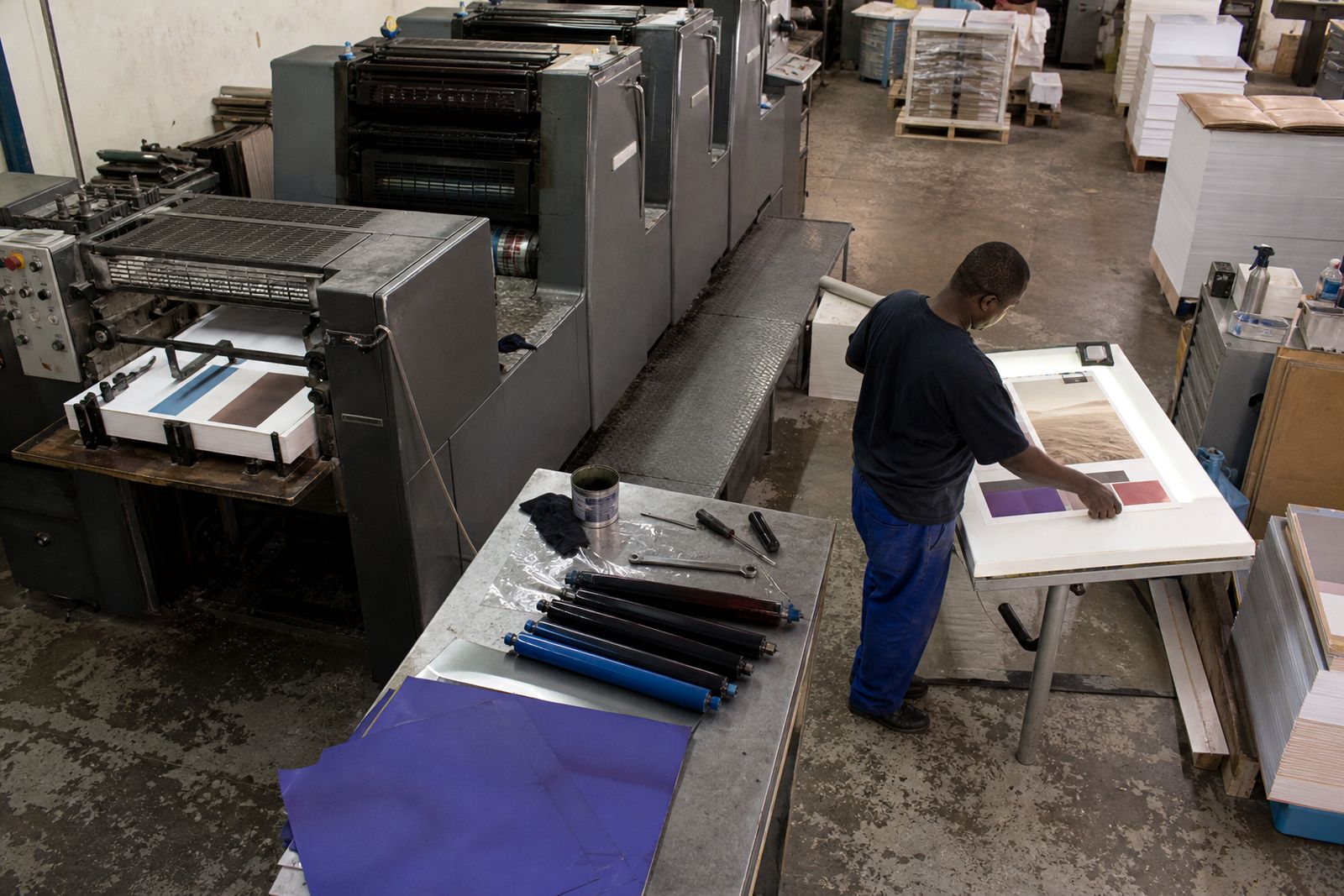
Quarter-end spares under the loupe
This review tracks blanket condition, sucker wear, gripper pads, delivery tapes, filters, and feeder rubbers. It also checks whether packing gauges, bearer strips, and wash-up consumables still match the unit specs used in the print room.
A quarterly spares review is not a purchasing memo. It is a pressroom check that compares what is on the shelf with what the feeder, inking train, dampening system, and delivery are actually consuming. On South African commercial offset work, rubber parts harden in heat, filters clog with wash residue, and neglected blanket stock often surfaces when a run has to start before sunrise.
The value of this note is in preventing stoppages caused by small parts that were assumed to be fine. A worn sucker or tired feed wheel can look acceptable until coated stock, board, or thin maplitho starts double-sheeting. Keep this review next to the unit spec sheet and mark any part that has changed brand, hardness, or size since the last count.
Crews in Midrand and Pinetown often report the same press fault from different ends of the machine. One team books extra sheets as feeder trouble, while another calls it unstable impression after a blanket swap. Set one quarterly language for the shelf check, so the handover records the actual spare, its condition, and the unit affected.
Shelf checks before the next run
Start with counted stock, not assumptions from the previous quarter. Pull one sample of each critical spare, confirm part numbers against the press manual, and note any rubber that shows glazing, cracking, flat spots, or swelling from solvent contact. Finish by checking whether the emergency box for Friday night makeready still contains the correct blanket underpacking, suckers, spray powder, and wash-up cloths.
- Blanket packers counted by thickness and size
- Feeder suckers checked for hardening and splits
- Dampening filters matched to unit positions
- Gripper pads separated into serviceable and scrap
- Wash-up stock dated and clearly labelled
When power cuts interrupt the review, capture counts on paper before terminals go down. Keep opened cartons closed against dust, especially in drier inland plants where rubber parts age faster on exposed shelves. Coastal stores should also inspect for moisture marks on boxed blankets and corrosion on small metal fittings.
Next documents for press leads
Use Units to confirm the correct consumables for each press configuration. Check Runs for job patterns that consume blankets, suckers, or spray powder faster than average, and open Resources for printable count sheets. If a shelf item does not match the manual, send the detail through the contact form with the unit name and the part marking visible.
A short note with one sharp photo is more useful than a long chain of guesses. Montague Gardens can continue the record when the count states the press, the shelf quantity, and the defect seen on the spare. If your site is coastal, mention it, because humidity affects blanket storage, carton condition, and the life of exposed rubber parts.
Clearwater, Cresta, Pavilion, and Tyger Valley visits should be used to compare actual samples with the listed spare. Bring the worn part, the carton label, and a sheet from the last troublesome run so the review can link stock on hand to press behaviour.
What our Offset Printing customers say
Verified Google reviews
Also worth a look

Tell us what your press room is running
Send a note through our contact form with your press make and format, the stocks and run lengths you handle, the plates, chemistry or blankets you use and your town, and we will come back with practical advice and a quote.
Open the contact form