

Register setup for short runs
Agencies change SKUs faster than register pins forgive.
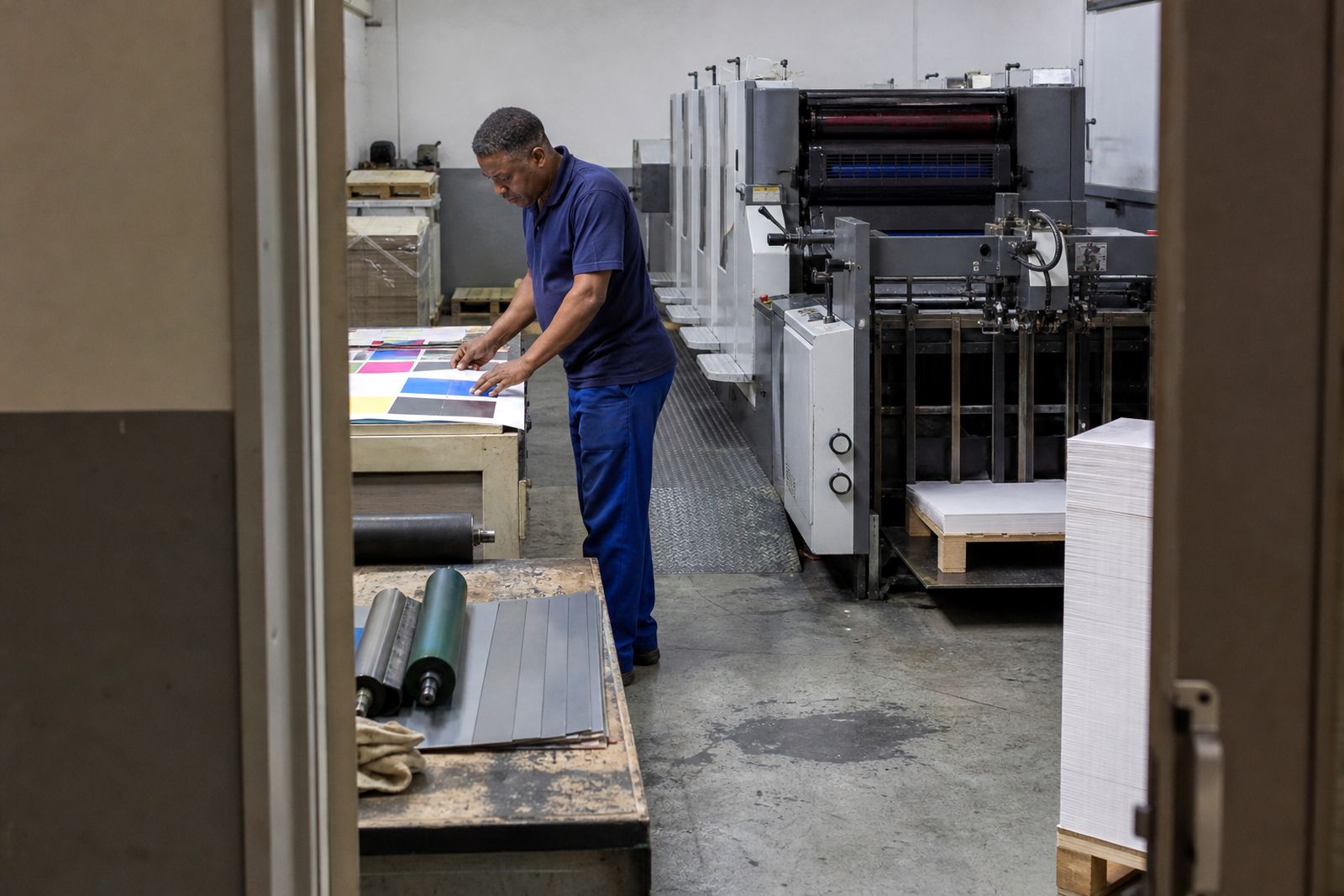
Early-sheet register control
On a short run, register waste can outrun the sellable stack before ink densities have even settled. South African press crews must lock position quickly on cartons, labels and fast-changing SKU work.
Small quantities punish slow corrections because every pull sheet counts against margin. A slight skew from feeder suckers, a loose gripper edge or stock curl from overnight moisture can show up immediately in type traps and barcode panels. Use this note with the unit route and job card so register decisions are made in the same order every shift.
Crews in Midrand and Pinetown often describe short-run movement differently, even when the mark on sheet is identical. One operator blames the lay edge, another calls it tail swing through delivery. Here the terms are tied to visible faults on sheet, so handover notes point to the correction rather than the argument.
Checks before saleable sheets
Start with the stock pile, grain direction and trimmed size before touching the side lay. Then pull a slow first sequence and inspect image position at lead edge, tail and both sides, not only at the gripper margin. Where setup work is running, compare black keyline against cyan and magenta early so a false pass sheet does not become the approval reference.
- Sheet size and grain marked at feeder
- Lead edge and side lay checked
- First register pass sheet dated and kept
- Skew source noted before speed increase
- Makeready note attached to the ticket
If power cuts the run, keep the latest approved register sheet separate from general spoilage. Restarting from an unchecked pile often puts curled or marked sheets back into the feeder and hides the original fault. In coastal plants, especially around Durban and Cape Town, recheck side guide pressure after a stop because stock can shift as humidity changes.
Useful pages after this note
Open Units to confirm cylinder layout, then use Runs for the route that matches the job length and sheet size. Resources carries printable check sheets that suit makeready discussions at the press. If you need to send job details, use the contact form and mention the register fault, stock and press location.
A single sharp photo of the register marks tells more than a long explanation typed after shift. Montague Gardens teams can follow the problem faster when the note states whether movement appears on the lead edge, side lay or throughout the sheet. Mention if the plant is inland or coastal, because paper condition and static behave differently between Gauteng and the coast.
Clearwater, Cresta, Pavilion and Tyger Valley discussions work best when the actual printed sample comes with the stock specification. Bring the short-run sheet that failed and the one that finally held register. Those two sheets usually show whether the change was feeder setup, packing or sheet condition.
What our Offset Printing customers say
Verified Google reviews
Also worth a look
Tell us what your press room is running
Send a note through our contact form with your press make and format, the stocks and run lengths you handle, the plates, chemistry or blankets you use and your town, and we will come back with practical advice and a quote.
Open the contact form