

Corporate stationery
Letterheads and cards on thin stock with soft feeder heads.
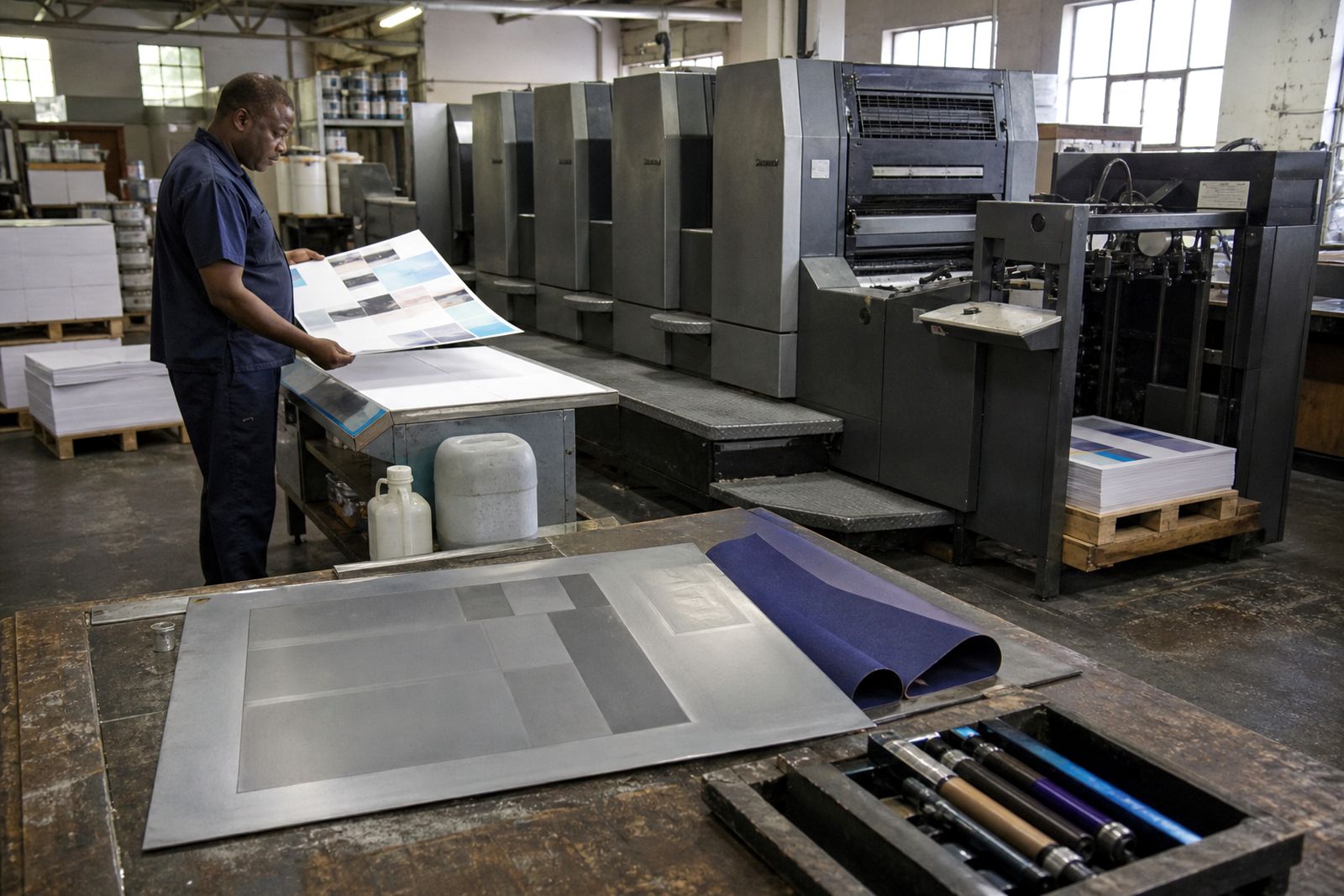
Corporate stationery run order
Send the job details through our contact form with stock weight, sheet size, and whether it is letterheads, compliment slips, or business cards. For corporate stationery, that lets us point you to the right unit leaf for thin stock and the makeready note for soft feeder head, especially where offset set-off and edge marking need checking early.
Corporate stationery usually mixes letterheads and cards that must look related while running very differently on press. Letterheads on lighter bond need gentle pickup, steady side lay control, and close watching on ink balance so logos stay clean without curl or marking. Cards bring a firmer sheet and tighter pile behaviour, so the run guide must note any stock change before the first pile goes on.
Start by writing down the exact stock for each item in the set, including gsm, grain, and whether the bond has a marked business side. Then set soft feeder head for the lightest sheet first and pull a signed sheet with registration, ink balance, and pile delivery noted. After that, record any packing adjustment, misting, or feed hesitation before moving from letterheads to cards.
Letterheads and compliment slips show problems quickly because the stock is light and the image area is usually sparse. Before anyone takes approval photos, check feathering around small type, watch for set-off in the delivery pile, and make sure the feeder heads are not bruising the edge. During power cuts windows, prioritise register, ink-water balance, and pile condition ahead of non-essential samples.
Press checks for bond stocks
This run depends on matching the unit path to the stock behaviour, not treating all office print as one job. The makeready note should state the feeder setup, any reduced pile height, and how the first approved sheet was judged under shop lighting. When you write in via our contact form, include the run name, town, and whether the issue is feeding, marking, or colour hold on the logo.
- Bond gsm, grain, and size recorded
- Soft feeder settings noted on first sheet
- Letterhead and card stock changes marked clearly
- Set-off, curl, and feed faults logged
- Follow-up note scheduled
Jobs handed between Cape Town, Durban, Johannesburg, Gqeberha, Bloemfontein, and Mbombela need a plain note on stock, approved sheet, and any feeder adjustment that was made. Corporate stationery is easily re-run later, but only if the first press team recorded how the light stock behaved on the machine.
Typical faults on stationery runs
The trouble usually starts when thin letterhead stock is treated like a heavier commercial sheet. Feed marks at the gripper edge, weak coverage in solids, and offsetting in the delivery pile show up fast on corporate stationery because the substrate is less forgiving. Keep special finishes out of the run unless the job card clearly adds another process and another check stage.
Dust, static, and a stock change between cards and letterheads are common causes of waste on this run. Pair the soft-feeder setup with the matching makeready sheet, then use the contact form with the city, stock weight, and whether the job includes single-colour or full-colour forms. Cape Town work often mentions Montague Gardens on the docket, especially where split deliveries are planned.
main route: Soft feeder head. Browse more under Units and Makeready.
What our Offset Printing customers say
Verified Google reviews
Also worth a look
Tell us what your press room is running
Send a note through our contact form with your press make and format, the stocks and run lengths you handle, the plates, chemistry or blankets you use and your town, and we will come back with practical advice and a quote.
Open the contact form