

Brochure press run
Four-colour brochure runs with perfecting and honest colour bars.
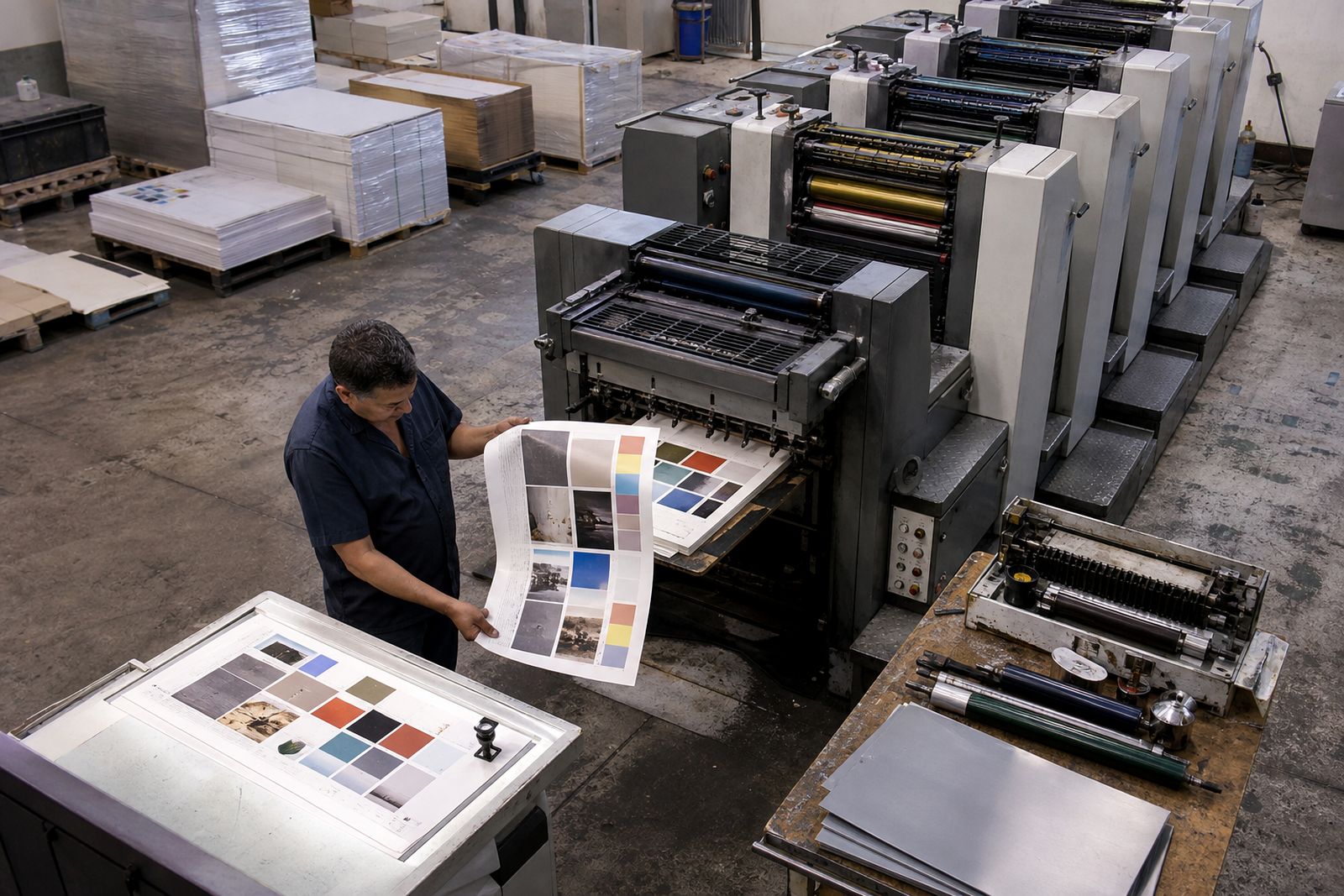
Perfecting order on four colours
Send the sheet size, page count, and stock grade through our contact form. Include whether the forme is work-and-turn or perfecting so the correct unit note and colour-bar layout can be matched to the job.
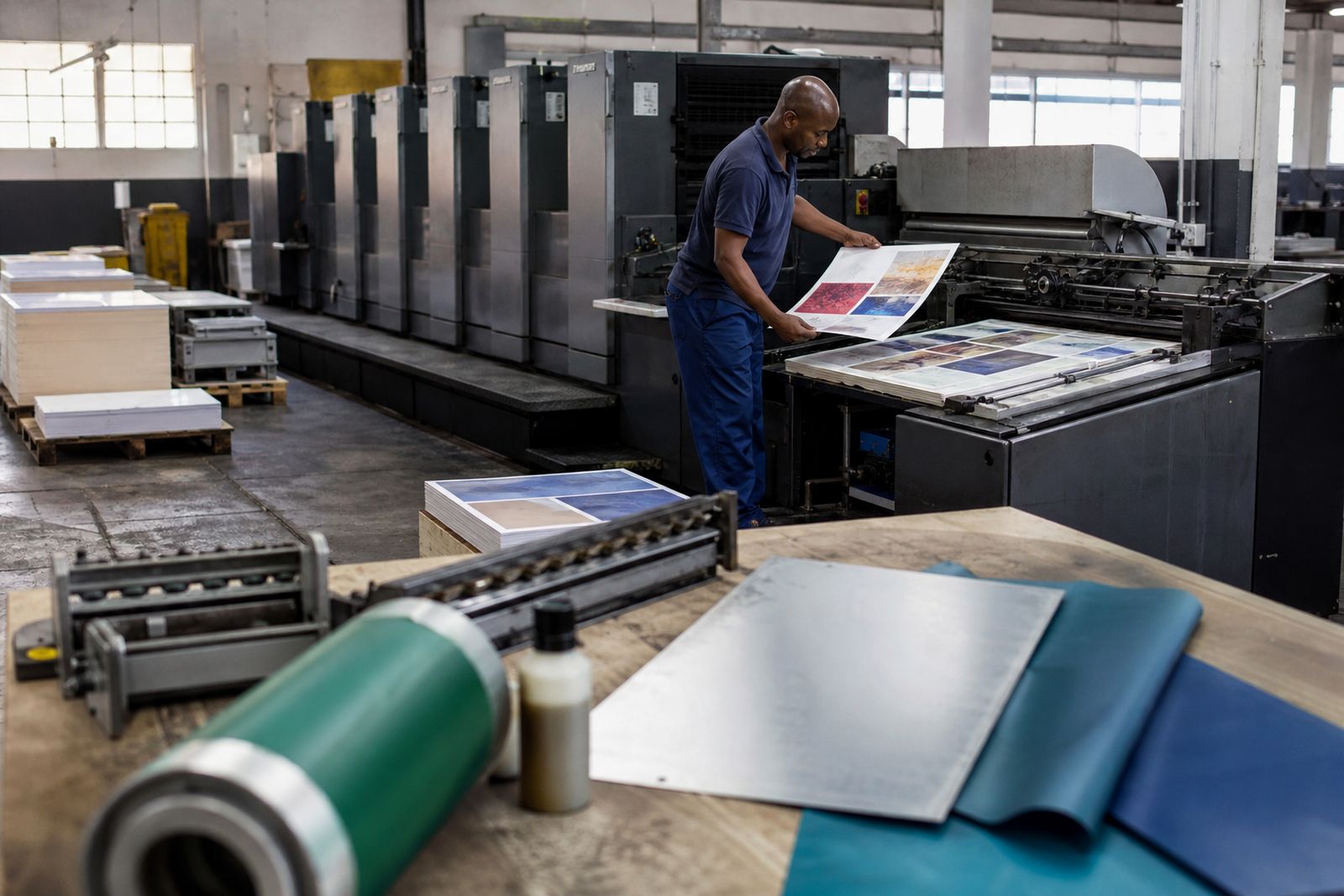
This run suits folded marketing pieces printed on a sheetfed four-colour press with turning for the reverse side. Start by fixing the imposition, gripper edge, and ink sequence, then set the colour bar where it stays clear of folds, trims, and page numbers. On longer forms, note where solids, flesh tones, and small type sit so the press crew watches the right areas first.
Begin with final flat size, folded size, and pagination on the docket. Next, confirm grain direction, plate positions, and whether the reverse side needs a tighter trap because of heavy images. Before the main pull, keep one signed pass sheet with density marks and register circles. At the end of shift, record any packing change, spray powder level, or drying issue for the next make-ready.
In South African print rooms, coated stock can react differently between a damp Cape Town morning and a hot inland afternoon. Watch for set-off after the first pile builds, especially on gloss art where heavy cyan and magenta sit back to back. If power cuts interrupt the shift, restart with a fresh water balance check before chasing colour to the previous pull sheet.
Press checks before folding
Each form needs a clear link between the chosen press unit and the make-ready note used on shift. Mark the approved side, the turning method, and the target look for skin tones, black text, and large tints. When sending the contact form, add the run name, city, stock, and whether first-pass sheets are available for comparison.
- Final size, fold style, page count
- Gripper edge and turn method marked
- Colour bar placed outside trim
- Drying risk noted for heavy coverage
- Follow-up note scheduled
Work sent through Montague Gardens, Jet Park, and Durban North often needs different handling once humidity and delivery timing are considered. A clear handover note should state stock, spray setting, approved sheet, and any side that still needs a tighter match before folding and stitching.
Common waste points on forms
Problems usually start when pagination changes after plates are made, or when the reverse side is judged before the sheet has stabilised. Another frequent loss comes from placing the bar and register marks where the fold or trim removes useful reading. Keep the form definition fixed, and move unusual finishes such as aqueous coating or spot work onto a separate plan where needed.
Waste on this kind of work often comes from poor back-up register, excess water, or rushing the pile before the ink has settled. Match the form to its make-ready note and unit sheet, then use the contact form with city, quantity, extent, and any bindery requirement such as saddle stitching or gate folds. The note can then follow the job through the Cape Town print room without guesswork.
Primary route: Four-unit sheetfed press unit. Browse more under units and makeready.
What our Offset Printing customers say
Verified Google reviews
Also worth a look
Tell us what your press room is running
Send a note through our contact form with your press make and format, the stocks and run lengths you handle, the plates, chemistry or blankets you use and your town, and we will come back with practical advice and a quote.
Open the contact form