

Annual report
Perfected report sections with dense type and calm solids.
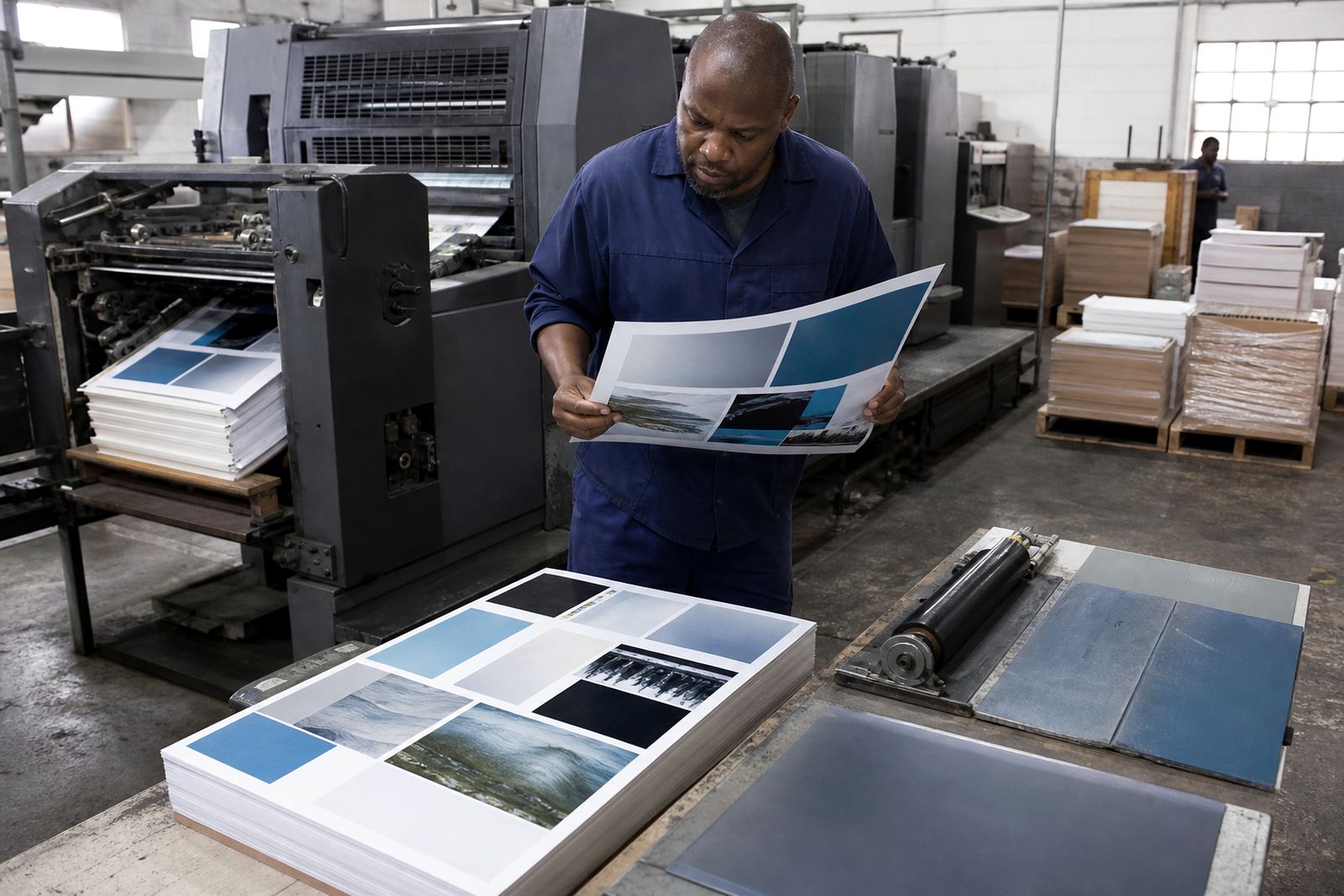
Perfecting order for annual reports
Send the paper weight, page extent and target ink balance through our contact form. For annual report work we match those details to the perfecting setup, then note any makeready watchpoints for fine text, tints and long black sections.
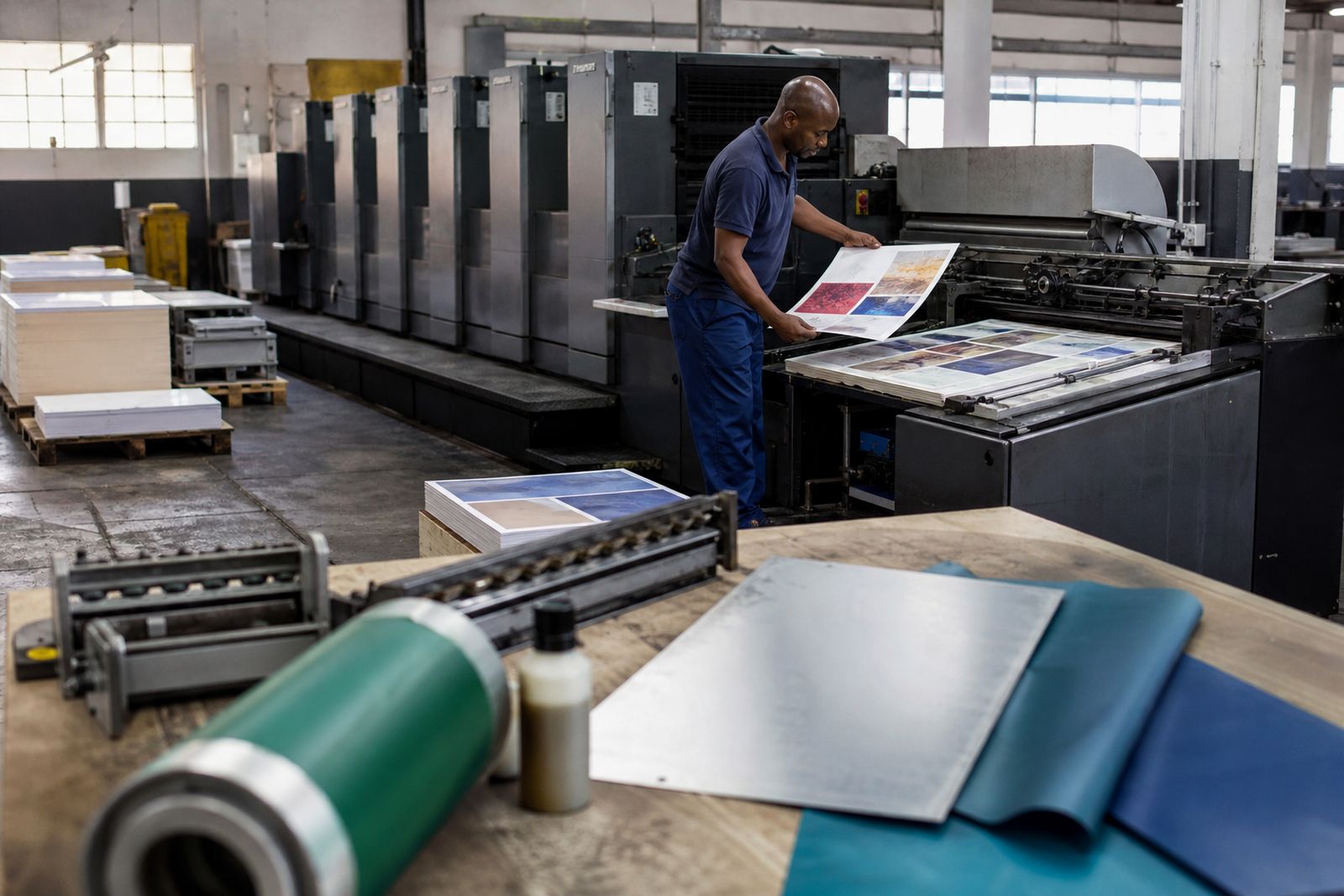
Annual reports usually carry long sections of financial tables, management commentary and full-page separators in one bound book. That mix suits a perfecting unit pair, where both sides can be controlled in sequence while register, show-through and solid density are watched together. For this run, the press crew gets the order of work first, then the checks that matter for text pages on coated or uncoated stocks common in South African corporate print.
Start by recording trim size, final pagination and whether the book will sew, stitch or perfect bind. Next, pull the text forms that carry fine rules, reverses and screened corporate colours, because those formes usually set the pace for makeready. Before the main run, sign off a folded sample for page position and crossover alignment. At the end of shift, keep one approved sheet from each major section with the docket.
In local plants, annual report trouble often starts when covers and inners are treated as one colour problem. The inner sections need steadier water and ink settings because heavy text pages show gain quickly, especially in winter air or after a power interruption. If power cuts breaks the day, restart with density and register checks before chasing pile height or pallet counts.
Makeready checks for text sections
For this kind of book, the handover note must mention stock, pagination blocks and any pages carrying signatures, portraits or large dark backgrounds. The perfecting unit pair does the main work, but the repeatable result comes from clear makeready notes on gripper edge, fan-out and acceptable variation across long runs. When you use our contact form, include the run name, plant location and which sections are most sensitive to set-off or rub.
- Pagination confirmed against imposition plan
- Text formes approved on both sides
- Register sheet kept with the docket
- Set-off risk noted before stacking
- Follow-up note scheduled
Jobs moving between Cape Town, Johannesburg, Durban, Gqeberha or Bloemfontein need a clean press note with the approved side marked clearly. Annual report sections can look acceptable under one viewing light, then show weak solids or a dirty reverse in the next plant. A signed pull sheet and a short note on dampening and powder use prevent that drift.
Common faults on report runs
The usual failures are not dramatic. They are creeping gain in financial tables, back-to-front register movement on light stocks, and solids that turn patchy after a restart. Another risk appears when late board changes force new folios or replacement forms without a full folded check. Keep the run limited to the annual report sections and log every revision against page numbers.
Waste on these books often comes from restarts, paper stretch across long sections, or powder levels that mark dense pages during delivery. Pair this run with the relevant makeready note and confirm whether the job includes bilingual sections, sustainability pages on different stock, or export copies for investor packs. Use the contact form with the city, sheet size and binding method so the press route fits the job.
Primary route: Perfecting unit pair. Browse more under Units and Makeready.
What our Offset Printing customers say
Verified Google reviews
Also worth a look
Tell us what your press room is running
Send a note through our contact form with your press make and format, the stocks and run lengths you handle, the plates, chemistry or blankets you use and your town, and we will come back with practical advice and a quote.
Open the contact form