

Export forms and pads
Multi-part form pads and export paperwork that still need offset feel.
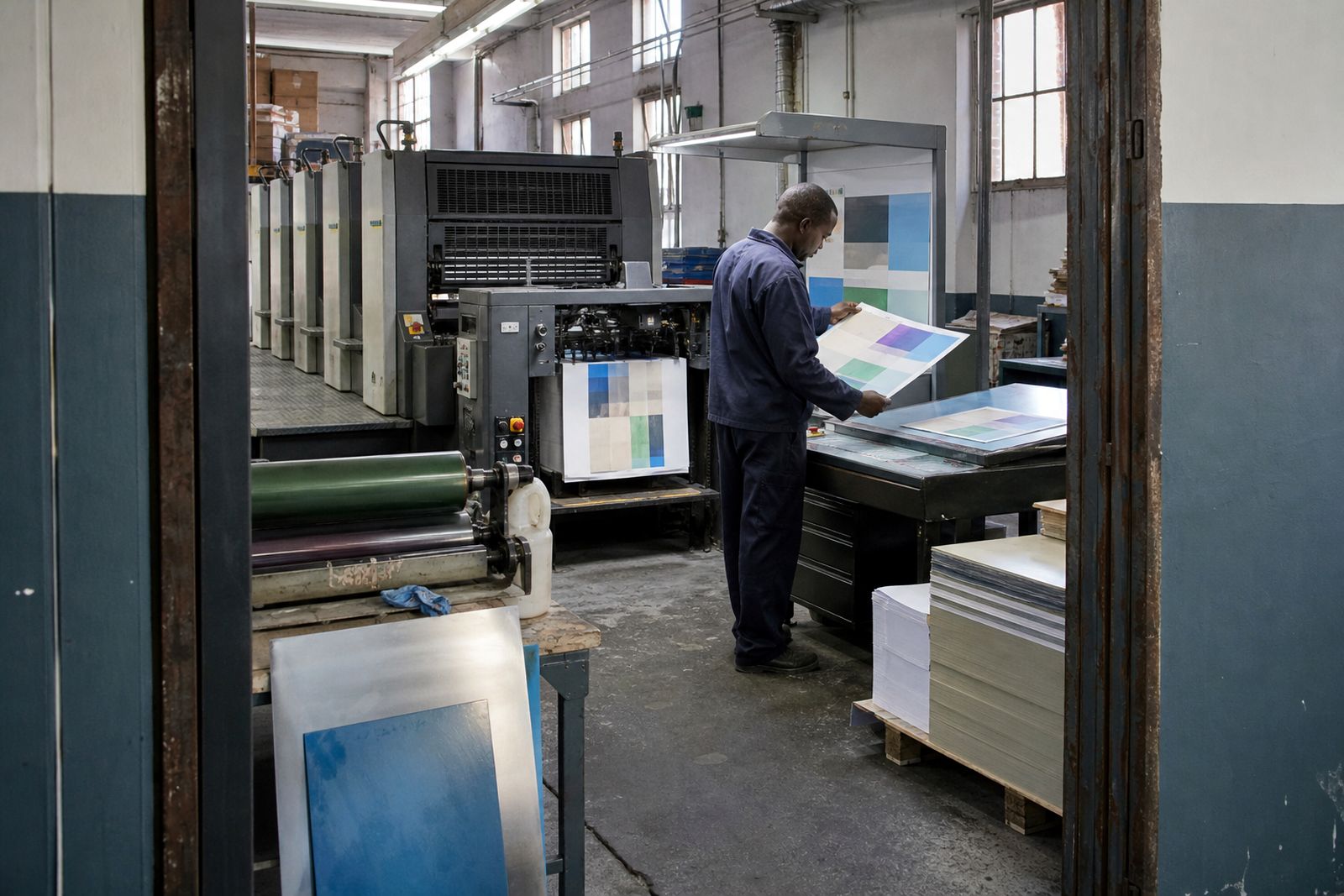
Set-up order for export pads
For export pads and multipart form work, send the sheet size, ply order, numbering position, and target ink strength through the contact form. That gives the press room a clear start for carbonless sets, writing stock, and the dampening system without guessing from a sample alone.
Export and form pads usually combine writing stock, carbonless sets and frequent pen use, so the run must protect image strength without marking through. Start with the dampening system when the job needs clean type, rule work and repeatable solids across duplicate or triplicate sets. Makeready should note grain direction, crash numbering position and how the pads will be glued or stitched after printing.
Begin by listing each part of the set, such as white, pink and yellow NCR, plus the sequence in the pad. Next confirm if the form carries SARS, customs, dispatch or warehouse fields, because tiny boxes and rules need tighter plate and blanket checks. Then set side lay and feeder for light stocks, pull an early sheet for register on every ply, and record numbering jumps before the full run starts.
Many South African print rooms see trouble on multipart work when humidity changes through the shift and the lighter sheets start curling at the edge. Keep an eye on fan-out, especially where duplicate lines, signature blocks and fine borders must land in the same place on every sheet in the pad. During power cuts planning, prioritise the forms with sequential numbering or fixed export references, because restarting those jobs needs stricter count control than plain writing pads.
Checks for NCR pad work
The press minder should inspect image transfer, drying and set-off with the pad finish in mind, not only the loose printed sheet. For export stationery, docket pads and goods-received forms, note whether the top sheet must write through cleanly to the last ply after gluing. When sending details through our contact form, add the run name, town, sheet count and whether numbering, perforating or padding is still to follow.
- NCR sequence marked on docket
- Numbering position checked against trim
- Fine rules held across all plies
- Glue edge left clear of text
- Follow-up note scheduled
Work moving between Cape Town, Durban, Johannesburg or Gqeberha needs a clear handover on stock shade, numbering range and pad count per box. Export forms often travel with other paperwork, so carton labels and bundle quantities should match the client filing method before dispatch.
Typical faults on multipart forms
This kind of job goes off track when artwork meant for laser forms is dropped onto offset pads without checking line weight, writing spaces and duplicate alignment. Problems also show up when the pad edge, perforation direction or numbering head is decided too late for the press layout. Keep the form version locked before plating, especially where export references, consignee details and declaration blocks must remain unchanged across the set.
Waste on form pads often comes from mis-register on light stocks, dirty numbering or ink set-off between stacked NCR sheets. Pair the run with the relevant makeready note and send the city, quantity and form construction through the contact form. Include whether the job is for dispatch books, invoice pads, cargo paperwork or other export documents so the unit notes fit the run.
Main unit: Continuous Dampening System. Browse more under units and makeready.
What our Offset Printing customers say
Verified Google reviews
Also worth a look
Tell us what your press room is running
Send a note through our contact form with your press make and format, the stocks and run lengths you handle, the plates, chemistry or blankets you use and your town, and we will come back with practical advice and a quote.
Open the contact form