

Coastal humidity run
Coastal mornings change blanket packing and plate clamp feel.
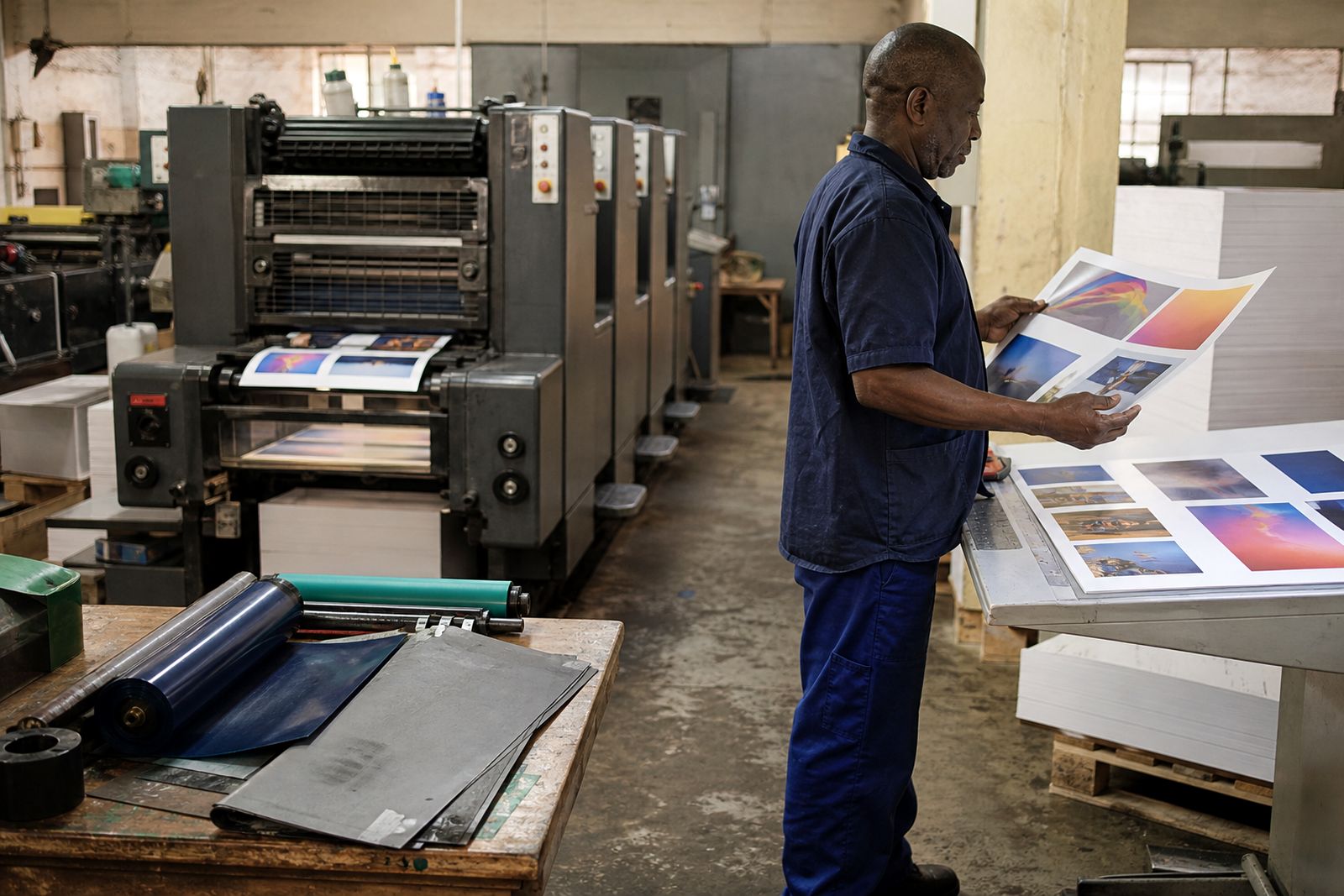
Morning moisture on press
Use the contact form with paper grade, GSM and the density drift you saw after first pull. For a coastal morning run, include whether the job started in Cape Town, Durban or Gqeberha, because dampening balance and blanket pack checks can shift before the room settles.
This run is for wet air at start-up, when paper edges lift slightly and the blanket feels different under impression. Begin at the blanket cylinder pack, then watch fan-out, trap and water carry on the first stable sheets.
Before ink-up, note the substrate, reel or sheet batch, and room condition if you have a hygrometer nearby. On first sheets, compare grip-edge stretch, solid ink lay and any slur through the tail. Later in the shift, recheck packing and side lay after the air warms and the stack loses surface moisture.
Coastal plants often see the biggest movement in the first hour after doors open. If power cuts have stopped air movement overnight, expect the first makeready sheets to differ from sheets pulled after power returns and extraction is running. Keep those two stages separate on the docket so the next shift does not chase the wrong setting.
Blanket pack checks at dawn
On this job type, the unit route matters because humid air can change squeeze faster than operators expect. The matching makeready note should record underlay used, bearer condition, water setting and whether the plate clamps felt tight or sticky at mount-up. When sending the contact form, add the run name, city and what the press minder has checked off so far.
- Paper batch, GSM and mill noted
- Blanket packing measured before first colour
- Dampening setting marked on the docket
- Second pull compared after room warms
- Follow-up note scheduled
Runs from Montague Gardens, Durban South and Gqeberha benefit from the same habit: record what changed between first pull and saleable sheet. Coastal air does not hit every stock the same way, so uncoated labels, board and gloss art all need their own note.
Typical faults in sea air
Trouble usually shows as unstable density, weak solids, tail-edge marking or a sheet that settles differently after the first pile stands. Another common miss is adjusting ink too early when the real change is water film on plate and blanket. Keep the run narrow to one press condition, then open a separate note if coating, board thickness or turnaround changes.
Waste on this route often starts with damp pallets, overnight paper movement or a quick stock swap midway through the shift. Pair this with its makeready note, then use the contact form to send city, substrate, number of units and whether the job is sheetfed commercial work or carton work. That gives the print room context without padding the message.
Primary route: blanket cylinder pack. Browse more under units and makeready.
What our Offset Printing customers say
Verified Google reviews
Also worth a look
Tell us what your press room is running
Send a note through our contact form with your press make and format, the stocks and run lengths you handle, the plates, chemistry or blankets you use and your town, and we will come back with practical advice and a quote.
Open the contact form