

Soft feeder head
Soft feeder head kit for thin papers that mark or double sheet easily.
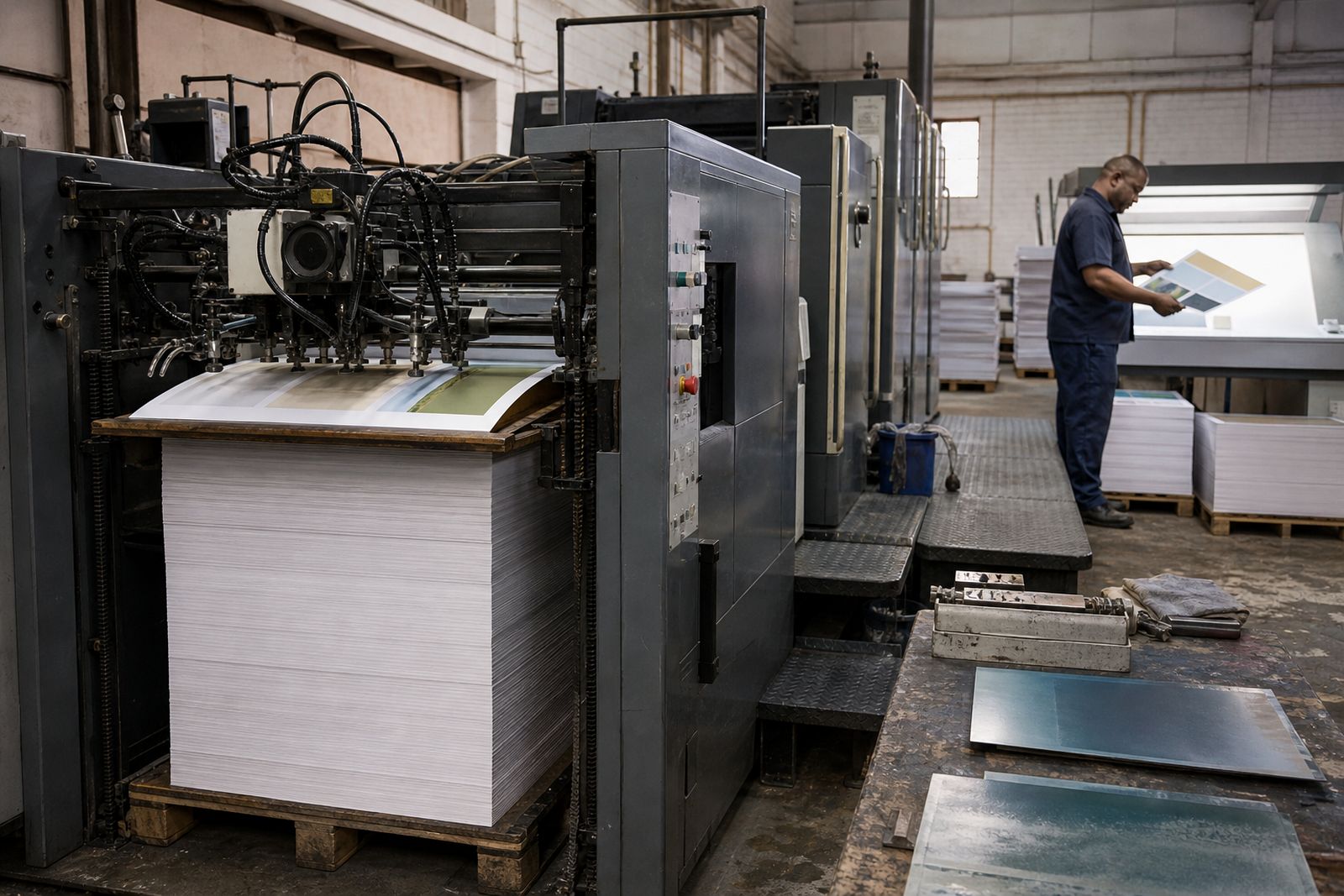
Soft suction for light sheets
Soft feeder head is fitted where 80 and 100 gsm sheets pick up too hard on a standard head. The softer sucker set reduces marking at the lead edge and helps prevent doubles on stationery stocks. In South African print rooms this is most useful on letterheads, continuation slips, and other uncoated work that bruises easily.
Set the head for gentle lift before chasing speed. Thin bond and smooth uncoated papers need lower suction, clean separators, and a steady air blast so the top sheet opens without dragging the one below. On perfecting work, watch gripper bite and side lay timing because light stock shows feeder faults quickly.
Before the run settles, pull sheets from the pile and inspect the lead edge for sucker rings, scuffing, or early dog-ears. A soft head should feed cleanly without polishing the surface or lifting two sheets together. If marks appear only after the pile drops, recheck pile height, blast direction, and sucker condition.
What the soft kit changes
This setup is for stock behaviour, not for chasing top speed. It gives a gentler pick on light papers, with feeder settings that suit office stationery and similar grades. Where another route makes more sense for the sheet range, see Runs.
Pair this unit with the correct note under Makeready before adjusting the whole feeder. Start with stock weight, sheet size, and whether the job is single-sided or perfecting, then trim suction and separation in small steps. If you use our contact form, include the paper gsm, press model, and whether doubling happens at the back or front of the pile.
- Lower suction on 80 to 100 gsm
- Check separator action on uncoated stationery
- Inspect lead edge for sucker marks
- See related Runs and Makeready notes
Pressroom conditions that affect feed
Highveld static can make light sheets cling, while coastal humidity can soften pile edges and change lift. Soft feeder head helps only when the air settings, pile preparation, and separators are also right. On power cuts restarts, jog the pile again and confirm the first lifts before opening speed.
Dust around Gauteng plants often shows up first as inconsistent separation on thin stock. In Cape Town and Durban, moisture pickup overnight can change how 100 gsm stationery opens under the suckers. Keep the feedboard clean, replace tired soft suckers, and check that blast holes are not partly blocked by paper lint.
Format band and stock range
| Format / band | Soft sucker set |
|---|---|
| Screen / role | n/a |
| Notes | Useful on 80,100 gsm stationery |
Format band follows the feeder size on the press, while the working use here is light paper that marks or double sheets easily. Screen or role is not applicable to this unit because the change is mechanical at the feeder head. For a sketch or stock check, use the contact form and name it clearly.
Related pages
What our Offset Printing customers say
Verified Google reviews
Tell us what your press room is running
Send a note through our contact form with your press make and format, the stocks and run lengths you handle, the plates, chemistry or blankets you use and your town, and we will come back with practical advice and a quote.
Open the contact form