

Pharma leaflets
High-page leaflets with plate clamp discipline and small type honesty.
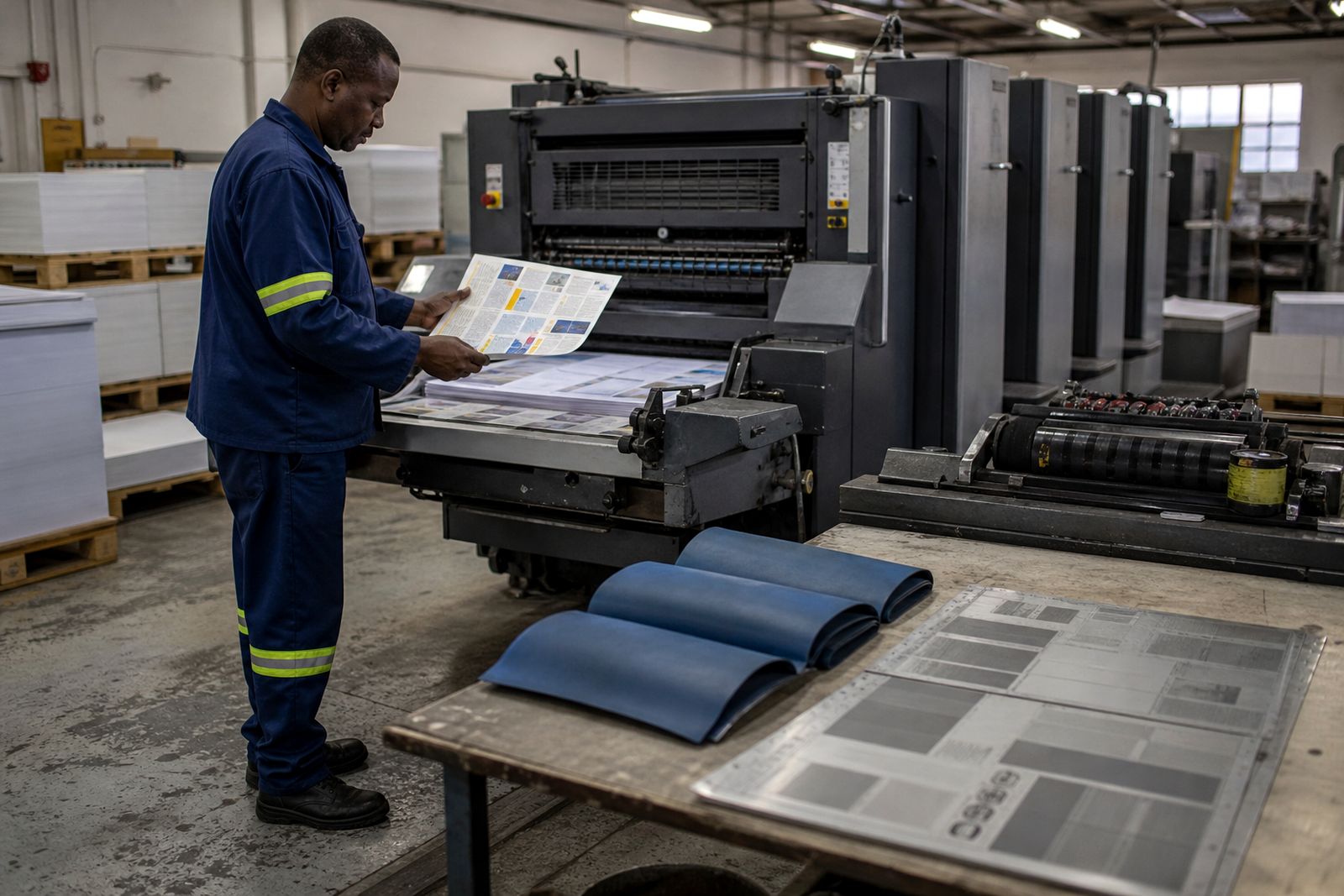
Fold planning for pharma leaflets
For pharma leaflets, send the text size, paper weight and target density through our contact form. Tiny dosage copy, repeat folds and multilingual panels need the unit leaf and makeready note matched to the exact stock, not guessed from a similar job.
Pharma leaflets live or die on imposition, fold order, and legibility after the final fold. These jobs usually sit on light woodfree stock with dense text, panel numbering, batch coding space, and multilingual copy that punishes drift. The focus is plate clamp rail because register at the plate edge shows up quickly when six, eight, or more folds must still open cleanly.
Start by fixing the finished size, panel count, fold style, and reading sequence before plates are hung. Next, verify grain direction, paper bulk, and whether the stock will hold parallel folds without cracking at the spine. On the first passed sheets, inspect hairlines, reversed type, and page crossover alignment under proper light. Before the balance of the run, compare folded samples from the operator side and gear side for creep, trim exposure, and barcode position if printed on the leaflet.
In South African print rooms, leaflet work often gets squeezed between cartons, labels, and general inserts, which is where tiny type starts to suffer. During power cuts planning, keep enough good sheets aside for fold trials after every stop-start so registration shifts are not hidden until finishing. Dust from dry winter conditions around Gauteng can mark light stocks quickly, so clean feed and delivery points matter more than the hero pull for photos.
Small type and fold checks
Plate clamp rail matters here because clamp-side movement can turn readable 5 pt copy into a fuzzy line once the leaflet is folded several times. The makeready note should record bearer pressure, dampening stability, and any side-lay correction used to keep panel backs true. When you send the contact form, list the leaflet format, language count, and whether the finishing house is folding on buckle plates or knife folds.
- Finished size and fold map confirmed
- Smallest type checked on folded sample
- Grain direction noted on docket
- Barcode or code panel kept clear
- Follow-up note scheduled
Jobs moving between Cape Town, Durban, Johannesburg, and Gqeberha need the same panel order, trim marks, and fold notation on every docket. A leaflet that reads correctly flat can still fail at the packing line if the folded face opens on the wrong warning panel.
Common faults on leaflet runs
Trouble usually starts with the wrong imposition for the fold sequence, not with ink alone. Another common miss is treating the sheet like a standard insert and forgetting that creep, bulk, and panel throw-off change once many folds stack up. Keep the job narrow to leaflet requirements, especially when pharmacy copy, dosage tables, and legal text all compete for space.
Waste on these runs often comes from weak register at the clamp edge, scuffing on thin uncoated stock, or folded pages that hide a warning line. Pair the run with the matching makeready note and use the contact form to send sheet size, fold count, and destination city. If the leaflet is for export packing, mention the language set and any code area that must stay untouched.
Main route: Plate clamp rail. Browse more under Units and Makeready.
What our Offset Printing customers say
Verified Google reviews
Also worth a look
Tell us what your press room is running
Send a note through our contact form with your press make and format, the stocks and run lengths you handle, the plates, chemistry or blankets you use and your town, and we will come back with practical advice and a quote.
Open the contact form