

Highveld dry run
Inland dry air changes dampening and static on thin sheets.
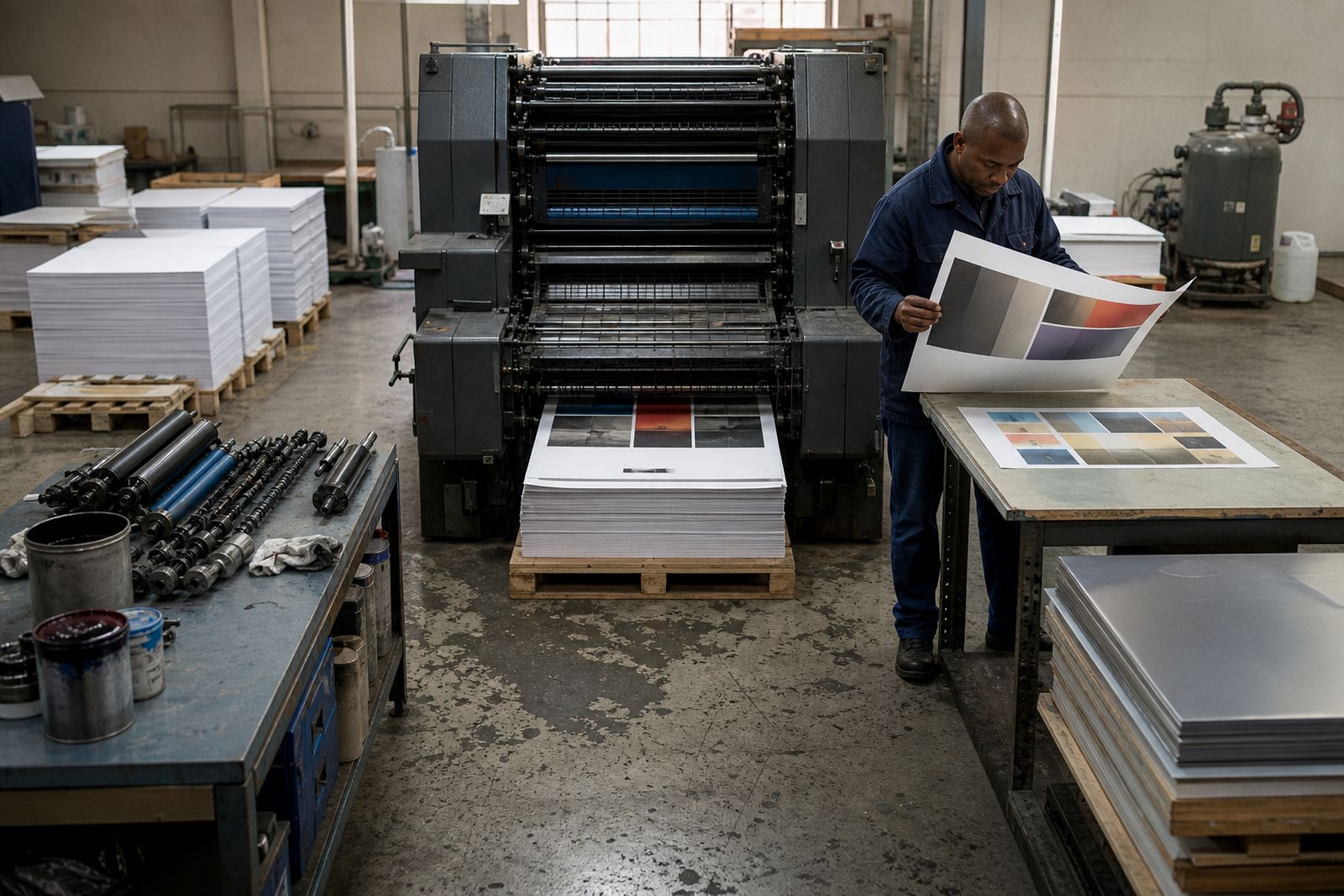
Inland dry-air press sequence
Use the contact form with sheet size, gsm and the first density reading from press. Include whether the job is running in Johannesburg, Pretoria or the Vaal, because Highveld winter air often needs a different dampening note on thin coated stock. We can then point you to the continuous dampening system leaf and the matching makeready note for dry inland conditions.
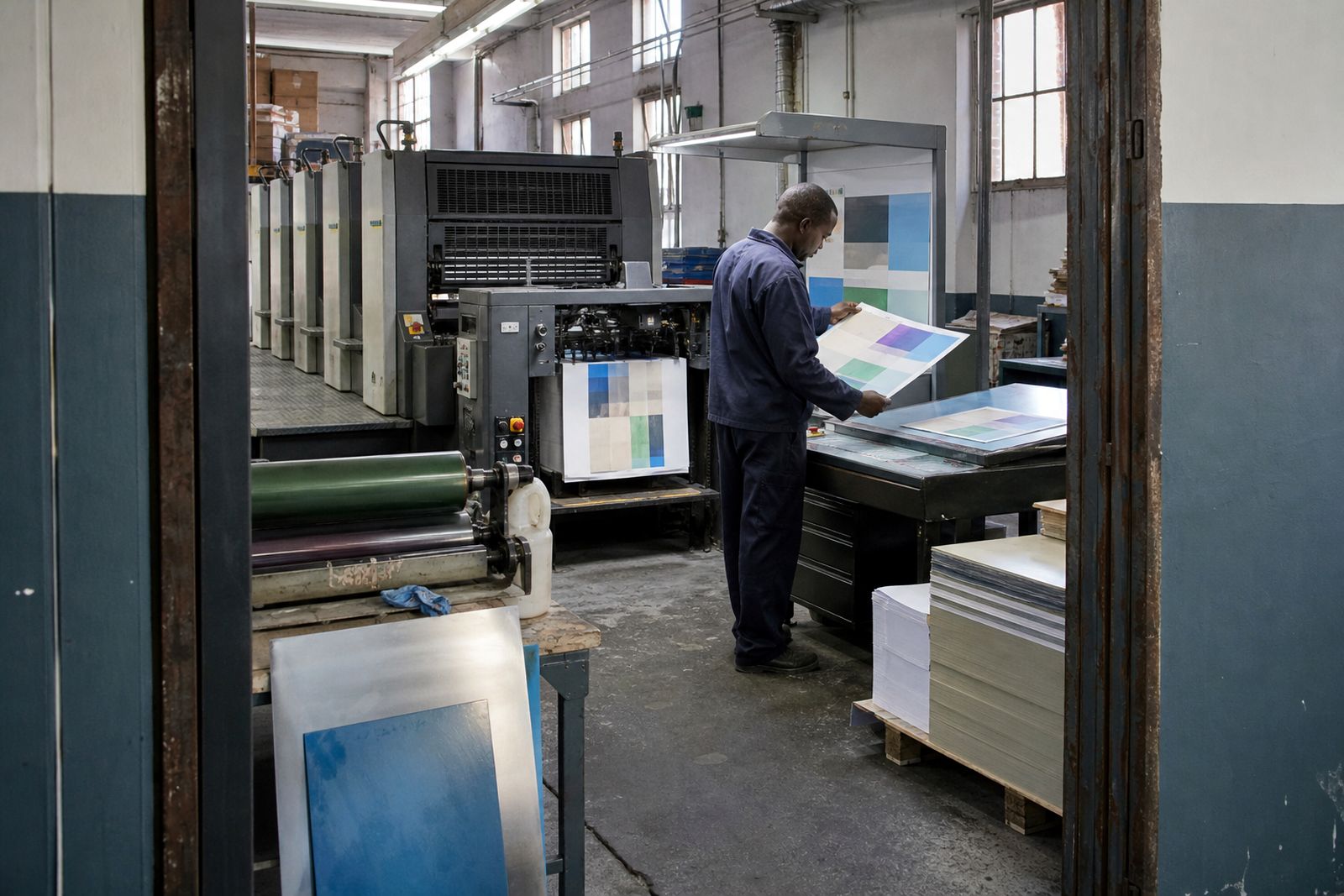
Highveld dry run is built for inland shifts where low humidity changes ink water balance fast. On 80 to 135 gsm sheets, watch static at the feeder, edge curl on standing piles and plate blinding if the fountain is pulled back too far. Start with the continuous dampening system guide, then note the water setting, conductivity and first stable density on the docket.
Before start-up, acclimatise paper in the press room and jog the lift to break any tight edges. At makeready, bring water up in small steps, because a dry morning often looks clean before tinting appears in reverses and fine screens. Mid-run, check sheet separation, powder lay and delivery pile behaviour, then note any change after lunch when the room warms up. At close-out, keep one approved sheet with the dampening reading written on it for the next repeat.
In South African inland plants, the first trouble on a dry day is often static rather than colour. Thin gloss stock can double-sheet at the feeder, while uncoated work may lose moisture and sit less flat through the grippers. If power cuts interrupt the run, recheck fountain balance and side lay before releasing sheets again, because the press may restart in a different room temperature window.
Checks for low-humidity makeready
This run should tie one dampening route to one clear press note. Write the job name, town and sheet grade when you send the contact form, then add whether static, piling or toning showed first on press. Those few facts matter more than a long message when the issue is specific to Highveld dryness.
- Paper acclimatised beside the press
- Fountain reading logged on first pass
- Static checks done at feeder and delivery
- Approved pull sheet marked with time
- Follow-up note scheduled
Jobs moving between Johannesburg, Pretoria, Bloemfontein and coastal plants should not carry one dampening setting unchanged. A run that holds in Durban humidity can behave very differently once the same stock stands overnight on the Highveld. Note the city on the docket so the next team knows why the water and powder choices were set that way.
Common failures on dry inland runs
This run usually goes off track when operators chase scumming by cutting water too hard. The image may look sharper for a short stretch, then plates heat up, solids turn uneven and fine text starts to fill. Another common miss is treating static as a feeder fault only, when the sheet itself has dried out too far for stable travel.
Waste on Highveld work often begins with light sheets, winter air and a pile that has stood open too long. Check the matching makeready note, then use the contact form to send city, stock weight and whether the problem showed at start-up or after the press settled. That helps separate a dampening issue from a handling or storage one.
Primary route: Continuous Dampening System. Browse more under Units and Makeready.
What our Offset Printing customers say
Verified Google reviews
Also worth a look
Tell us what your press room is running
Send a note through our contact form with your press make and format, the stocks and run lengths you handle, the plates, chemistry or blankets you use and your town, and we will come back with practical advice and a quote.
Open the contact form