

Continuous dampening system
Continuous dampening system kit for balanced water and ink on Highveld mornings.
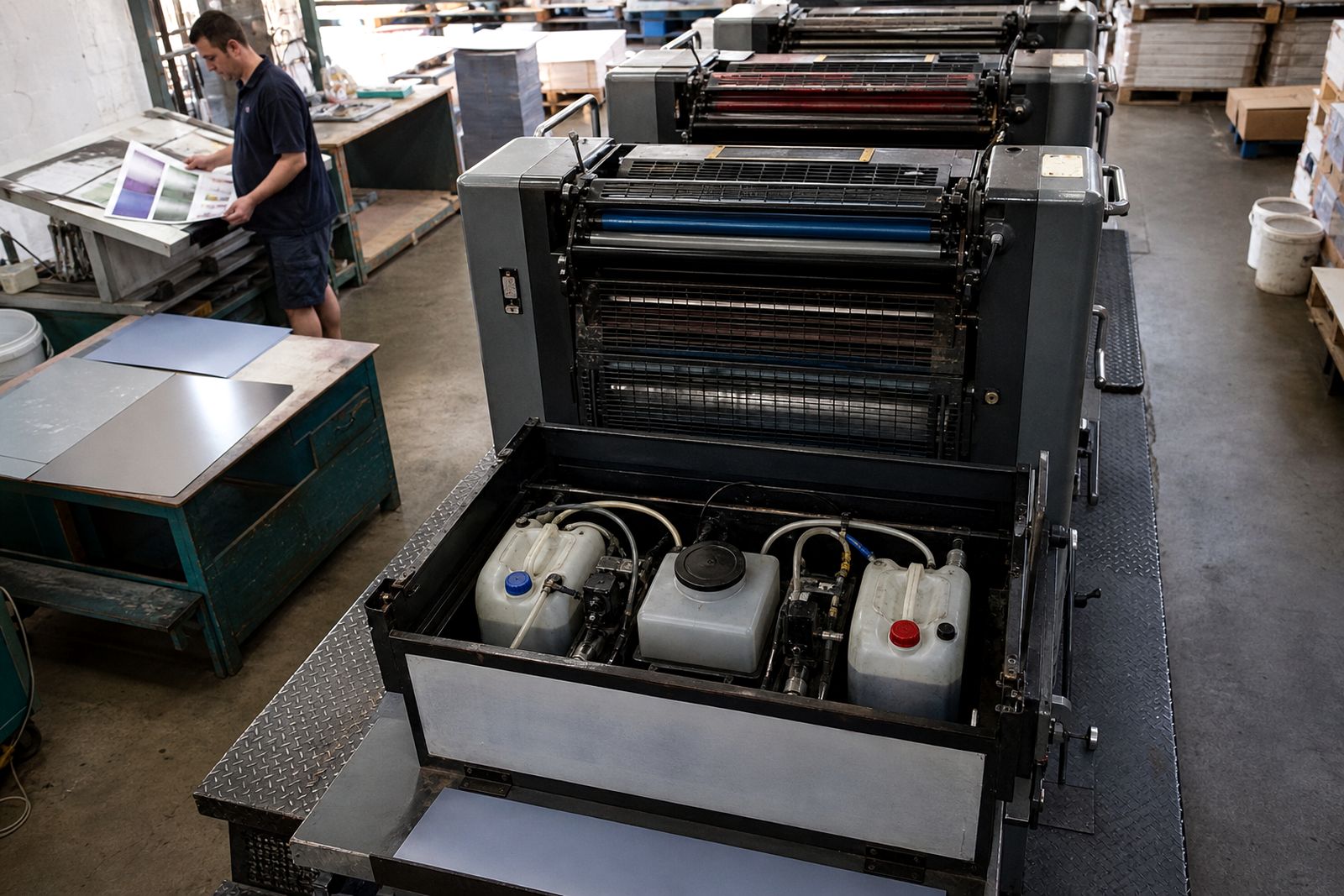
Dampening balance at start-up
Continuous Dampening System refers to the feed and control parts that keep a thin, even film on the plate through the run. On Highveld mornings, low humidity can pull water off fast, so the metering setting and roller condition matter before ink strength is touched. In coastal rooms, the same unit often needs a lighter correction because moisture in the air changes how quickly the film settles.
This kit is specified for commercial offset rooms running mixed work on one shift, from coated promos to uncoated NCR and house forms. Alcohol substitute guidance is included because fountain chemistry, conductivity and plate cleanliness need to agree if you want stable ink-water balance. Operators usually pin the setting card near the console, then note stock, plate brand and room conditions for repeat work.
Before the first sellable sheet is signed off, check pan level, filter condition and the stripe across the form rollers. A quick photo of the first good sheet still helps, but the real gain comes from recording fountain mix, pH reading and room temperature beside that image. Those notes make the next restart cleaner after lunch, power loss or a plate change.
What sits in the dampening pack
A typical pack covers the continuous feed arrangement, mixing notes for alcohol substitute, and a short fault list for toning, scumming and weak solids. The aim is not extra paperwork. It is one working setup that suits Gauteng dry air, Cape humidity and ordinary shift changes. Where another layout is more suitable for the press, see Runs.
Match the dampening setup to the stock and image area before changing three variables at once. On long forms, the paired note under Makeready helps the crew check roller stripe, feed rate and plate wetting in the same order every time. If you use our contact form, send the press model, fountain solution used, and whether the issue appears on all units or only one.
- Pan level marked before sheets enter
- Mix ratio noted with conductivity reading
- Roller stripe checked after wash-up
- Related: Runs and Makeready guidance
Cape coast and Highveld variables
Dry inland air, coastal moisture and dust around loading bays all change dampening behaviour during the day. A continuous system still needs ordinary checks on filters, hoses, pan contamination and roller glaze. Continuous Dampening System is written so the press crew can correct the water side first, instead of chasing colour with unnecessary key changes.
Cape Town rooms often watch condensation and storage temperature after cold stock comes onto press. Johannesburg plants usually see faster evaporation, so fountain settings that behaved at dawn may drift by mid-morning. If your room is working beyond basic setup, mention that in your email and we can direct you to Colour Bar Scanner or pressroom spares kit when the fault is measurement or wear rather than dampening supply.
Checks worth briefing to the crew
| Format / band | Continuous feed |
|---|---|
| Screen / role | n/a |
| Notes | Alcohol substitute notes included |
The sheet for this unit lists the points most crews check during make-ready: mix ratio, conductivity, pH, pan cleanliness and roller contact. Maintenance staff can use the same sheet when tracing repeat faults such as scum on non-image areas or over-emulsified ink. For a bay sketch or unit layout, use the contact form and say which dampening route you need.
Related pages
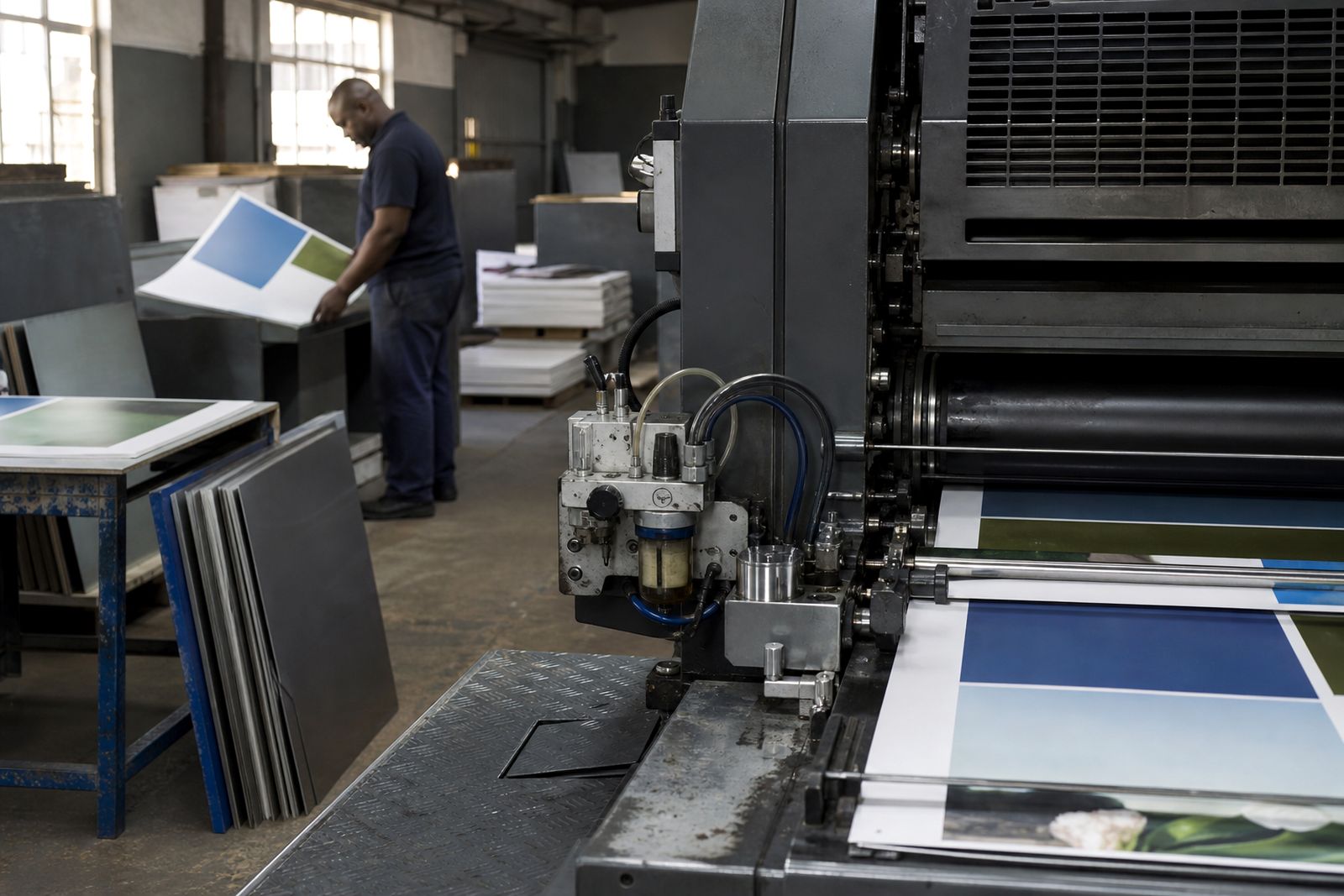
Continuous Dampening System process
Continuous dampening system kit for balanced water and ink on Highveld mornings.
Read more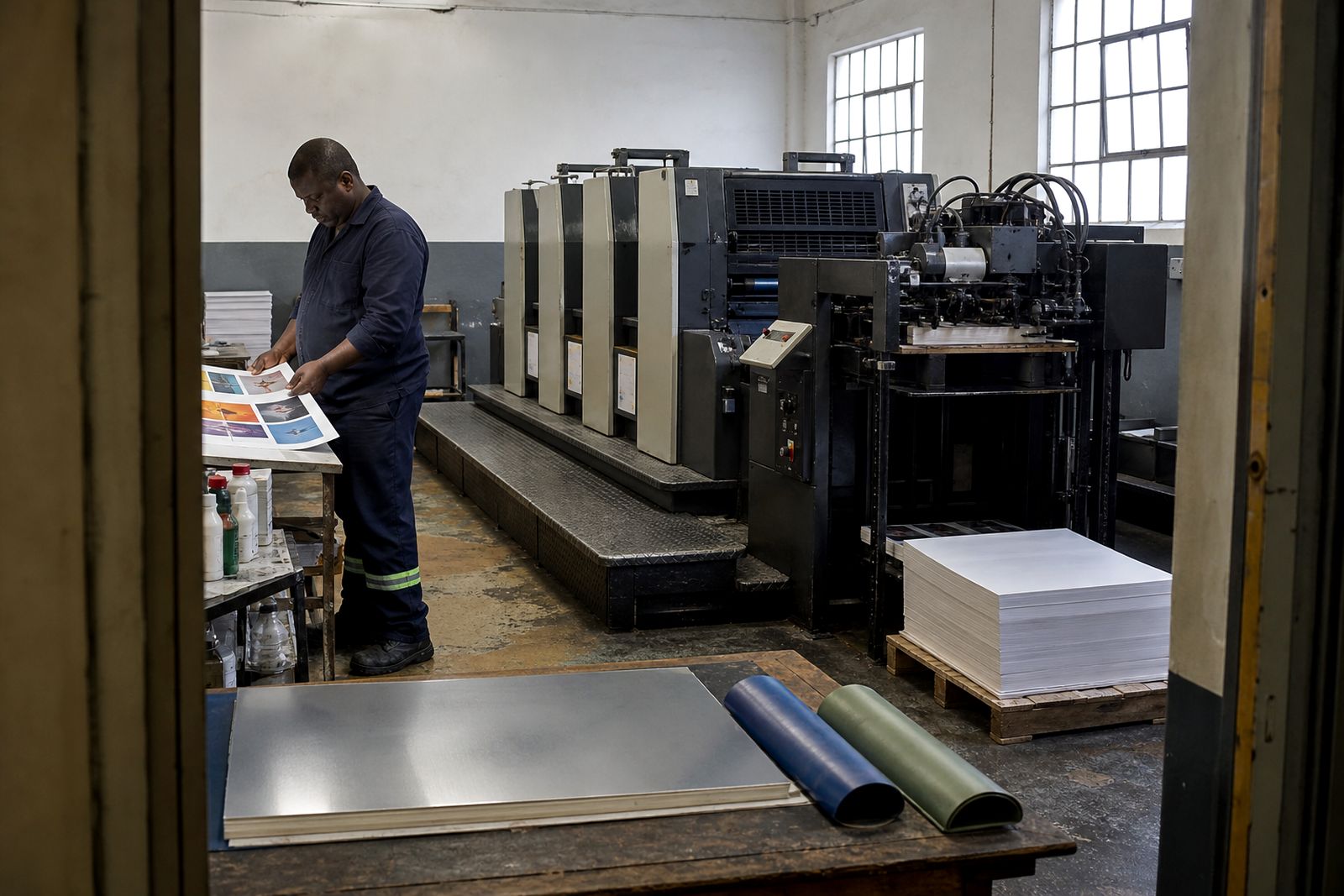
Continuous Dampening System service
Continuous dampening system kit for balanced water and ink on Highveld mornings.
Read more
Delivery stack guard
Delivery stack guard and jogger pads for clean stacks on long brochure runs.
Read moreWhat our Offset Printing customers say
Verified Google reviews
Tell us what your press room is running
Send a note through our contact form with your press make and format, the stocks and run lengths you handle, the plates, chemistry or blankets you use and your town, and we will come back with practical advice and a quote.
Open the contact form