

Wine and beverage labels
Sheetfed label runs on wet-strength stocks for Western Cape brands.
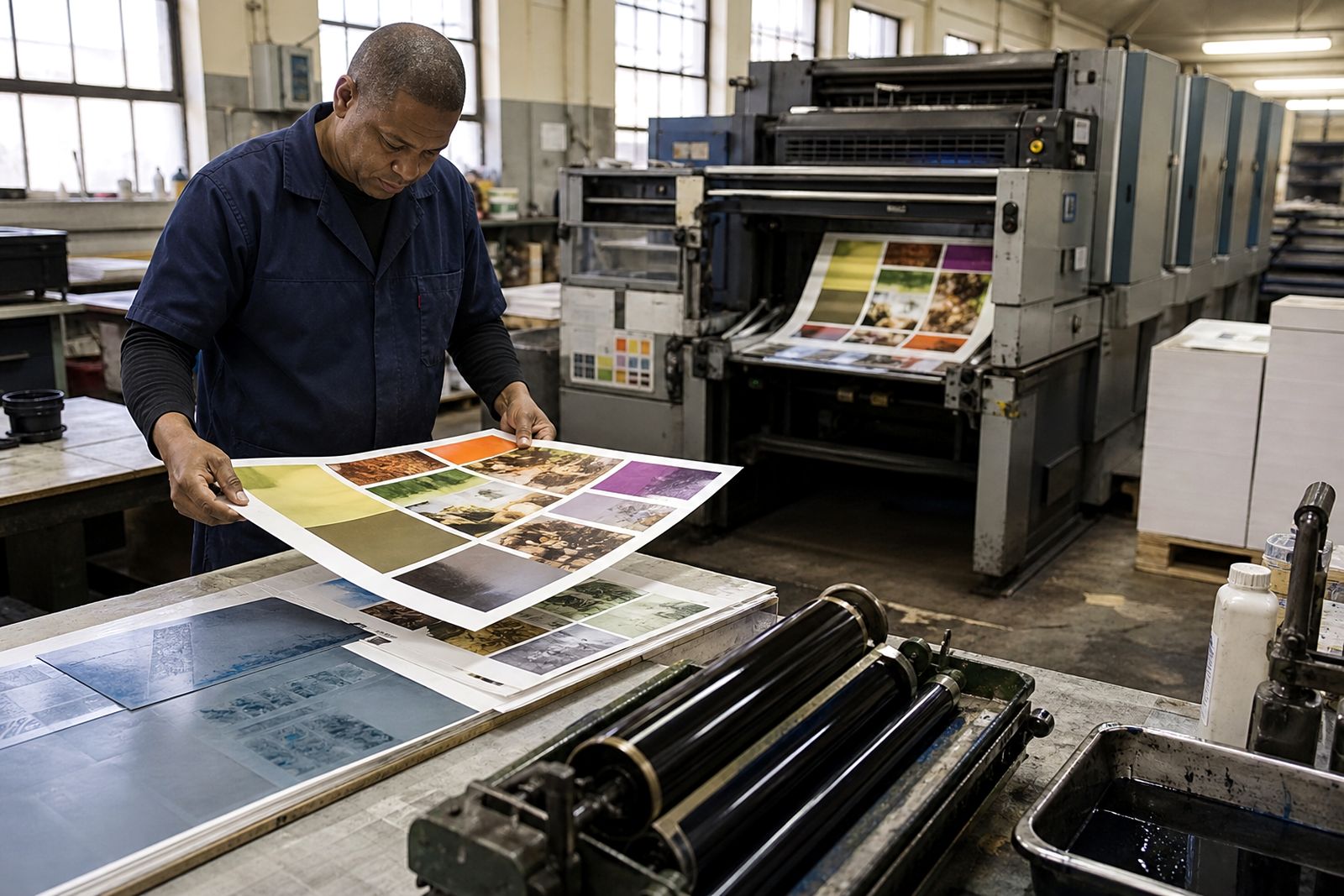
Wet-strength label press order
For wine and beverage labels, use our contact form and include the stock, adhesive type, bottle application, and target density. Wet-strength papers, metallised sheets, and returnable bottle work each need different press notes, so those details matter. We will point you to the unit leaf and a makeready note that fits bottle label production in South African print rooms.
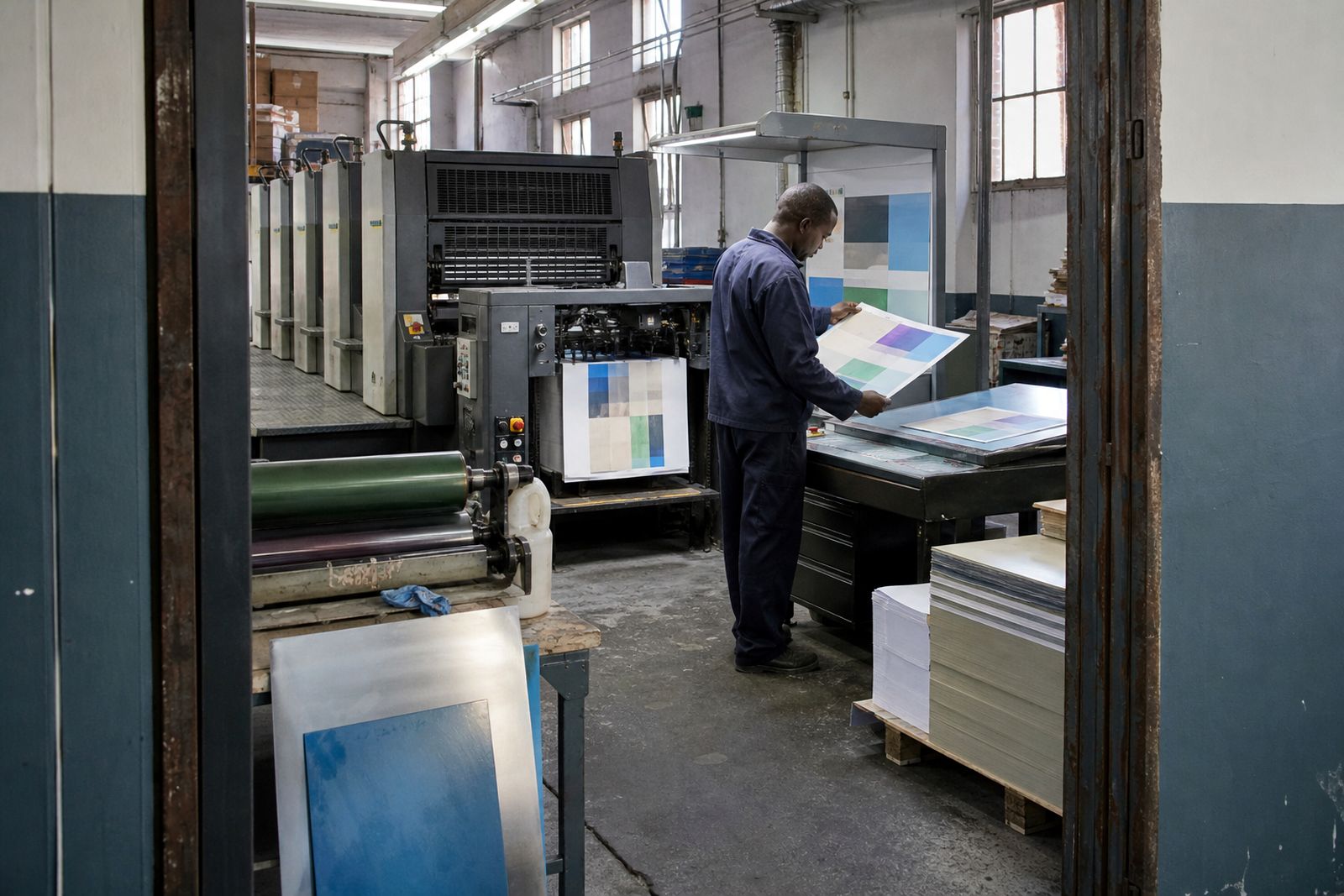
Wine and beverage labels on sheetfed presses usually start with wet-strength coated stocks that can handle ice buckets, bottle sweat, and cellar handling. On these runs the blanket cylinder pack is the main transfer point, with attention on sheet grip, stable dampening, and clean lay on narrow label formats. Cape wine work often includes tactile varnish, foil, or emboss steps, so the run sequence must note which pass carries decoration and which pass carries process colour.
Begin by recording bottle size, label dimensions, grain direction, and the exact stock ordered for the cellar or retail line. Next, set packing against the chosen label stock and pull the first acceptable sheet with solids, small serif text, and reverse-out areas under a loupe. Then check colour bar readings, trap, and dot gain before the decorative pass is added. End the setup by marking varnish position, die orientation, and any back-up tolerance needed for front and back labels.
Western Cape label work can change character quickly when humidity shifts between morning and late afternoon. A stock that feeds neatly at start-up may curl or lose register once the pressroom warms up, especially on smaller cut sizes. During power cuts windows, keep priority on register, solid ink holdout, and adhesive-side cleanliness rather than non-critical photo records. Export label jobs also need close reading of legal copy, vintage, and volume text before the run moves from approval into quantity production.
Bottle label checks on press
Each wine label run needs one clear press route and one note that explains how the operator set the job for that stock and finish. The transfer point sits on the blanket cylinder pack, while the makeready note captures packing, dampening balance, and any issues seen on fine text or metallic areas. When sending details through our contact form, add the run name, town, stock code, and whether the job includes neck labels, back labels, or both.
- Wet-strength stock code and grain direction
- First approved sheet kept with density marks
- Varnish, foil, and emboss passes listed
- Barcode, vintage, and volume text checked
- Follow-up note scheduled
Label work linked to Cape Town, Paarl, Stellenbosch, Franschhoek, and Worcester often moves between brand teams, print buyers, and bottling schedules. A proper handover note should state approved stock, final cutter size, and any register concern noted on the first pass, so the next print room does not guess from a visual sample alone.
Where label waste starts
Problems on wine and beverage labels usually begin with poor register on small formats, over-emulsified inks, or varnish planned without enough allowance for fine type. Waste also climbs when one run mixes multiple SKUs with late text changes for cultivar, ABV, or export compliance. Keep the job split by version where needed, and treat front labels, back labels, and neck labels as separate control points if the artwork differs.
Most spoilage on these runs comes from stock movement, dust on the sheet, or decorative finishing added without a matching press note. Pair the run with the correct makeready sheet and unit process leaf before the label stock is cut down. Use the contact form with the town, SKU count, stock name, and whether the job is for local shelves or export cartons.
Primary route: Blanket cylinder pack. Browse more under Units and Makeready.
What our Offset Printing customers say
Verified Google reviews
Also worth a look
Tell us what your press room is running
Send a note through our contact form with your press make and format, the stocks and run lengths you handle, the plates, chemistry or blankets you use and your town, and we will come back with practical advice and a quote.
Open the contact form