

Retail flyer drops
Weekly flyer runs that reward spare kits and feeder discipline.
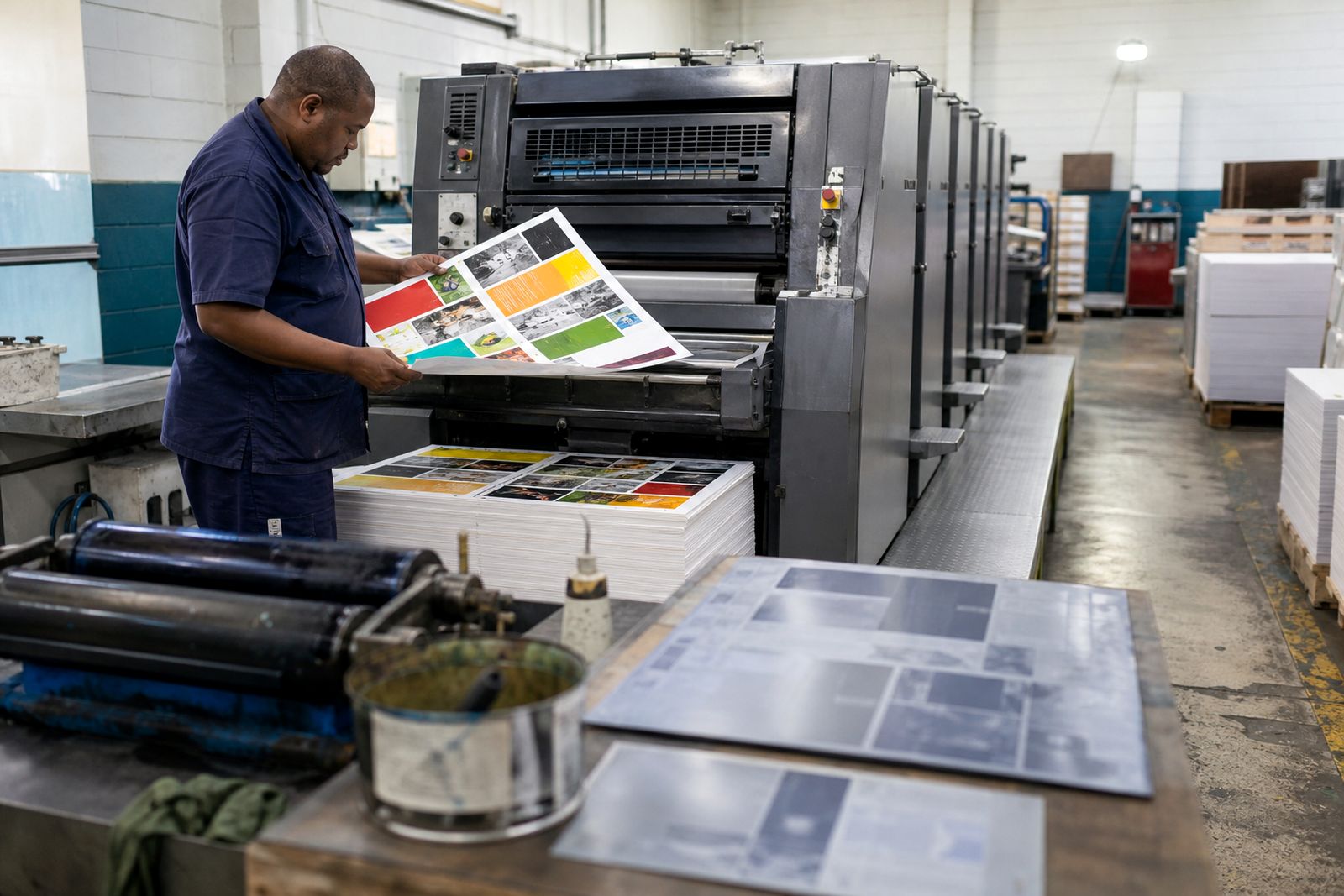
Retail flyer press order
Provide the page size, stock gsm, and expected ink coverage through our contact form. For retail flyer drops, it helps to note insert quantity, fold style if any, and whether the run must match last week's shelf-edge pricing. That makes it easier to point you to the relevant unit sheet and the right makeready note for high-volume flyer work.
Retail flyer drops usually mean long weekday volumes, tight version control, and aggressive paper consumption. The required press sequence keeps sheets feeding cleanly on lightweight coated stocks while price blocks, red specials, and dense solids stay stable. The main route is a pressroom spares kit because sucker wear, tape condition, and feeder settings matter more here than on shorter commercial runs.
Early in the week, lock the paper grade, size and page count for the drop, then note the press unit order on the docket. Midweek checks should compare the first approved sheet against later bundles, with special attention on red price bursts, reverse type and fold position. Before dispatch, review bundle labels, area splits and pallet counts so stores receive the right regional version.
Across many South African print rooms, flyer work gets rushed once promotional deadlines tighten. Retail flyer drops works best when feeder settings, ink keys and pile conditioning are checked before anyone takes approval photos. If power cuts the shift, prioritise register, density and folding tolerance inside the available power block, then leave marketing images for later.
Feeder checks for thin stock
Retail inserts punish loose feeder discipline because a light sheet will expose every worn sucker, skewed pile, and dusty separator. The press lead should keep the makeready note with the docket and mark any changes to blast air, pickup timing, and delivery slowdown. In your contact form message, include the run name, plant location, and the checks your crew has completed so far. A short, factual note is more useful than a long general summary.
- Paper gsm confirmed against booking
- Feeder suckers checked for grip
- Version count matched to plate set
- Barcodes scanned from press sheet
- Follow-up note scheduled
Retail groups sending work into Montague Gardens, Clearwater, Cresta, Pavilion, Tyger Valley, Baywest, Mimosa, and Riverside need handover notes that reflect the live job, not the original plan. A flyer drop may look identical across centres, yet one regional version can carry a different price panel, date block, or competition strip. Those changes must travel with the pallets and the press record.
Common spoilage on flyer runs
This run goes off track when weekly specials are treated like a simple repeat and no one checks the new version map against the old imposition. Trouble also starts when extra items are pushed onto the same docket, such as heavier inserts or an unplanned fold change for one region. Keep the flyer run isolated, with its own paper assumptions and its own press checks.
Most waste on retail flyer drops comes from feeder mis-pick, offsetting in dense colour areas, or a late price amendment after plates are made. Pair this run with the matching makeready note and log every stop that follows a version swap. Use the contact form with the city, page count, and whether the job includes multiple regional price lists. That gives the print room a clearer base for the next repeat cycle.
Primary route: Pressroom spares kit. Browse more under Units and Makeready.
What our Offset Printing customers say
Verified Google reviews
Also worth a look

Tell us what your press room is running
Send a note through our contact form with your press make and format, the stocks and run lengths you handle, the plates, chemistry or blankets you use and your town, and we will come back with practical advice and a quote.
Open the contact form