

Magazine signatures
Signature work for magazines with tight register and colour bars.
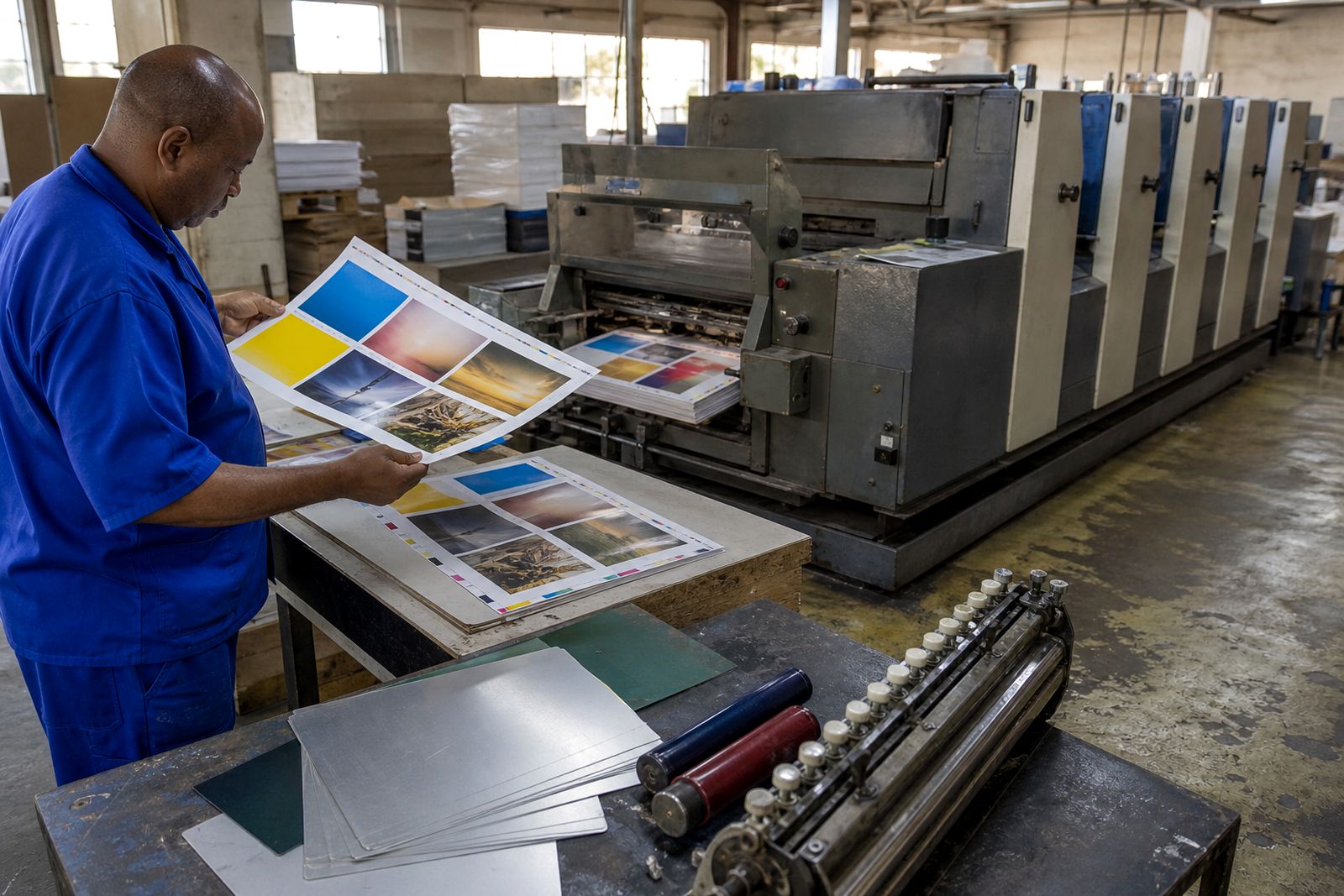
Magazine signature press order
Send page size, pagination and paper details through the contact form for the signature. Include whether the work is self cover or cover plus text so the right makeready note can be matched to the form and fold. If the job carries a colour bar, say which edge the scanner will read.
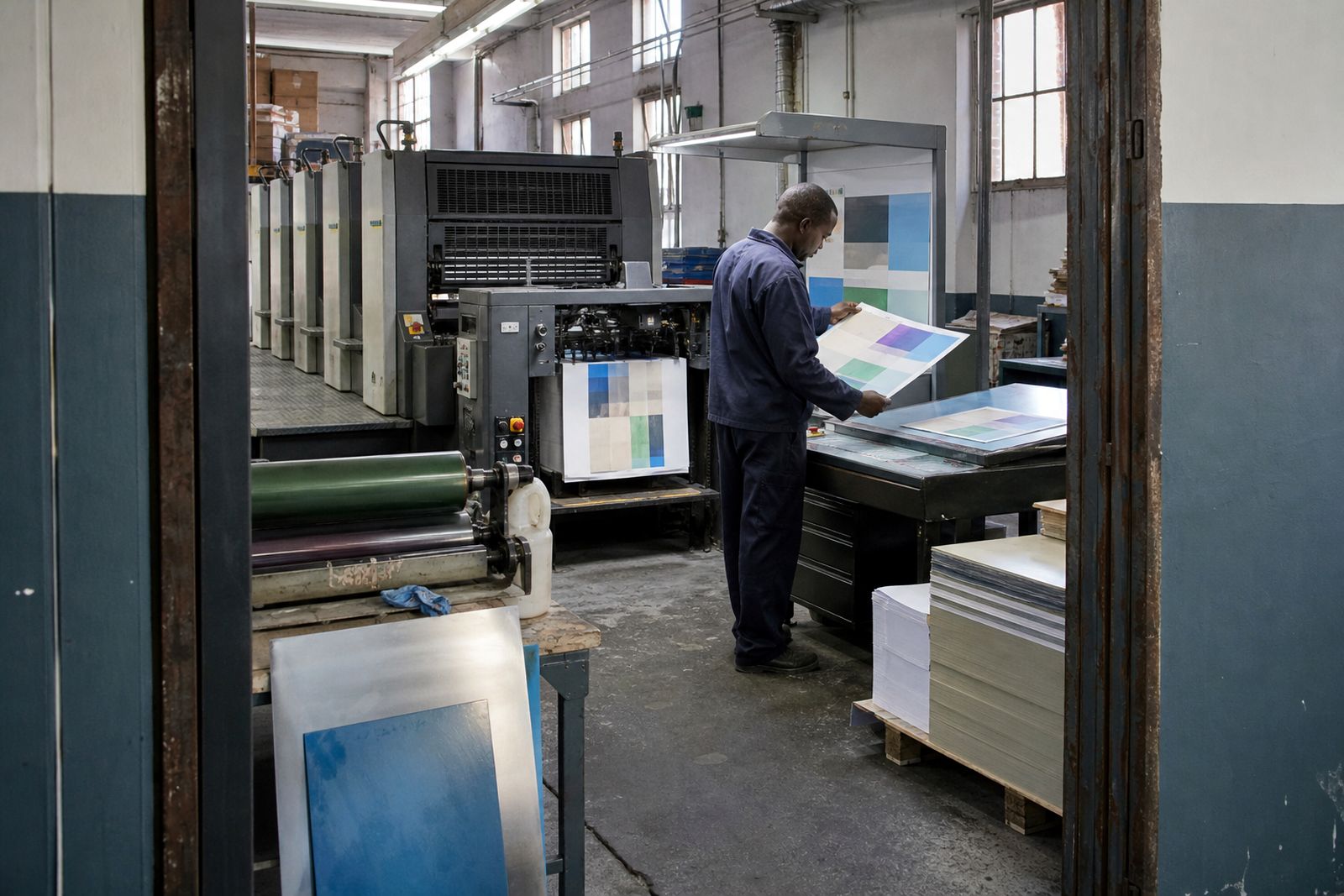
Magazine signatures are planned around page imposition, fold sequence and register across the spread. On this run the first control point is the scanner, because density drift shows up quickly on large solids and skin tones.
Start by confirming final trim, sections per form and grain direction of the stock. Next, pull the first passed sheet against the imposed proof and check cross folds, lap and head to foot register before the pile builds. During the run, watch fountain balance and bar readings after plate changes, then record any adjustment that affects backing up on the reverse side.
In South African print rooms, coated magazine stocks can shift with humidity between morning and night shift. That movement shows first in fold accuracy and page creep, not only in the colour. When power cuts interrupt the run, recheck side lay, gripper edge and scanner position before restarting, especially on 16 and 32 page forms.
Checks on folded forms
A magazine signature only works when the printed sheet, fold plan and bindery marks agree. The makeready note should state bar placement, pull sheet timing and the acceptable register window for text to image pages. If you send the contact form, add the run name, plant location and whether the job is saddle stitched or perfect bound.
- Trim size, section count, grain direction
- Colour bar edge confirmed for scanner
- First folded section checked to imposition
- Register notes added after plate stop
- Follow-up note scheduled
Plants in Montague Gardens, Durban, Gqeberha and Johannesburg often hand signatures between press and outside bindery. A written note on fold type, section numbering and any crossover spreads prevents the next team from guessing at the form. That matters most when the issue carries inserts, stitched samples or regional language splits.
Faults seen on magazine forms
Problems usually start when a form meant for magazine work is treated like a simple flat sheet job. Crossover pictures then break at the fold, page numbers creep, and backing up exposes weak side lay control. Keep the run limited to the signature spec, then move specials such as gatefolds or tipped inserts onto their own instruction.
Waste on signature work often comes from paper stretch, spray powder build-up or a late pagination change. Pair the run with the relevant makeready note and scanner setup so the bar is read consistently through the shift. Use the contact form with city, page count, fold style and whether the issue includes cover and text on separate stocks.
Primary route: Colour Bar Scanner. Browse more under Units and Makeready.
What our Offset Printing customers say
Verified Google reviews
Also worth a look
Tell us what your press room is running
Send a note through our contact form with your press make and format, the stocks and run lengths you handle, the plates, chemistry or blankets you use and your town, and we will come back with practical advice and a quote.
Open the contact form