

Four-unit sheetfed press
A four-unit sheetfed press handles everyday CMYK work with a single pass through the printing units on B2 or B3 stock.
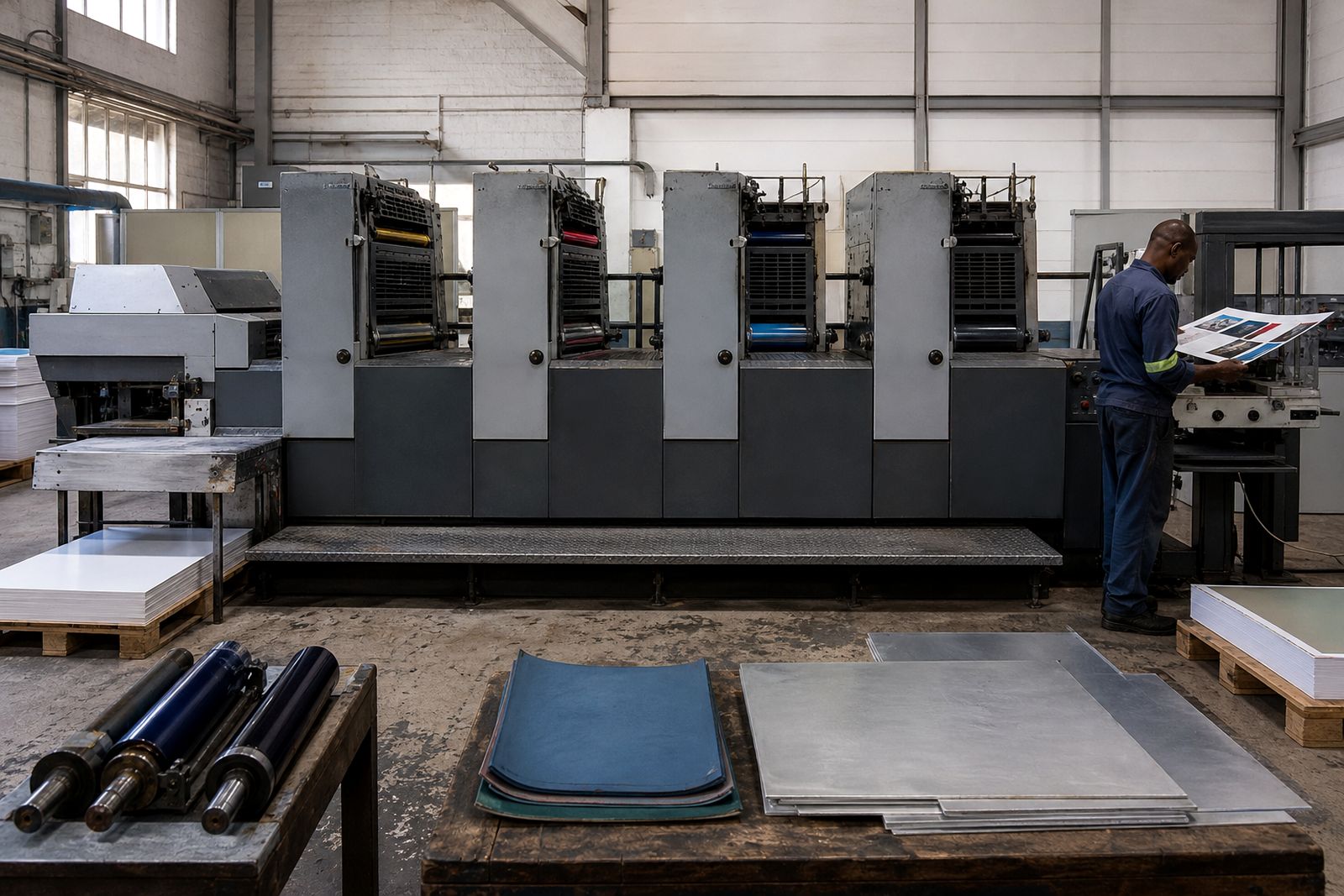
CMYK sequence on four towers
A sheetfed four unit is the standard CMYK layout for everyday commercial work on B2 and B3 presses in South African print rooms. One pass through four printing units lets cyan, magenta, yellow and black register on the same sheet, which suits flyers, inserts, covers and carton work where both image balance and throughput matter.
On gloss and matt coated stocks, crews usually target tighter water control and watch the last unit for set-off at delivery. Uncoated sheets need a softer approach on ink film and powder, especially when the job carries fine type, tints or a 175 to 200 lpi screen. Where an IR dryer is fitted on the fourth unit, it is normally used to help the pile stand cleaner on heavier coverage.
Before the run settles, pull a clean ok sheet and mark the unit order, ink densities and any feeder adjustment that stopped edge wander. That record helps when power cuts, blanket washes or stock changes break continuity during a live shift.
Press checks that matter
Look first at side lay consistency, gripper bite and trap from unit one through unit four. A four-colour run only holds if the sheet travels square and the image stays stable through transfer, turn and delivery. For related press layouts, see Runs.
Read the paired Makeready note before setting keys or packing, because short-run commercial work often rises or falls on the first thirty sheets. If you use our contact form, include stock weight, sheet size, screen ruling and whether the job is coated or uncoated. Mention any previous trouble on unit three or four if the tail edge has been scuffing or drying unevenly.
- Check unit-to-unit register on ok sheet
- Confirm powder level for delivery pile
- Watch water balance on long tints
- See also Runs and Makeready
Conditions in South African plants
Highveld rooms often fight dry air, static and quick paper movement at the feeder, while coastal sites spend more time watching moisture pickup and slower drying in the pile. Those conditions change how a four-unit sheetfed job behaves, even when plate curve and target density stay the same.
Cape Town winter humidity can soften sheet travel on lighter grades, and Gauteng dust means blanket and roller cleaning intervals cannot be guessed. During power interruptions, crews normally secure the pile, note the last acceptable sheet and restart with fresh register checks rather than trusting the previous setting. If the press line needs adjacent tools, refer to Colour Bar Scanner or pressroom spares kit after noting the exact unit issue.
B2 and B3 working notes
| Format / band | B2 / B3 common |
|---|---|
| Screen / role | 175,200 lpi |
| Notes | IR dryer optional on last unit |
Common B2 and B3 four-colour configurations are used for general commercial work. Typical reference points include 175 and 200 lpi screening, standard CMYK unit order, and optional IR drying on the last tower where heavy coverage or slower stock demands it. For a plant-specific note, use the contact form and name the press format.
Related pages
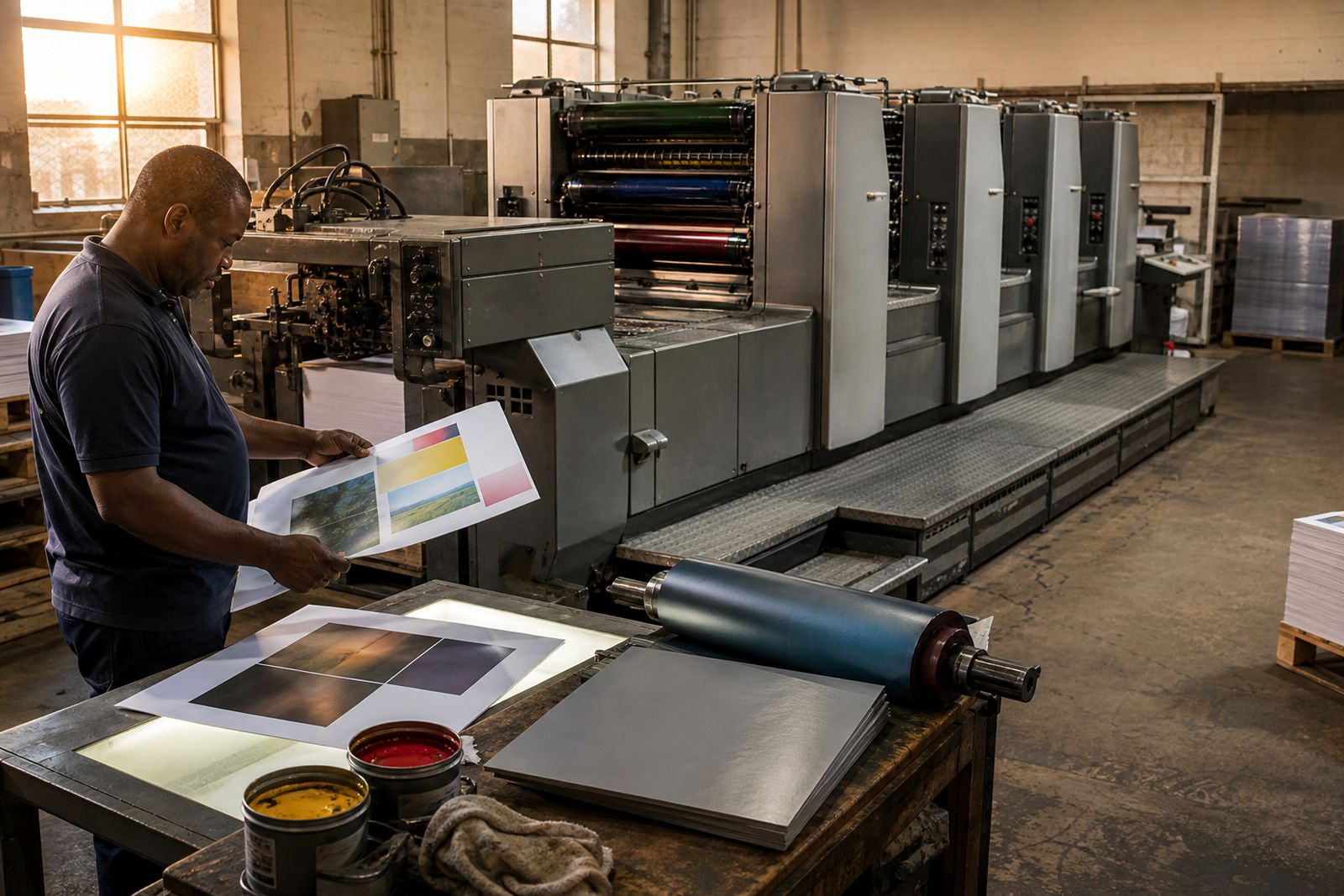
Sheetfed Four Unit process
Four-unit sheetfed setup notes covering common formats, screen use and optional IR drying on the last unit.
Read more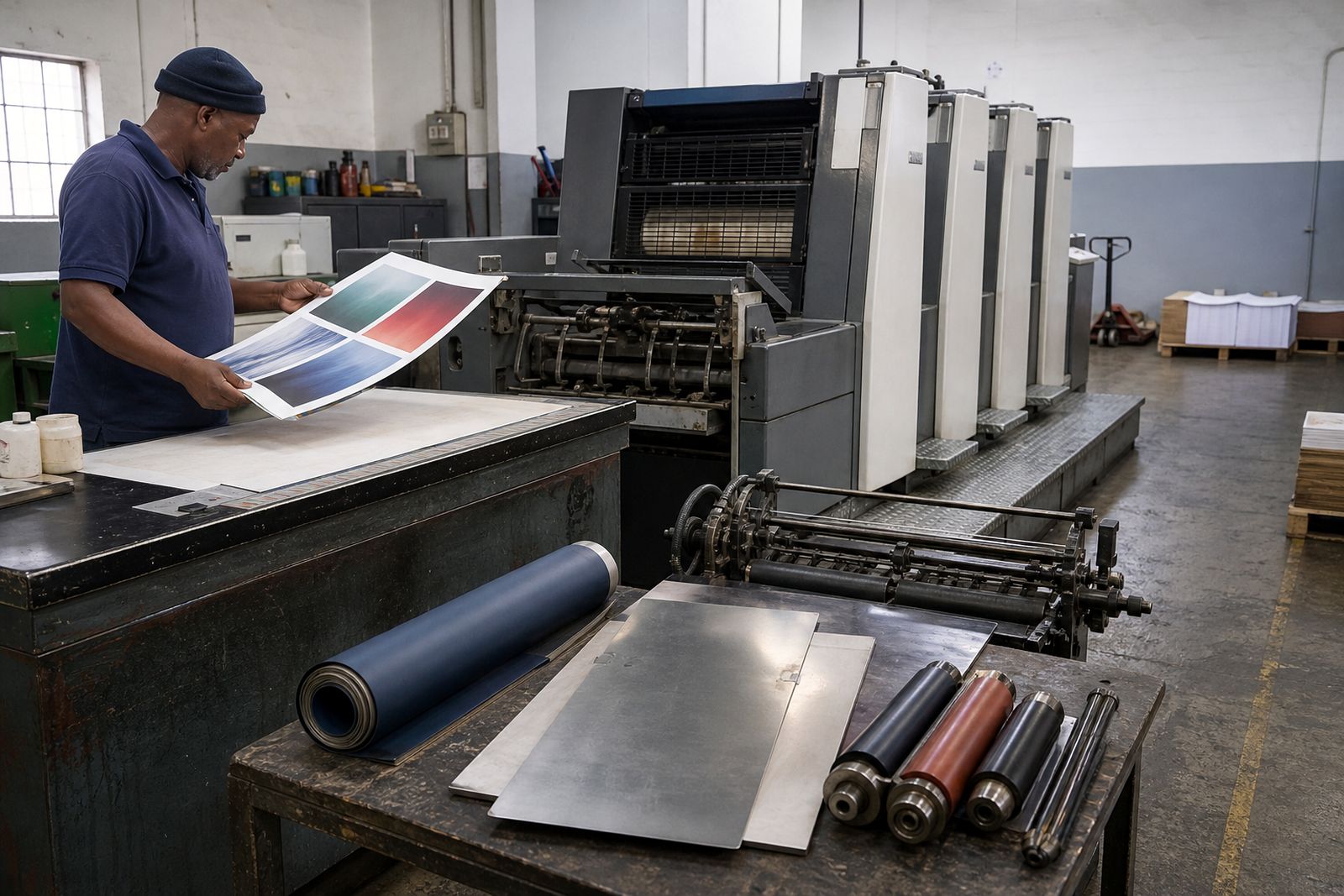
Sheetfed Four Unit service
Service guidance for four-unit sheetfed presses, covering blanket washing, packing care and feeder inspection during production.
Read more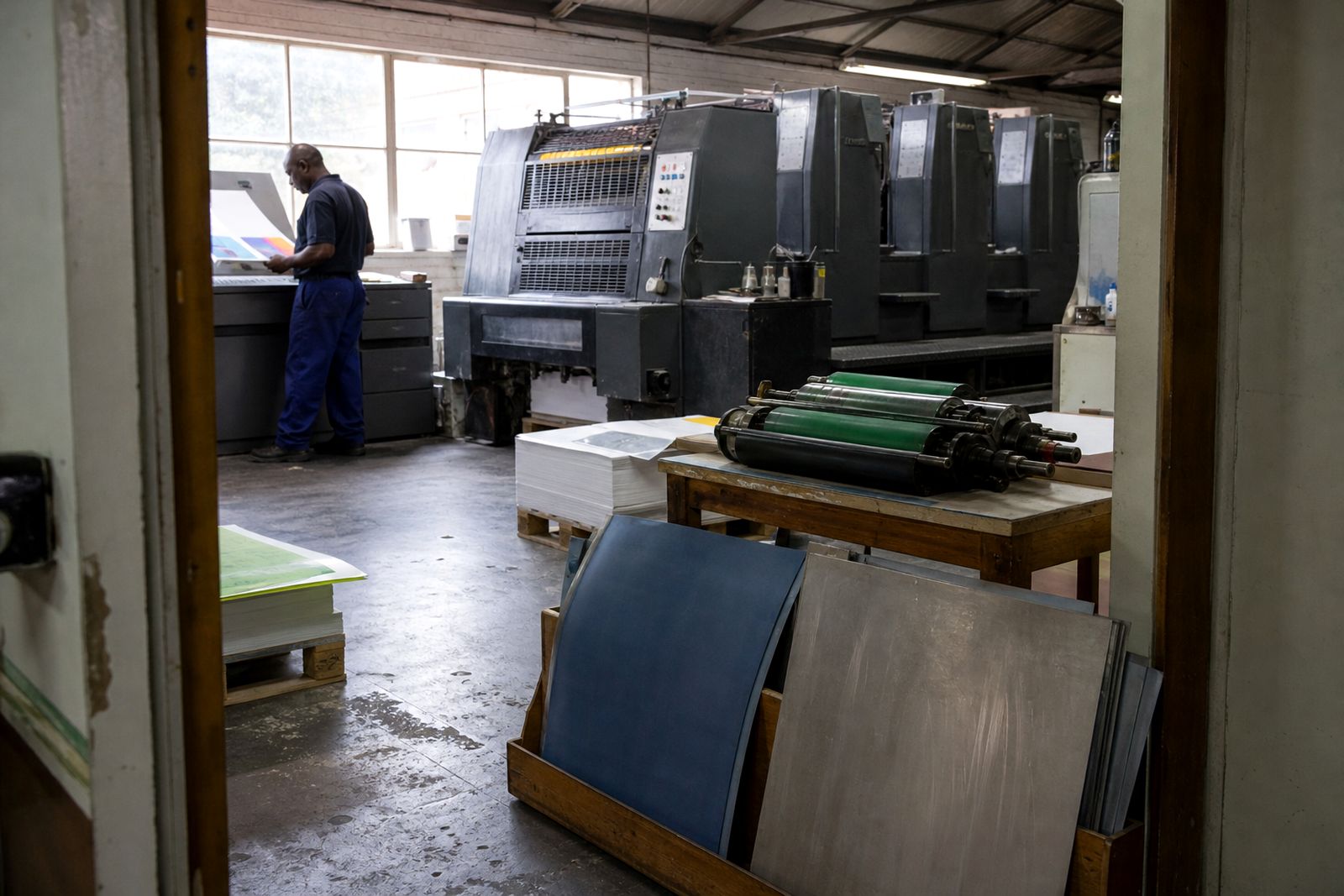
Blanket cylinder pack
Blanket cylinder pack with packing gauges for clean transfer on coated and uncoated.
Read moreWhat our Offset Printing customers say
Verified Google reviews
Tell us what your press room is running
Send a note through our contact form with your press make and format, the stocks and run lengths you handle, the plates, chemistry or blankets you use and your town, and we will come back with practical advice and a quote.
Open the contact form