

Sheetfed Four Unit service
Service notes explain blanket washing, packing care and feeder inspection for steady four-unit sheetfed work.
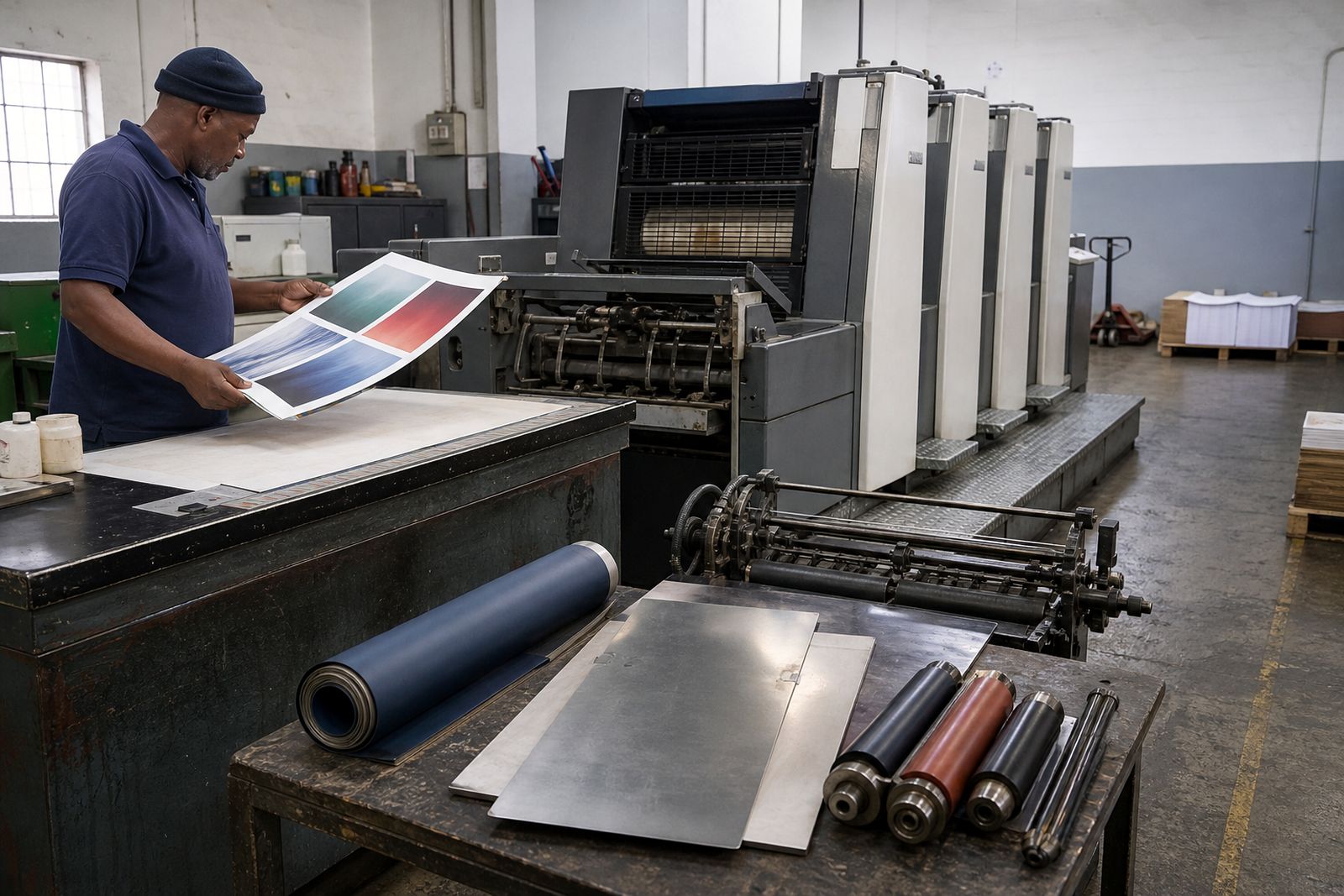
Four unit cylinder checks
Blanket wash frequency should match the ink load and stock dust coming through the press, especially on B3 work with frequent stop starts. Keep packing gauges dry and flat, and inspect feeder suckers closely when lightweight bond or NCR sheets are running. For quarterly replacement items, pair it with Pressroom spares kit.
- Check transfer jackets and delivery grippers weekly
- Monthly packing gauge check
- Quarterly spare kit review
For a service booking, use the contact form and note the press model, unit count, and fault location. Photos of a glazed blanket edge, worn sucker, or loose gripper pad help separate feeder trouble from transfer faults. Visits are arranged around the plant's weekday power windows where wash-up and restart are affected.
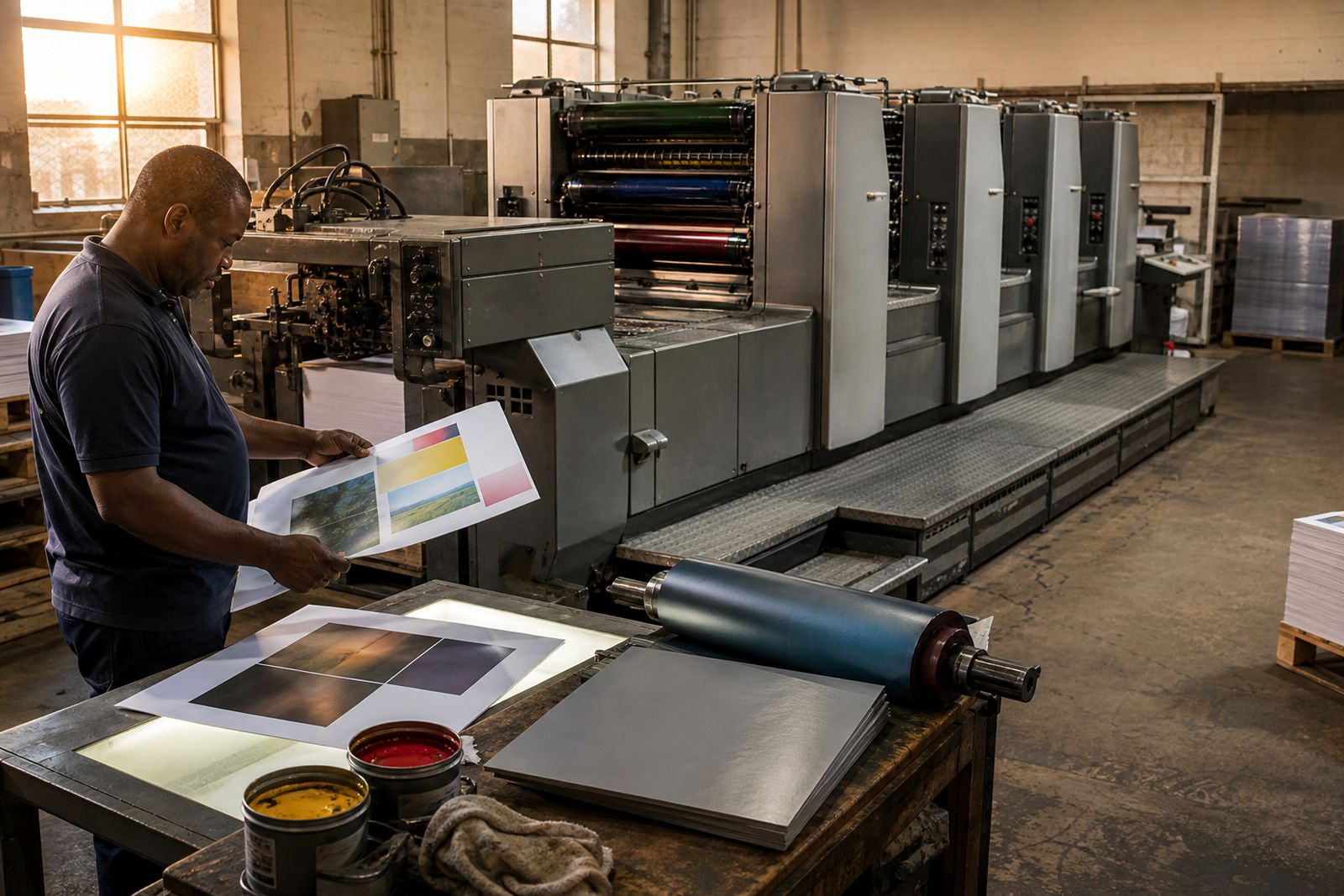
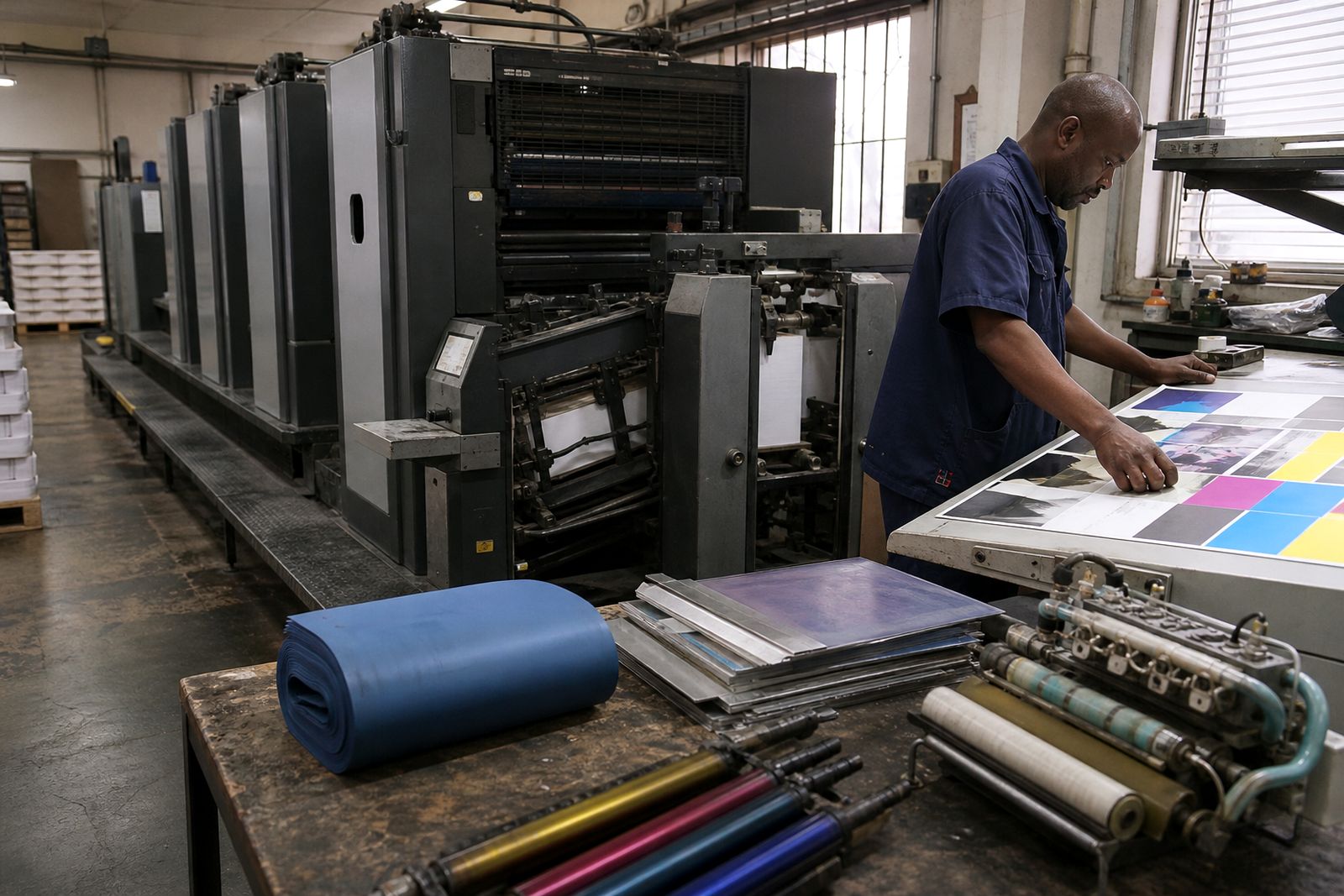
Sheetfed four-unit press on shift
Most four unit trouble on South African shifts comes from small drift across the press, not one dramatic failure. Packing settles, dampening balance moves with the morning air, and a delivery issue on unit four can be mistaken for ink trouble upstream. The sheetfed four unit service is written for commercial bays in Montague Gardens, Isando, and coastal plants managing humidity, dust, and power cuts on live jobs.
Start with the substrate, sheet size, and whether the job is a fast repeat item or a once off campaign run. B2 and B3 work place different demands on feeder timing, side lay stability, and delivery braking, especially when stock changes during the shift. For 175 and 200 lpi work, service notes need to sit close to practical press settings, not buried in a long general manual.
Keep a signed first pass sheet from each service test and mark which unit changes were made before the press returns to production. That record helps when a similar hickey, slur, or grip problem appears again after a blanket wash or stock change. On four colour work, one labelled sheet often saves more waste than memory alone.
Press checks before printing
A proper four unit service follows the paper route from feeder to delivery and ties each check to the way the press actually runs. Expect attention on sucker timing, lays, blanket condition, packing, dampening form rollers, grippers, transfer sections and delivery handling. If the better fix sits with a production route rather than a mechanical one, see Runs.
Look at the service note beside the matching Makeready page before changing multiple variables on press. Send stock weight, sheet size, screen ruling, fault description, and the unit number already adjusted through our contact form. Where packing hardness shifts between carton and lighter sheet work, keep a second gauge available for comparison instead of guessing by feel.
- Record first pass sheet with unit notes
- Match checks to coated, uncoated, or board
- Verify packing and dampening on short reruns
- See related run routes and makeready notes
Conditions affecting four-colour printing
Cape Town coastal air, Highveld static, and dust around busy loading areas all show up quickly on sheetfed four unit presses. Condensation can alter blanket behaviour, while inland dryness can change sheet separation and feeder consistency on light stocks. Service notes here assume commercial offset rooms dealing with ordinary South African utility interruptions and mixed stock pallets.
Coastal plants often need closer attention on filters, dampening cleanliness, and corrosion around exposed fittings. Inland rooms usually watch powder, paper lint, and static more carefully, especially on thin sheets and long flyer runs. If your press team is chasing colour measurement or spares strategy rather than a four unit service issue, mention that and move to Colour Bar Scanner or pressroom spares kit where it fits better.
Service figures for B2 and B3
| Format / band | B2 / B3 common |
|---|---|
| Screen / role | 175,200 lpi |
| Notes | IR dryer optional on last unit |
Routine checks for a four unit commercial machine need the useful figures in one place for the maintenance lead or press minder. That includes common B2 and B3 use, 175 and 200 lpi screen work, and the note that an IR dryer may be fitted on the last unit. For a plant sketch or service discussion, use the contact form and name the machine clearly.
What our Offset Printing customers say
Verified Google reviews
Also worth a look
Tell us what your press room is running
Send a note through our contact form with your press make and format, the stocks and run lengths you handle, the plates, chemistry or blankets you use and your town, and we will come back with practical advice and a quote.
Open the contact form