

Sheetfed Four Unit process
Four-unit sheetfed notes cover common formats, screen use and when IR drying may be fitted on the last unit.
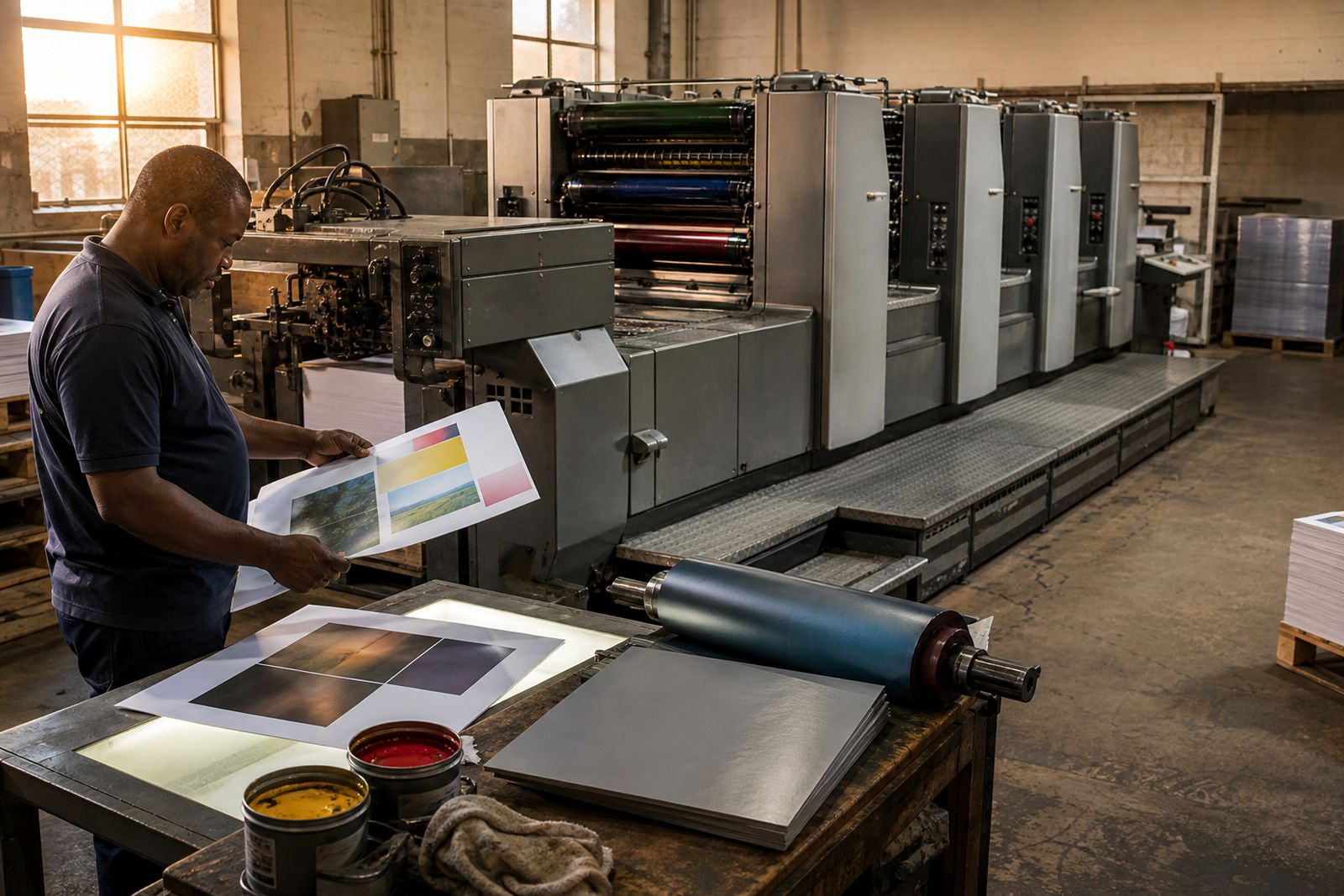
Sheetfed four unit on a real shift
| Format / band | B2 / B3 common |
|---|---|
| Screen / role | 175,200 lpi |
| Notes | IR dryer optional on last unit |
| Typical runs | See Runs used on four-unit sheets |
Need a unit layout for a B2 or B3 feeder line? Use the contact form and note whether unit four carries IR. The figures are working bands for planning, then checked against stock, blanket condition, and delivery pile behaviour on press.
During makeready, pin the first pass sheet to the shift card and mark the unit order used for cyan, magenta, yellow, and black. On Highveld summer days, note any packing change once solids start to open up, especially on B2 coated work at speed.
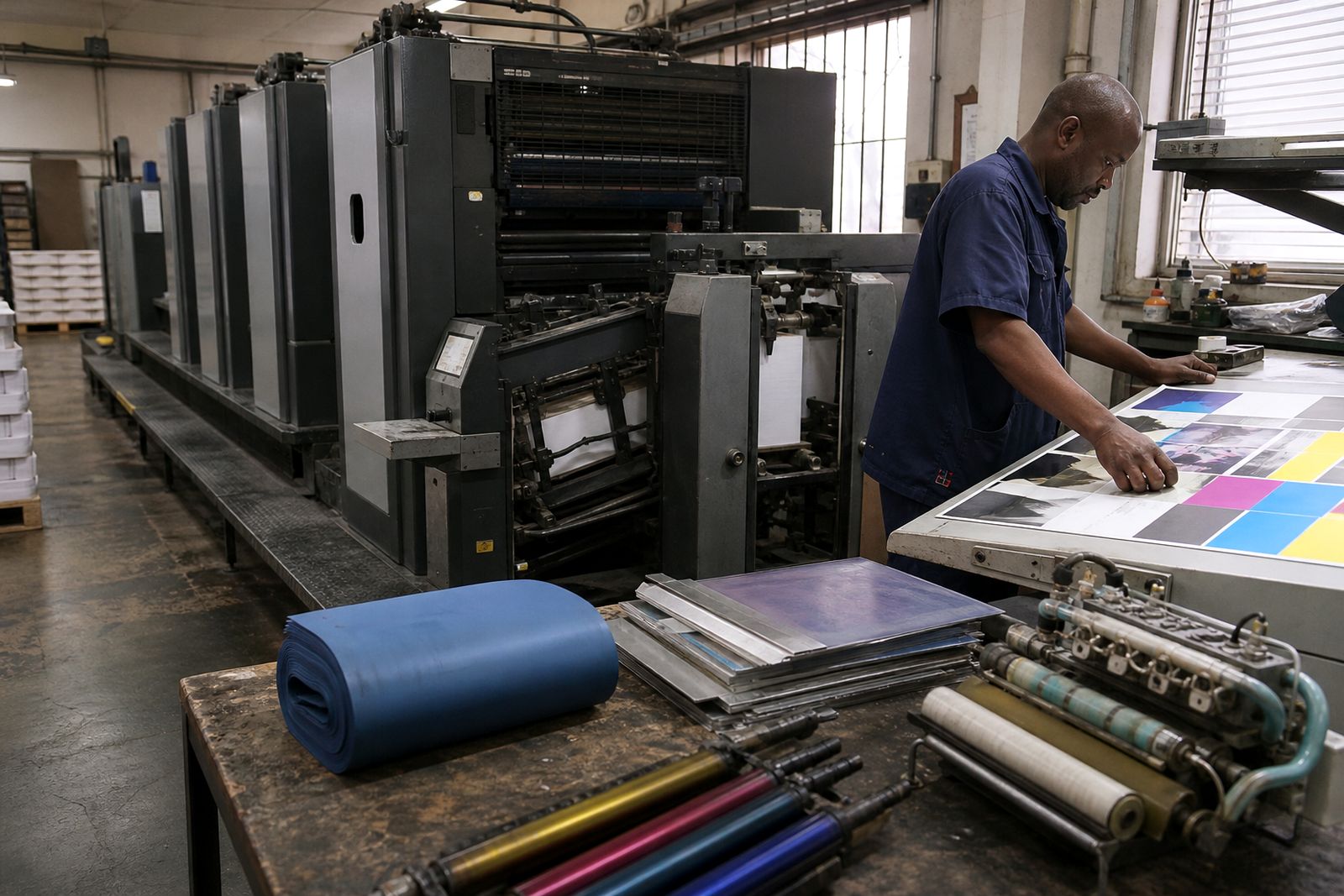
A sheetfed four-unit press lives or dies on transfer through all four towers, not on the nameplate at the feeder. Trouble usually starts with water balance, blanket build-up, or a pile that changes as the room warms up after sunrise. For South African commercial rooms, this process page tracks the checks that matter on B2 and B3 CMYK work, from Isando day runs to Cape Town coastal shifts with stop-start power.
Four units in line suit straight CMYK work where the sheet must leave unit four ready for the delivery stack or optional IR. Art paper, bond, and light board do not take impression the same way, so gripper bite, sheet travel, and powder use need to match the stock.
Take the first approved sheet once colour, register, and slur are all in tolerance. Include the control strip, job number, and side lay edge in the frame so a restart has something useful to match. Without that record, a pause after power cuts often turns into avoidable waste on unit three and four.
CMYK route through four towers
The four-unit sheetfed press unit notes give the sheet order, operator checks, and press-side cautions for a four-colour line. It is aimed at commercial work where one pass must carry cyan, magenta, yellow, and black cleanly to delivery. Where a job pattern matters more than the hardware note, follow the paired link to Runs.
Check the linked Makeready note before setting target waste and packing depth for the shift. Unit sequence is only part of the story on thin stock, heavy coverage forms, or work that needs IR on the last tower. If you send details through our contact form, include stock weight, sheet size, screen ruling, and which colour is giving trouble. A second packing gauge is useful when one SKU family spans coated and uncoated sheets.
- First approved sheet filed with colour bar
- CMYK sequence set for stock and coverage
- Packing, water, and powder checked on startup
- See matching runs and makeready notes
Highveld and coastal press factors
Highveld dryness, Cape humidity, and grit near loading bays all show up quickly on a four-unit sheetfed press. Blanket washes, fountain solution control, and anti-setoff powder often need different habits between Gauteng and the coast. The setup notes here keep the focus on what the crew can check at the machine without turning a normal shift into a fault hunt.
Static on light sheets inland can upset feeder consistency before unit one is even stable. Coastal rooms see more condensation risk, so morning starts need extra attention on rollers, plates, and delivery powder. If your plant is working beyond baseline setup, say so in your email and note whether the issue sits with colour control, sheet travel, or drying. Keep lamp checks separate from density reading when both happen on the same console bench.
Numbers used on shift
| Format / band | B2 / B3 common |
|---|---|
| Screen / role | 175,200 lpi |
| Notes | IR dryer optional on last unit |
The figures support everyday makeready on four-unit commercial presses, including common B2 and B3 work at 175 to 200 lpi. They brief operators on screen range, typical format, and whether IR at the last unit is in play. For a plant sketch or press position note, use the contact form and name the four-unit sheetfed press notes.
What our Offset Printing customers say
Verified Google reviews
Also worth a look
Tell us what your press room is running
Send a note through our contact form with your press make and format, the stocks and run lengths you handle, the plates, chemistry or blankets you use and your town, and we will come back with practical advice and a quote.
Open the contact form