

IR dryer bay
IR dryer bay for faster stack turn on coated stock without scorching.
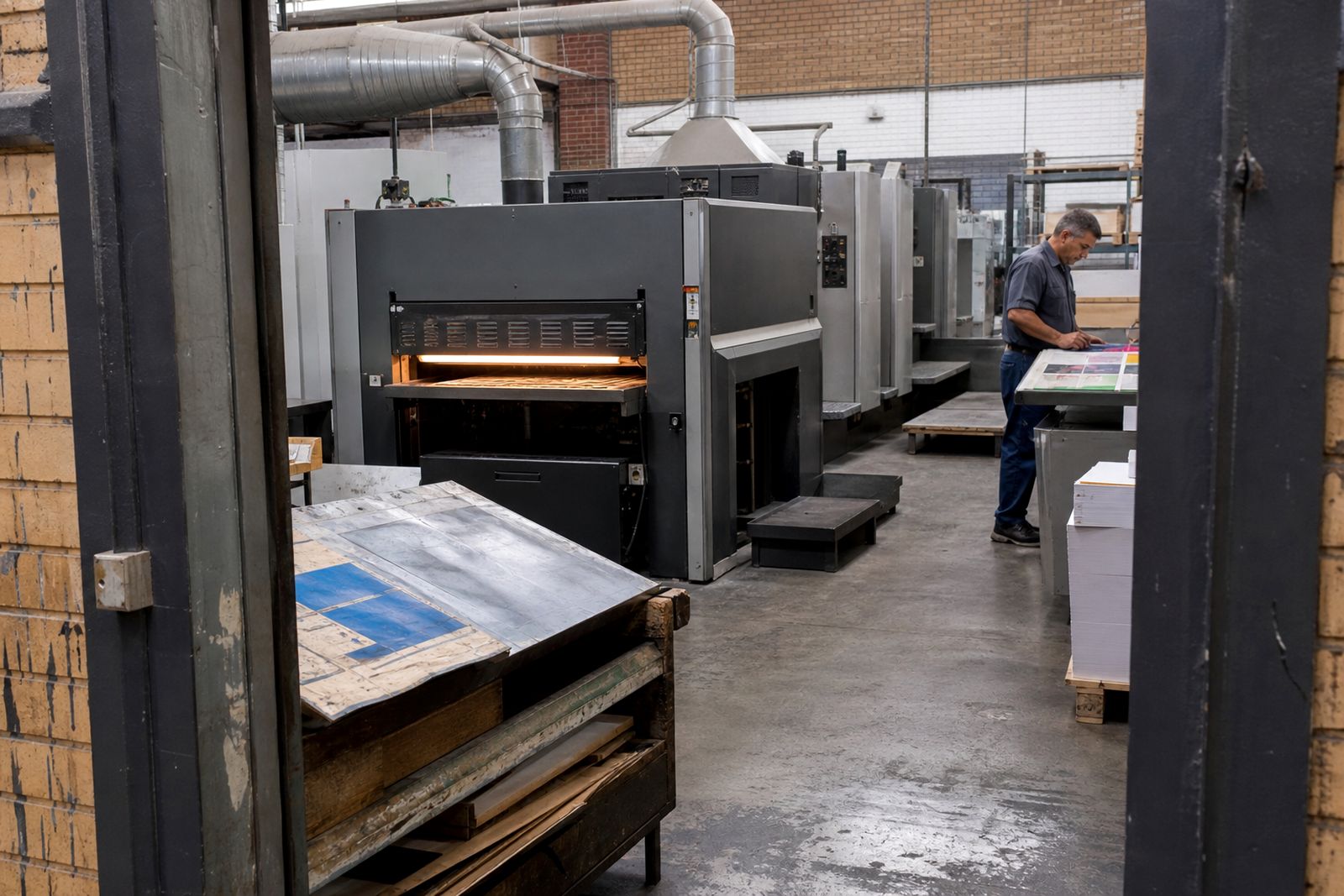
IR lamps at delivery
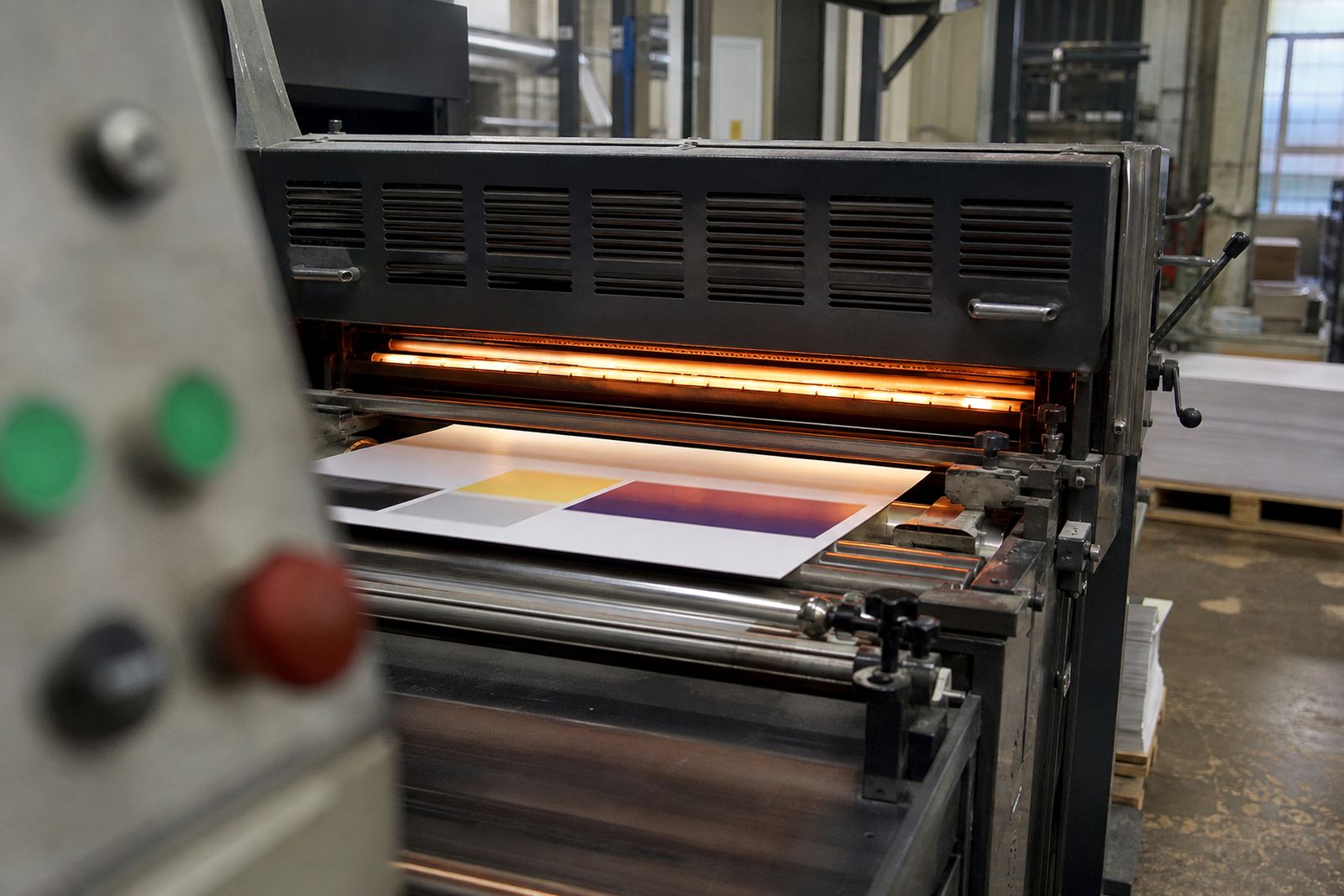
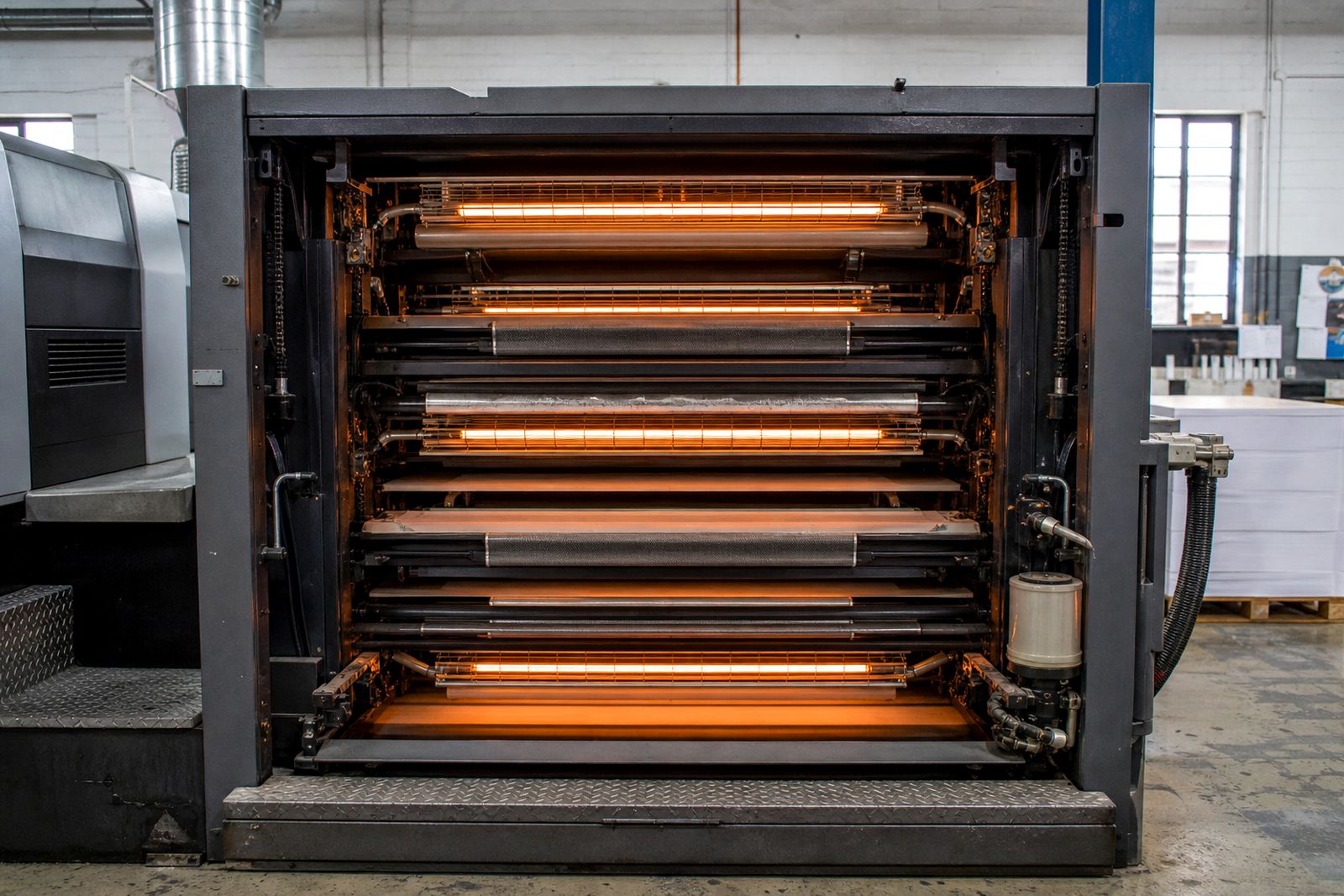
An IR Dryer Bay sits just before delivery to drive off surface tack on wet sheets. On coated stock it helps the pile stand cleaner, especially where heavy solids or dense process builds would otherwise mark in the stack. In South African pressrooms, crews usually trim lamp output around paper weight, ink film and pile temperature rather than leaving one setting all shift.
Start with the stock, not the lamp bank. Gloss art, matt art and board each take heat differently, and thin sheets can curl if the bay is pushed too hard. For perfecting work, check that the first side is stable enough to travel without offset before asking the IR section to do more than it should.
Makeready on an IR Dryer Bay begins with a lamp check and a look at the reflectors for dust or ink mist. Then pull a clean sheet from the first settled pile and test for set-off under normal delivery load, not only on hand-held samples. If pile edges feel hotter than the centre, airflow and lamp balance need attention before the run lengthens.
Press checks around the pile
The useful handover is a clear note on lamp level, delivery speed and whether powder is running soft or normal. That gives the next shift something they can repeat when the same coated job returns. Where the job needs a full press sequence rather than a single unit note, we point you to Runs.
Read the IR bay note with the matching Makeready card before opening the job. Heat, powder and delivery pile height affect one another, so the setting only makes sense in the full press context. If you use our contact form, send the stock gsm, ink coverage and sheet size, and note whether the problem is set-off, curl or marked solids.
- Lamp bank checked before first lift
- Coated stock setting noted on docket
- Powder kept soft on heavy solids
- Related: Runs and Makeready notes
SA heat and humidity factors
Cape Town winter damp and Durban humidity change how quickly a printed pile sheds surface tack. On the Highveld, dry air can let sheets run fast yet build static at delivery, which changes how the pile presents under heat. The IR bay helps with stack turn, but it still needs sensible delivery settings and regular pile checks.
Dust on reflectors cuts efficiency, so inland plants usually inspect the bay more often during dry windy spells. Coastal rooms must watch condensation and paper conditioning, because cold stock taken into a warm press hall can react badly once lamps come on. If your issue sits outside the dryer section, say so in your email and we can point you to Colour Bar Scanner or pressroom spares kit. Keep lamp testing separate from colour reading so heat checks do not disrupt densitometry work.
IR bay data to brief
| Format / band | IR lamp bank |
|---|---|
| Screen / role | n/a |
| Notes | Pair with powder spray soft on heavy solids |
The page data covers format band, lamp bank and the key running note for this unit. For this bay the screen or role field is marked n/a, because the working variables are heat, pile behaviour and delivery conditions rather than an image carrier. If you need a sketch or layout note, use the contact form and name the IR Dryer Bay page.
Related pages
What our Offset Printing customers say
Verified Google reviews
Tell us what your press room is running
Send a note through our contact form with your press make and format, the stocks and run lengths you handle, the plates, chemistry or blankets you use and your town, and we will come back with practical advice and a quote.
Open the contact form