

Feeder Head Soft service
Soft feeder head service covers the vacuum and timing checks that matter when light stock starts missing, doubling, or marking at the pile edge. Typical attention points are sucker lips, air hoses, valve response, separator setting, and sheet pick on 80 and 100 gsm stationery. Before a site visit, send press model, stock range, sheet size, and whether the fault shows at start-up or only once speed comes up.
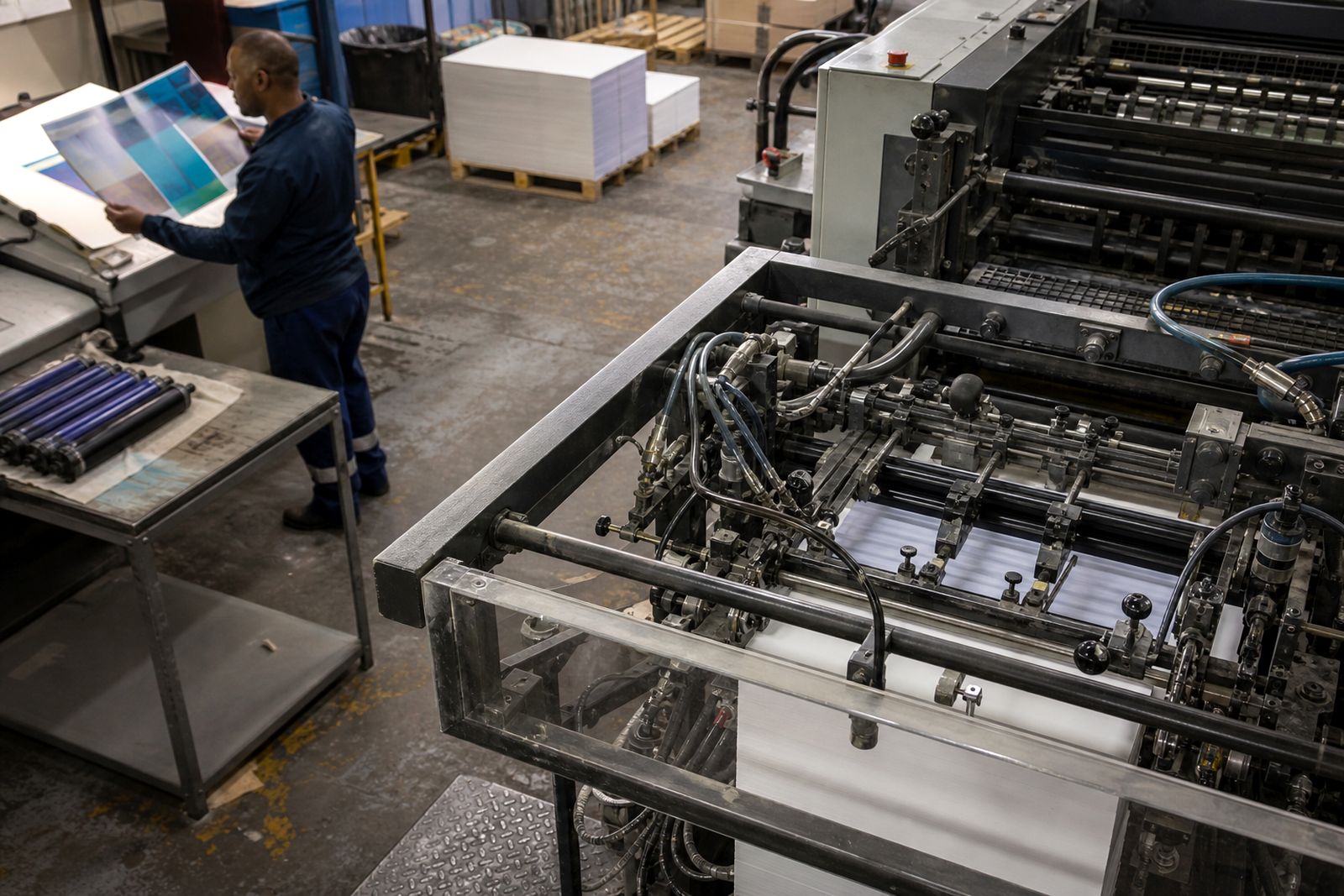
Soft pickup on light stock
This service is usually requested where thin uncoated work needs a gentler first lift off the pile without losing registration into the lays. We check sucker softness against the stock being run, then look at pile height, blast air, and separator action together rather than chasing one setting at a time. If you keep a quarterly kit on hand, pair it with Pressroom spares kit so the usual feeder wear parts are listed against your shift pattern.
- Inspect soft suckers for glazing or splits
- Monthly packing gauge check
- Quarterly spare kit review
For a service booking, use the contact form and note the feeder head issue, press model, and stock weight. Photos of soft suckers, separator fingers, or a marked pile edge help identify whether the fault is vacuum, timing, or pile set-up. Planned shutdown slots and municipal power windows are useful to include for South African print rooms.
Feeder head soft on real shifts
Feeder trouble in South African print rooms often starts with ordinary commercial stock, not unusual substrate. On a Highveld morning, static can hold two thin sheets together, while coastal humidity can soften the pile and change how cleanly the top sheet breaks away. Soft feeder head service focuses on that first pick, because poor separation at the pile quickly becomes skew, doubles, and wasted sheets at the front lays.
Begin with the paper, not the complaint. A 100 gsm bond letterhead run needs a different sucker feel and air balance from coated promo sheets of the same size, and perfecting work can expose feeder inconsistency sooner than one-side jobs. We document the usable band for the stock, the soft sucker setup, and the checks operators should repeat after a wash-up or long stop.
Keep one signed good sheet from the run where feeder settings were stable. That sheet, together with a note of speed, stock, and sucker position, gives the next shift a reliable starting point when the same job or paper returns. It is especially useful after a power cuts restart, when feeder settings may look unchanged but behaviour at the pile has shifted.
Feeder-head checks after service
The visit centres on sucker condition, vacuum consistency, blow setting, separator clearance, side lay approach, and pile presentation. We look for signs that soft pickup is helping the sheet release cleanly rather than pulling too deep into the stack. Where a feeder symptom is actually tied to the way the job is being run, we will point you to Runs for the matching production steps.
Match the feeder setup to the job before changing several press variables at once. Read the paired note under Makeready if the issue appears during first sheets or after a stock change, because the feeder and make-ready often overlap on short commercial runs. When you send details through our contact form, include stock weight, press model, sheet size, speed range, and which sucker set is fitted now.
- Good sample sheet kept with feeder settings
- Soft sucker choice matched to light stock
- Separator and blast air checked together
- Related: runs and makeready notes for feeder faults
Highveld static and coastal moisture
Cape Town humidity, inland static, dust around the feeder table, and stop-start power conditions all change how light sheets lift from the pile. This service does not treat sucker softness as a magic fix on its own. The useful result is a feeder note the crew can apply to ordinary commercial work without guessing every time thin stationery goes on press.
Coastal plants often need closer watching for tacky pile tops and moisture-related marking at pickup. Inland rooms can struggle more with static, sheet cling, and doubled lifts on dry winter mornings, especially on lighter bond grades. If your plant is beyond feeder basics and the issue sits elsewhere in control or maintenance, mention that in your email and we can point you to Colour Bar Scanner or pressroom spares kit where those are the better fit.
Feeder points to brief clearly
| Format / band | Soft sucker set |
|---|---|
| Screen / role | n/a |
| Notes | Useful on 80,100 gsm stationery |
The useful specs are the stock band being run, the soft sucker set fitted, and the role that setting plays on press, noted as not screen-related. Add press model, sheet size, and whether doubles, skew, or miss-feeds are present when using the contact form. That gives the service note enough context to match the feeder checks to your room.
What our Offset Printing customers say
Verified Google reviews
Also worth a look

Tell us what your press room is running
Send a note through our contact form with your press make and format, the stocks and run lengths you handle, the plates, chemistry or blankets you use and your town, and we will come back with practical advice and a quote.
Open the contact form