

Perfecting Unit Pair service
A perfecting pair needs attention at the transfer point, blanket faces, and turner grip before it starts marking the reverse side. Our note covers the spare items usually checked first, such as transfer jackets, gripper pads, and packing gauge condition. Before a site visit, send sheet size, stock weight, and whether the fault shows as scuffing, front to back register drift, or uneven backing up.
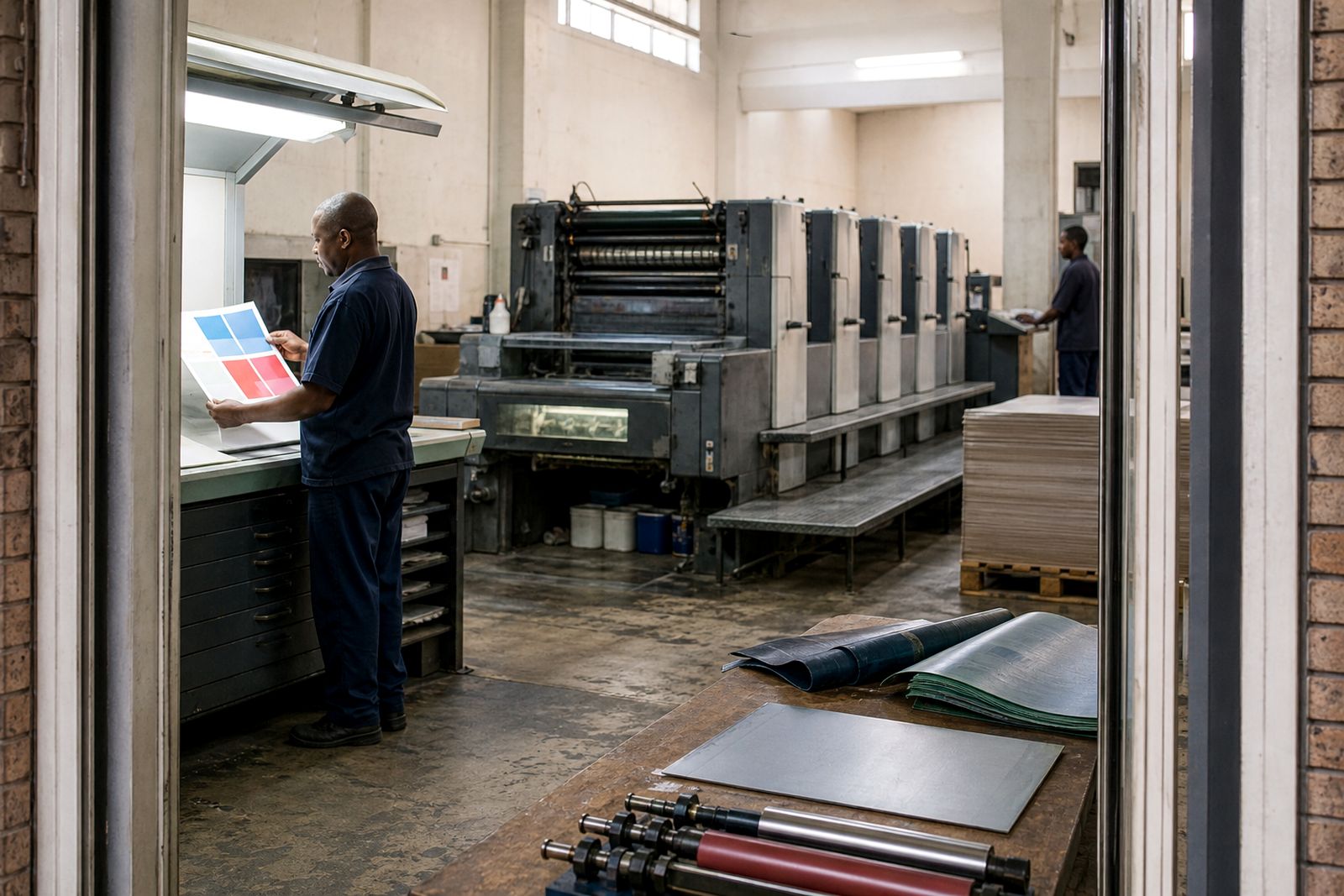
Turner unit service points
On a perfecting pair, blanket wash timing should match how quickly spray powder, coating dust, or paper lint builds on the second side. Coastal plants need packing gauges kept dry and flat, because moisture changes the reading and leads to weak transfer decisions. If the pair is carrying mixed commercial work, keep it with Pressroom spares kit so the quarterly spares check includes turner grippers, sucker cups, and transfer tapes.
- Check turner grippers for edge marking
- Monthly packing gauge check
- Quarterly spare kit review
Use the contact form and state that the issue is on the perfecting unit pair service. Add a clear photo of the transfer area, blanket face, or marked sheet edge if there is visible bruising or smudging. It also helps to include the plant's power cuts window when fault finding has to fit around stopped and restarted shifts.
Perfecting unit pair on a real shift
Perfecting trouble in South African print rooms usually starts where the sheet turns, not at the ink fountain. Backing up can go off when gripper bite varies across the sheet, when transfer cylinders glaze, or when the first side is still too fresh for the speed being pushed. This guidance is written for B2 commercial bays in Montague Gardens, Isando, and coastal plants where humidity changes sheet behaviour through the day.
Begin with the job brief the press crew will actually use: sheet size, grain direction, gsm, and whether both sides carry heavy solids. A perfecting pair behaves very differently on 90 gsm uncoated forms and on coated promotional work at 175 lpi. The notes here focus on settings and checks that matter on shift, including gripper honesty, transfer cleanliness, and packing consistency across the pair.
Photograph the first pass sheet and the backed up sheet together once the pair settles. That record shows whether the issue began before the turn or after it, and it gives the next shift a visual reference for register and set-off. On presses that stop during afternoon power cuts, those two photos are often more useful than a long handover note.
What the pair note covers
The service material gives you a clear check sequence for the perfecting pair, not a generic press checklist. It sets out what to inspect at the turner section, what to measure on packing, and what to watch on second side marking under local plant conditions. If the better fit is a production route rather than a unit service topic, the related page is Runs.
Read Makeready together with this when the pair is giving trouble at start-up or after a stock change. The makeready note helps the crew separate impression and dampening issues from faults caused by transfer, grip, or backing up. When you use our contact form, include the stock, printed side sequence, target speed, and whether a second packing gauge gave a different result.
- First and second side sheets compared
- Gripper bite checked across full width
- Packing gauge verified before reverse pass
- Run notes matched to makeready brief
Conditions affecting perfecting
A perfecting pair in South Africa has to cope with dry Highveld static, coastal moisture, and stop-start production during power interruptions. Those conditions change sheet travel, transfer reliability, and how quickly the first side can be turned without marking. The service notes keep the focus on what the crew can inspect and correct at the unit, rather than blaming every problem on ink or paper.
Near the coast, condensation and fine grit can change how the transfer unit behaves before the morning shift settles. Inland, dust and static on light stocks can make the turned sheet lift unpredictably into the second side nip. If the press has moved beyond basic checks, say so in your email and refer to Colour Bar Scanner or pressroom spares kit where those tools are a better fit than more unit-side adjustments.
Brief figures for B2 perfecting
| Format / band | B2 perfecting |
|---|---|
| Screen / role | 175 lpi |
| Notes | Needs honest gripper and sheet size brief |
The figures and reminders here are typically needed when briefing a B2 perfecting job at 175 lpi. It groups the service points around transfer unit condition, packing gauge checks, and spare kit review so maintenance and production can work from the same reference. If you need a plant-specific note, use the contact form and name the perfecting unit pair service.
What our Offset Printing customers say
Verified Google reviews
Also worth a look
Tell us what your press room is running
Send a note through our contact form with your press make and format, the stocks and run lengths you handle, the plates, chemistry or blankets you use and your town, and we will come back with practical advice and a quote.
Open the contact form