

Perfecting Unit Pair process
Perfecting unit pair for double-sided brochure and report runs without a second pass.
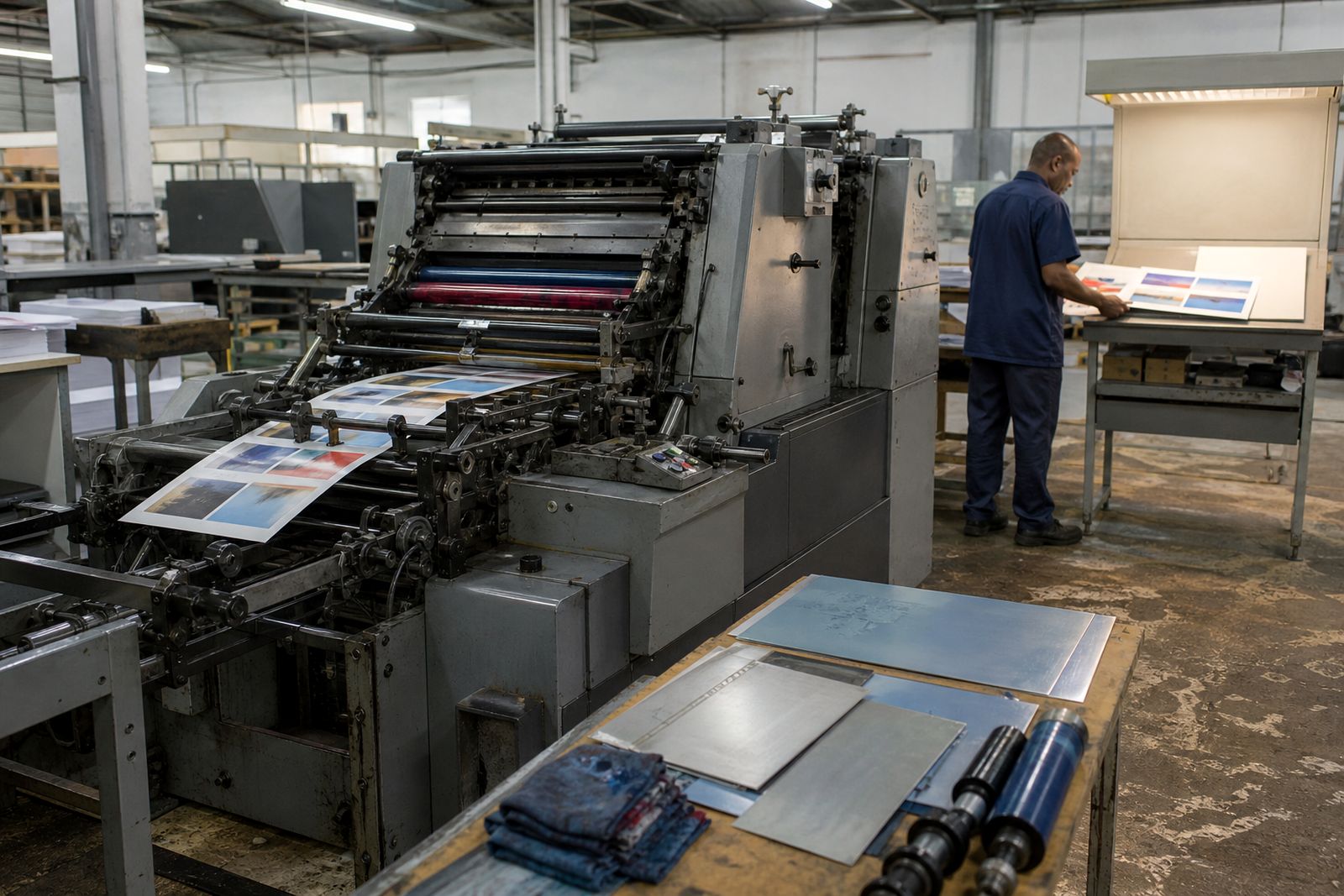
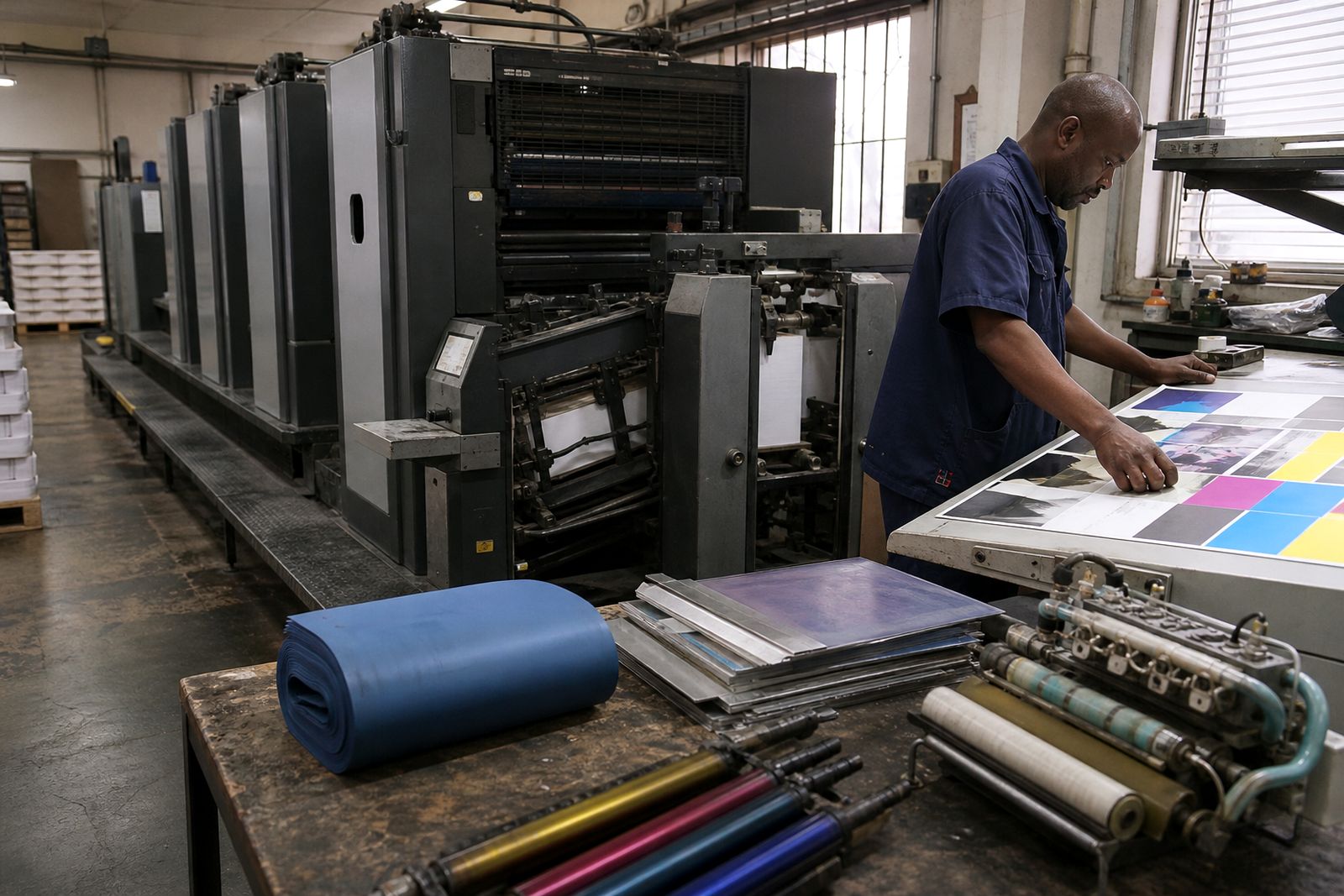
Perfecting unit pair on a real shift
| Format / band | B2 perfecting |
|---|---|
| Screen / role | 175 lpi |
| Notes | Needs honest gripper and sheet size brief |
| Typical runs | See Runs that use this pair |
If you need a layout for the turning section and delivery, use the contact form. Treat the B2 perfecting figure as a planning guide, then confirm usable sheet size, gripper bite, and turn edge on your press before sign-off.
Keep the first pass sheet and the perfected sheet with the shift docket. On hot inland days, note packing and sheet curl changes as soon as the back-up side starts moving away from the front.
A perfecting pair lives or dies on sheet control through the turn. Trouble usually starts with weak gripper allowance, back-up scuffing on dense solids, or dampening carried too high into the second side. In South African commercial rooms from Montague Gardens to Isando, coated work, power breaks, and mixed stock pallets are part of the shift.
Brief the stock, grain direction, and finished fold before choosing this process. Light uncoated sheets can mark in the turn, while heavier gloss grades may need slower delivery and stricter anti-set-off control. Perfecting Unit Pair process is for double-sided B2 work where the front and back must hold register without a second trip through the press.
Photograph both sides of the first accepted sheet, with bars and trim marks visible. When the press restarts after power cuts or a wash-up, that image gives the crew a hard reference for register, back-up position, and scuff level.
Turn-bar and gripper essentials
The press sequence for a perfecting pair starts with the checks that matter before speed comes up. It focuses on turn edge, back-up register, and sheet behaviour after reversal. If another layout suits the job better, follow the linked Runs.
Match the unit pair to the run before adding extra variables. Check the paired note under Makeready so the feeder, turn, and delivery checks use the same language your press minder uses on shift. If you send details through our contact form, include stock weight, finished size, gripper edge, and whether marking appears before or after the turn.
- Front and back sheets kept as press refs
- Turn edge planned from actual sheet size
- Back-up side checked for scuffing and set-off
- Related: Runs and makeready notes for perfecting
Press conditions across SA plants
Highveld rooms often see static and curl on lighter sheets, especially when the back-up side is laid down straight after the turn. Coastal plants fight condensation and slower drying, which makes marking on the reversed side more likely. The setup notes here assume those local pressroom conditions, not a climate-controlled demo bay.
Dust on inland pallets changes how often blankets and transfer cylinders need attention. Near the coast, spray powder level and delivery pile temperature can decide whether the second side stays clean. If your plant is working beyond the basic setup stage, say so in your email and we can point you to Colour Bar Scanner or pressroom spares kit where that fits the issue.
B2 perfecting notes
| Format / band | B2 perfecting |
|---|---|
| Screen / role | 175 lpi |
| Notes | Needs honest gripper and sheet size brief |
Use this job sheet to brief the job before plates are hung. It keeps the key figures for B2 perfecting, screen expectation, gripper allowance, and turn checks in one place. For a bay sketch or turning layout, use the contact form and name the process clearly.
What our Offset Printing customers say
Verified Google reviews
Also worth a look
Tell us what your press room is running
Send a note through our contact form with your press make and format, the stocks and run lengths you handle, the plates, chemistry or blankets you use and your town, and we will come back with practical advice and a quote.
Open the contact form