

Colour Bar Scanner process
Colour bar scanner supplier for densitometry on commercial offset without drama.
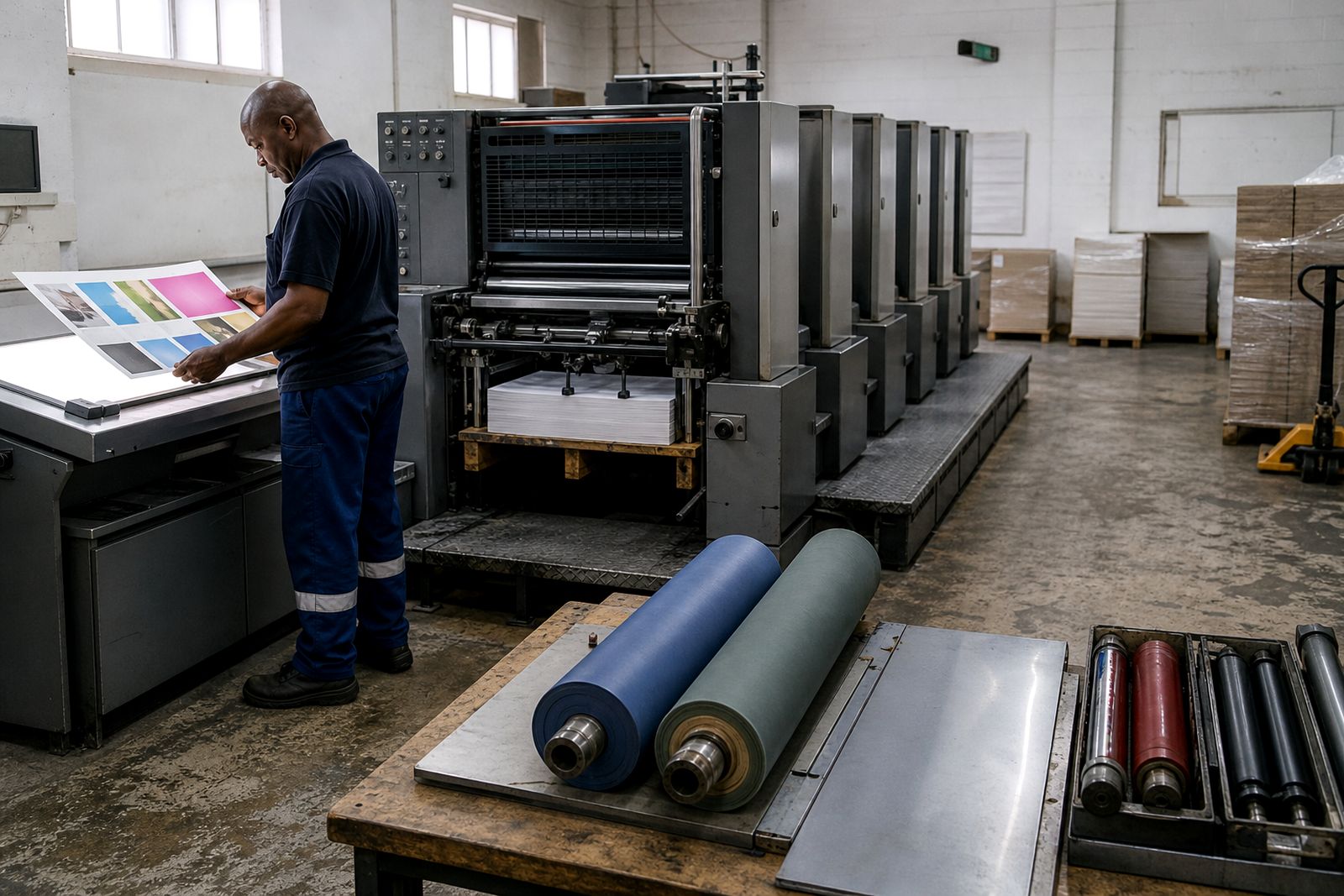
Colour bar scanner on real shifts
| Format / band | Density targets |
|---|---|
| Screen / role | Colour bar |
| Notes | Log first good sheet before rate climbs |
| Typical runs | View Runs used with bar scanning |
If you need scanner placement on the delivery side, use the contact form and note the press format. Treat the density figures as starting targets, then trim them to stock, ink set, and your bar width during setup.
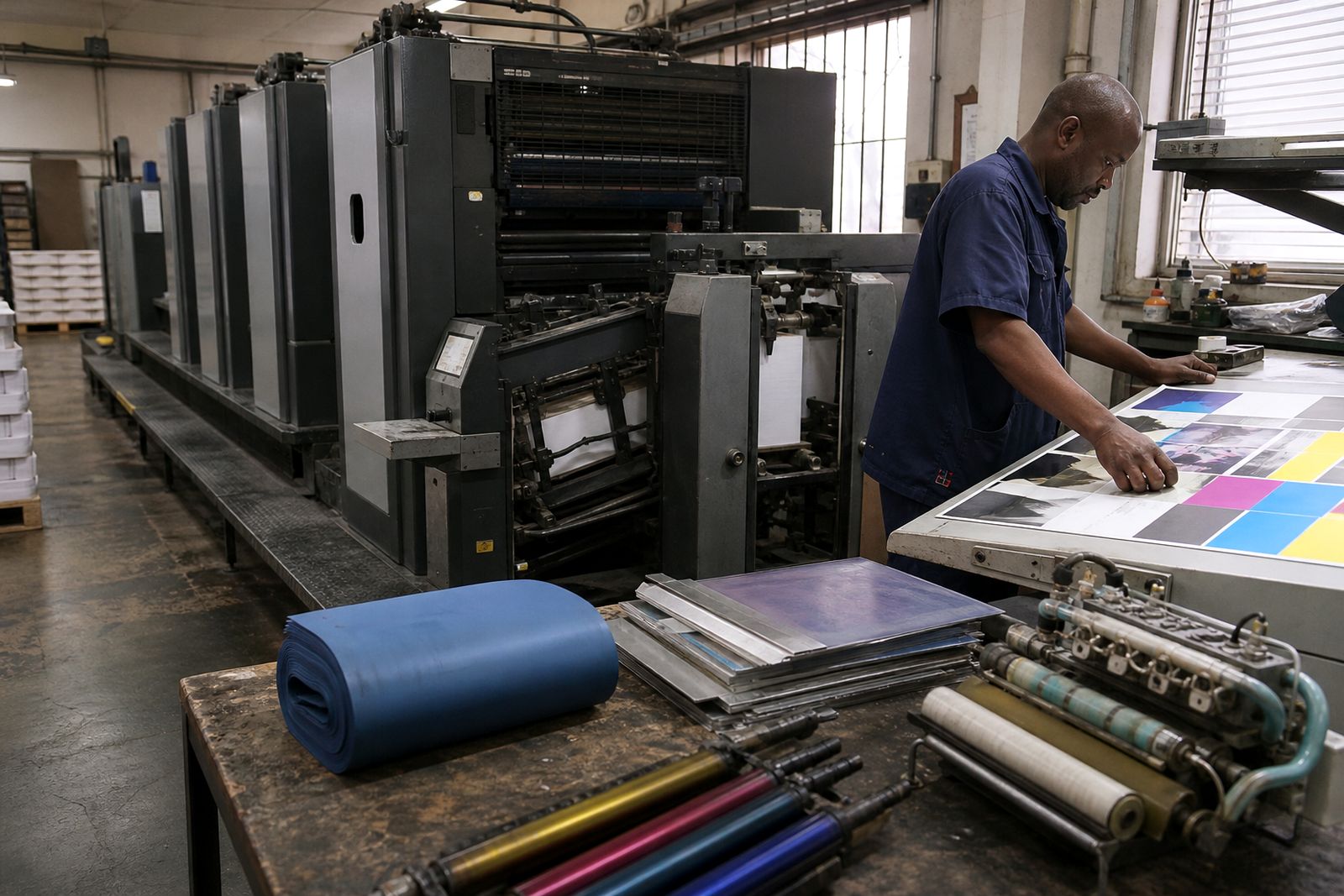
Keep an image of the first pass sheet with the scanner reading visible on the shift card. When solids wander during a hot inland afternoon, record packing, fountain setting, and which zone moved first.
A colour bar scanner only helps when the bar is printed cleanly and the operator trusts the reading. On South African commercial offset, the trouble usually starts with weak dampening, stock stretch after a stop, or bars placed too close to trim on small forms. This process is written for Cape Town print rooms, Isando flyer work, and coastal plants that must restart accurately after power cuts.
Begin with where the bar will sit and which scanner mode the crew will use. Gloss art, matte coated, bond and light carton each read differently once ink film and dot gain settle. Perfecting work also needs the bar positioned where both sides can be checked without slowing the pile change. The notes here keep the scanner process short enough for live production, not classroom reading.
Photograph the first accepted sheet with the colour bar and scanner screen together. That record matters when a night shift restarts after a wash-up or power interruption and needs the same densities back on press without guesswork.
Scanner handover on press
The process page ties the scanner check to actual sheet movement, not just lab numbers. It shows where to read, what to log, and when to ignore a false swing caused by a dirty patch or weak sheet lay. If a job is better described by production sequence, see the paired Runs page.
Read the scanner routine next to the matching Makeready note before changing bars or targets. Send stock, sheet size, line screen and current density aim through our contact form if you want the setup checked against your press. Include whether the unit is straight printing or perfecting, because the reading pattern changes once the sheet turns.
- First good sheet logged with scanner values
- Bar width suits sheet size and trim
- Dampening, blanket and lens checked early
- Related: Runs and Makeready pages
Pressroom conditions that affect readings
Scanner readings drift when the pressroom changes faster than the ink film can settle. Highveld static on lighter stocks, Cape humidity on night shifts, and dust around the delivery all affect how reliably the bar prints and how cleanly the scanner sees it. These notes keep the operator focused on bar quality, not only the display number.
Coastal plants need more attention on lens cleaning and bar contamination from spray powder. Inland rooms often battle dry stock, static and faster water changes through the morning. After a power cut, take a fresh reference from a stable sheet before chasing old values. If your bay uses a combined table for densitometry and lamp checks, separate those steps so the bar reading is not influenced by a rushed viewing check.
Targets worth posting by the console
| Format / band | Density targets |
|---|---|
| Screen / role | Colour bar |
| Notes | Log first good sheet before rate climbs |
This job sheet groups the figures an operator actually reaches for during make-ready and the first few hundred sheets. It covers bar placement, reading order, density targets and the checks to repeat after a stop. For a scanner position sketch or console-side note card, use the contact form and name the press format.
What our Offset Printing customers say
Verified Google reviews
Also worth a look
Tell us what your press room is running
Send a note through our contact form with your press make and format, the stocks and run lengths you handle, the plates, chemistry or blankets you use and your town, and we will come back with practical advice and a quote.
Open the contact form