

Observatory pack inserts
Retail inserts needing clean backs and soft powder.
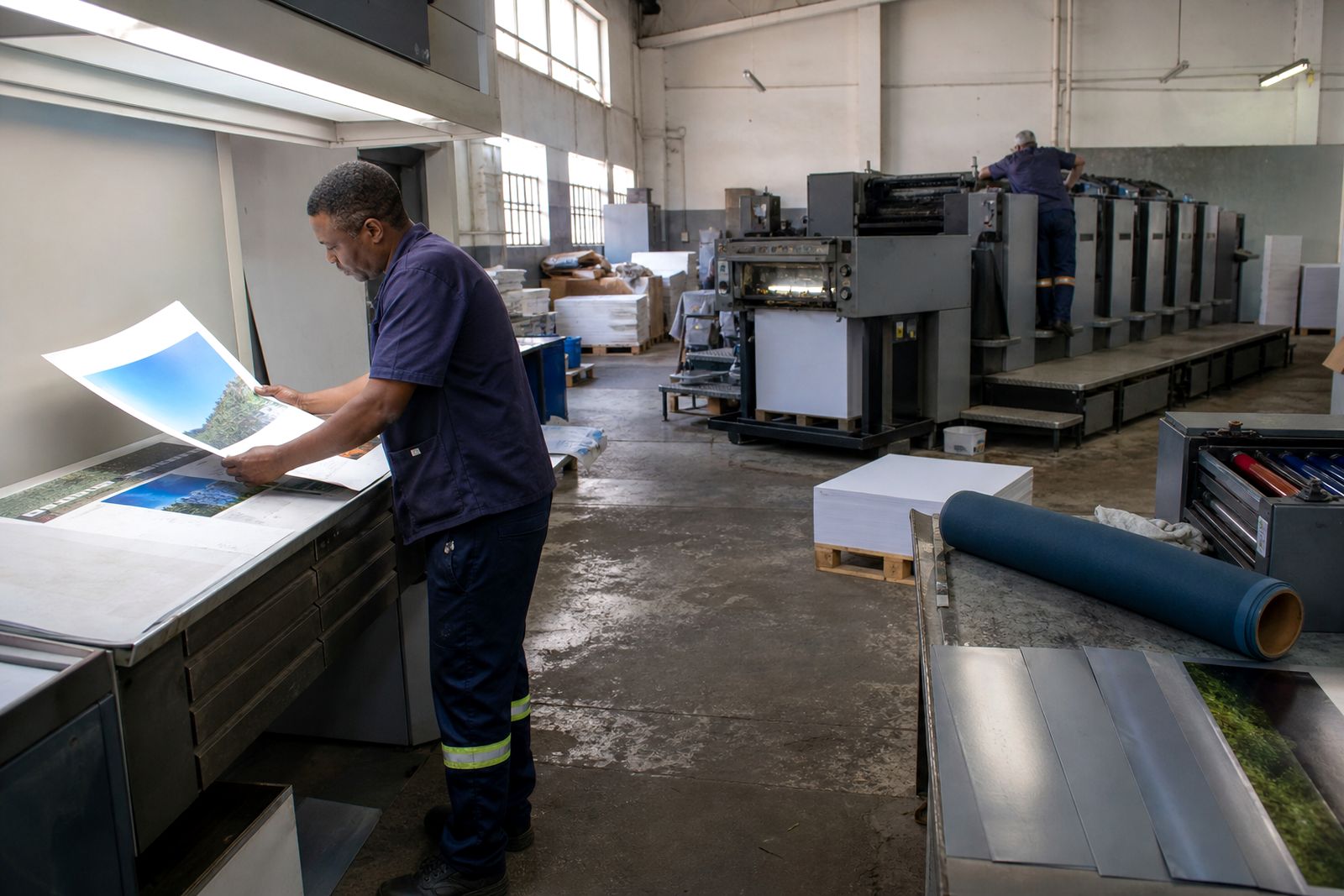
Observatory insert run sequence
Retail inserts need clean backs and soft powder. The brief stayed narrow: one primary unit route, one check card, and a makeready note that the plant could keep. We write the run sequence a South African press lead can stand over on the floor.
Place: Observatory. Stock and finish were confirmed before the first sheet ran.
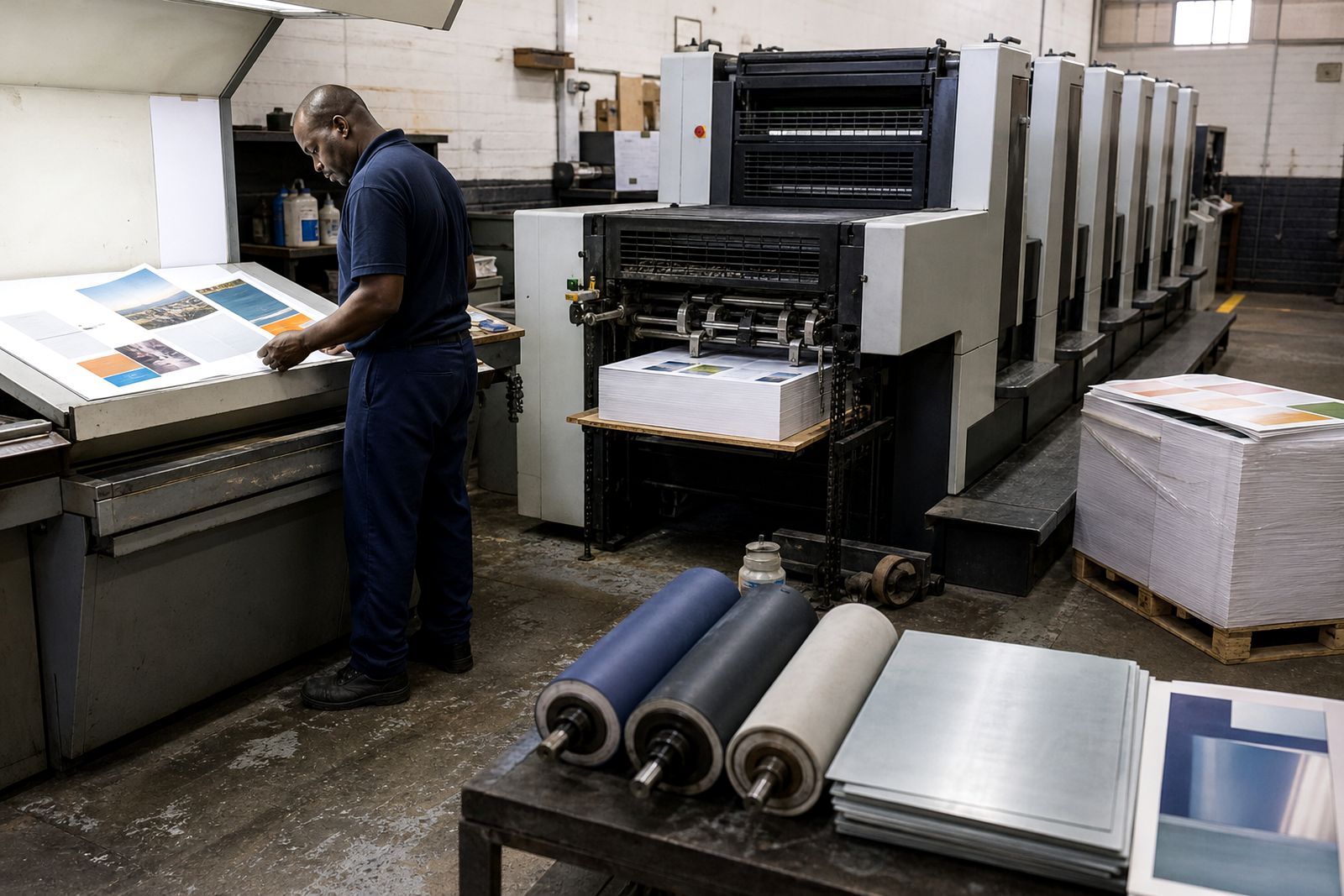
These pack inserts were set up for retail work where the back must stay clean enough to sit inside the pack without marking. We kept powder low, watched set-off on the delivery stack, and checked the sheet edge for any misting as speed increased. A small reject bundle stayed banded beside the press so doubtful sheets did not drift back into the good pile.
Checks that stayed useful
Observatory jobs like this usually turn on three things: stock dryness, powder level, and whether the back stays free of rub on the pile. In Cape Town air, a sheet can feel different by mid-shift, so the press lead needs notes that match the actual run rather than a generic card. If your insert work needs the same kind of record, send the plant details through our contact form and include the stock and sheet size.
- Single unit route for inserts
- Check card matched to live sheet
- Back cleanliness watched at delivery
- Makeready note filed with ticket
After the run, the useful paperwork was the sheet sample, the marked check card, and one makeready note with the final settings written plainly. That gave the print room something to pin up for the next repeat, instead of a long report no one would open at the press. Where this step gets skipped, soft solids and dirty backs usually return on the next insert batch.
Briefing retail insert work
Start with the place, stock, final size, and whether the insert sits loose in the pack or is machine inserted. Add the preferred unit order only if the plant has tested it before. One clear ticket beats a padded file when the press crew must set units, powder, and packing without guessing.
For Observatory inserts, we noted how the stock behaved once the first good sheets reached delivery, especially on the back where offset and powder show first. Coastal conditions matter here because a pile that feels right at start-up can tighten later and change the look of solids. A simple note on pile condition and stack height helps the next run more than extra meeting notes.
Browse Units, Runs, and Makeready before the call so the language matches. Send a message through our contact form.
Records left at Observatory
The press room kept the approved sheet, the check card, and the reject marker used during start-up. First good sheet photos were sent to the plant WhatsApp and added to the job folder only after colour and back cleanliness were holding steady. That sequence matters on insert work because early photos can record a sheet the plant would never want repeated.
When a similar insert job is booked, note any packing method that could scuff the reverse side after print. Retail work often looks fine at the feeder and then picks up marks during handling, bundling, or pack-out. A half-filled ticket with the right stock and finishing notes is more useful than polished wording that leaves out the sheet behaviour.
What our Offset Printing customers say
Verified Google reviews
Also worth a look
Tell us what your press room is running
Send a note through our contact form with your press make and format, the stocks and run lengths you handle, the plates, chemistry or blankets you use and your town, and we will come back with practical advice and a quote.
Open the contact form