

Centurion stationery bay
Thin-stock letterheads with soft feeder heads.
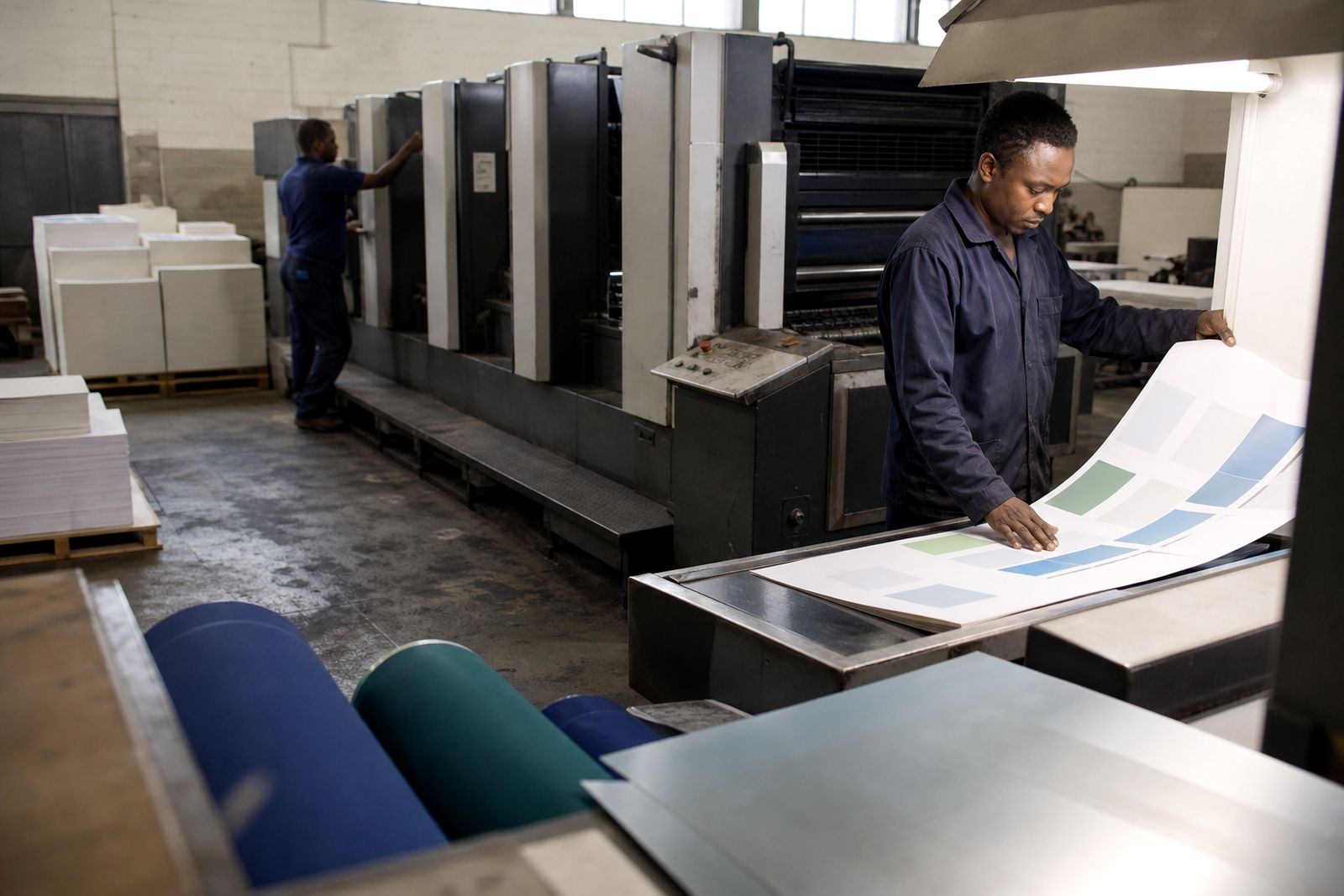
Centurion letterhead run order
Thin-stock letterheads with soft feeder heads. The brief stayed narrow: one primary unit route, one check card, and a makeready note that the plant could keep after we left. We write the run sequence a South African press lead can stand over on the floor.
Place: Centurion. Stock and finish were confirmed before the first sheet ran. First good sheet photos went to the plant WhatsApp group.
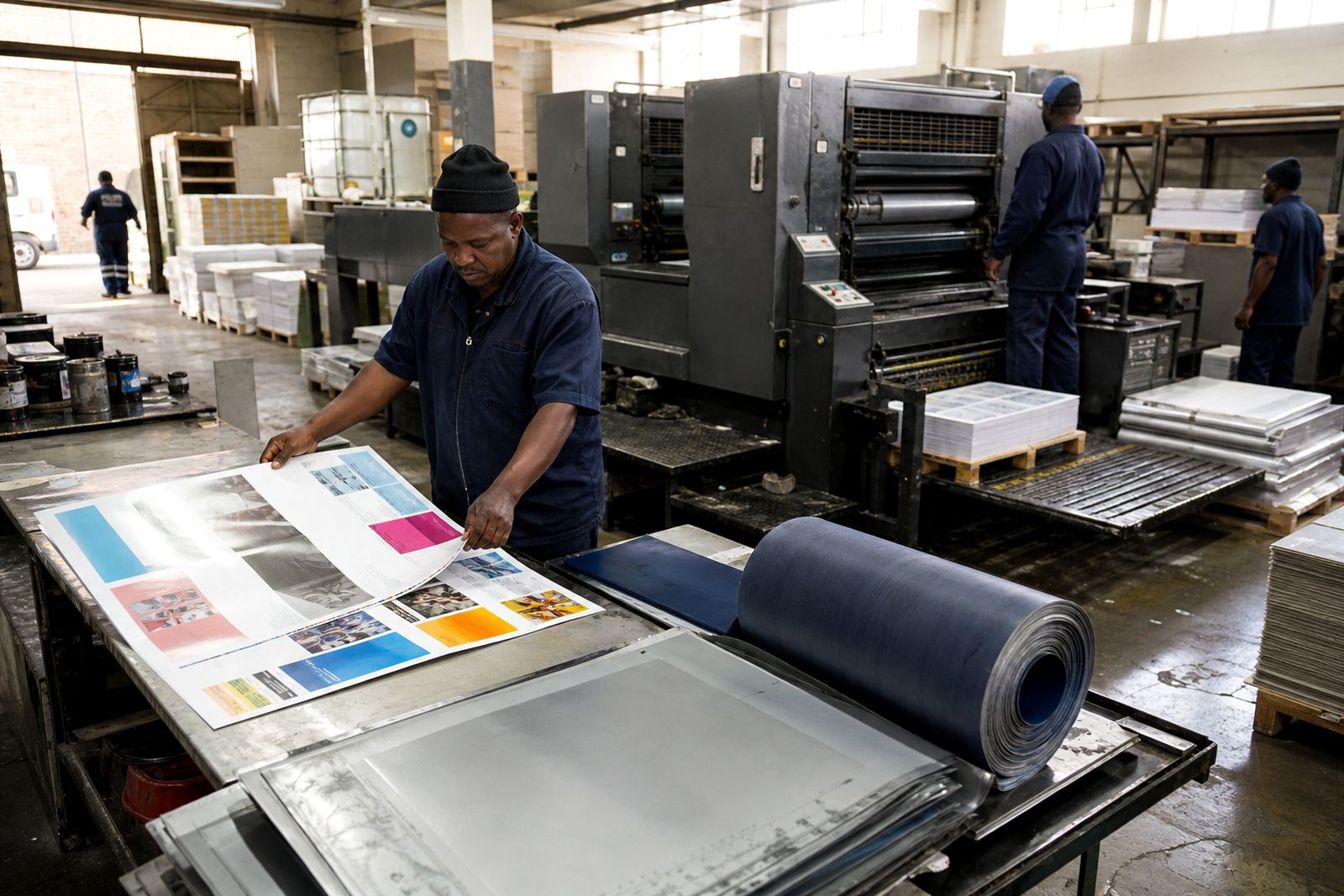
Makeready centred on thin-stock control for the letterhead set. Soft feeder heads were set first, then the crew checked side lay, gripper bite, and sheet travel before lifting speed. Early pull sheets were marked and kept aside so no spoiled stock could slip back into the delivery pile.
Notes kept after handover
On stationery work in Centurion, trouble usually starts with light paper, fan-out at the feeder, or a late change to artwork placement. This bay held to one unit route and one check card, which kept the brief tight and the press crew aligned.
- One unit route for letterheads
- Check card fixed at the bay
- First good sheet sent on WhatsApp
- Makeready note kept with ticket
After the run, the bay kept a written note with feeder settings, packing references, and the approved pull sheet. That mattered more than a general summary because thin letterhead stock can behave differently from one pallet to the next. The point was to leave the next shift with usable press information, not a memory of the job.
Briefing another stationery run
Start with place, stock weight, sheet size, and whether the job is a letterhead or matching stationery item. Add the intended unit sequence and any feeder concerns seen on previous runs. A short press ticket is easier for the bay to use than a padded document full of extras.
At Centurion, stock and finish were confirmed before the first sheet ran, which removed guesswork from the opening setup. The approved pull was photographed and filed with the ticket. That gave the bay a live reference and kept the record tied to the actual run.
Browse Units, Runs, and Makeready before the call so the language matches. Send a message through our contact form.
Items left at the bay
The station kept the check card, the approved first sheet image, and the makeready note from the run. Reject sheets from startup stayed separate from saleable work so the pile could be checked without debate. For stationery jobs, that separation matters because light stock can hide early marking until the stack is turned.
For another Centurion stationery setup, note any feeder limitations, stock curl, or edge damage before paper reaches the press. Include whether matching pieces must hold to the same appearance as the letterheads. It is better to receive a plain ticket with honest stock detail than a polished brief that leaves out the paper behaviour.
What our Offset Printing customers say
Verified Google reviews
Also worth a look
Tell us what your press room is running
Send a note through our contact form with your press make and format, the stocks and run lengths you handle, the plates, chemistry or blankets you use and your town, and we will come back with practical advice and a quote.
Open the contact form