

Midrand brochure week
Four-unit brochure run with perfecting and colour bar photos before lunch.
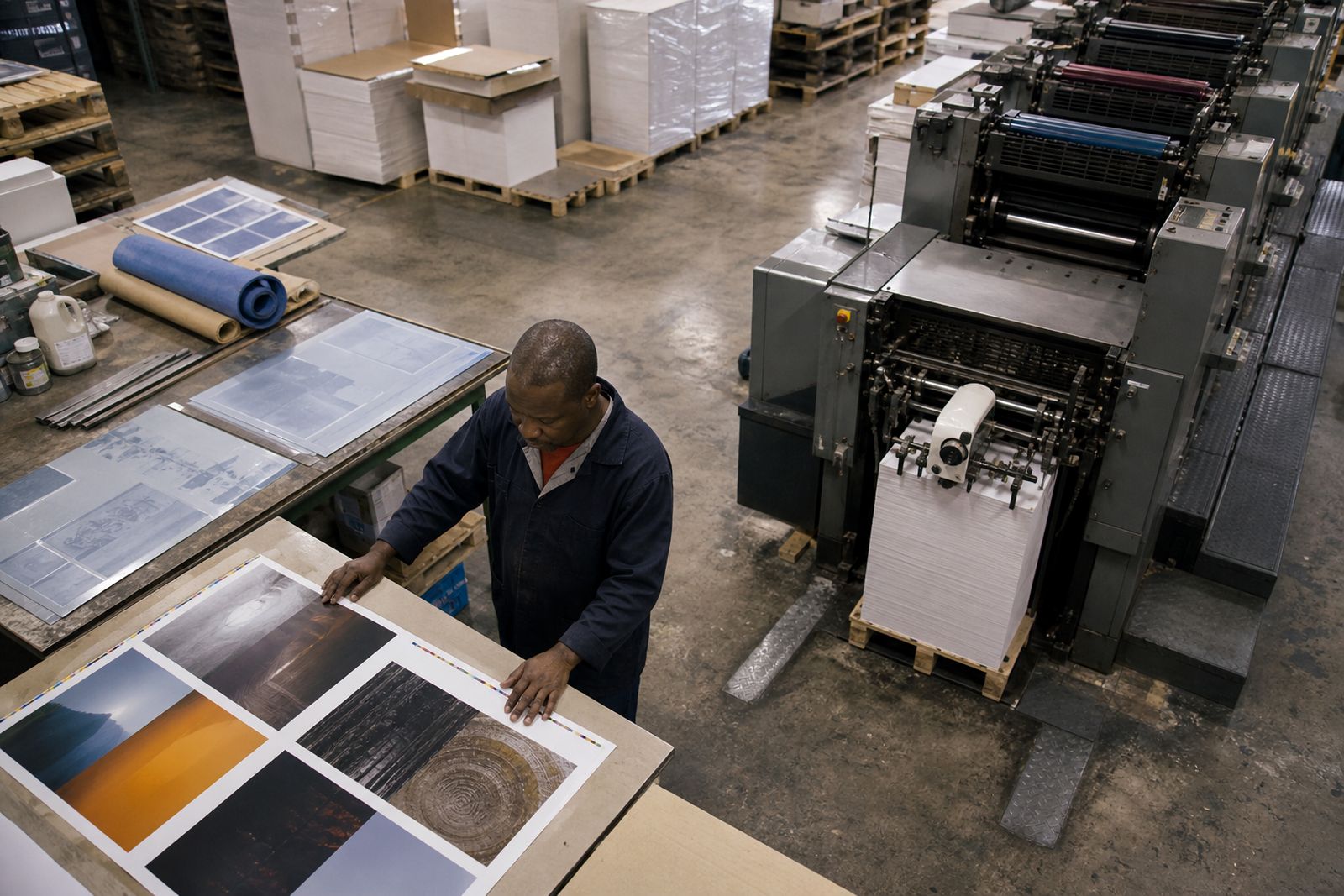
Midrand four-unit press sequence
Four-unit brochure run with perfecting and colour bar photos before lunch. The brief stayed narrow: one primary unit route, one check card, and a makeready note the plant could keep after we left. We write the run sequence a South African press lead can stand over on the floor.
Midrand. The brochure was approved on the first sheet that matched the proof.
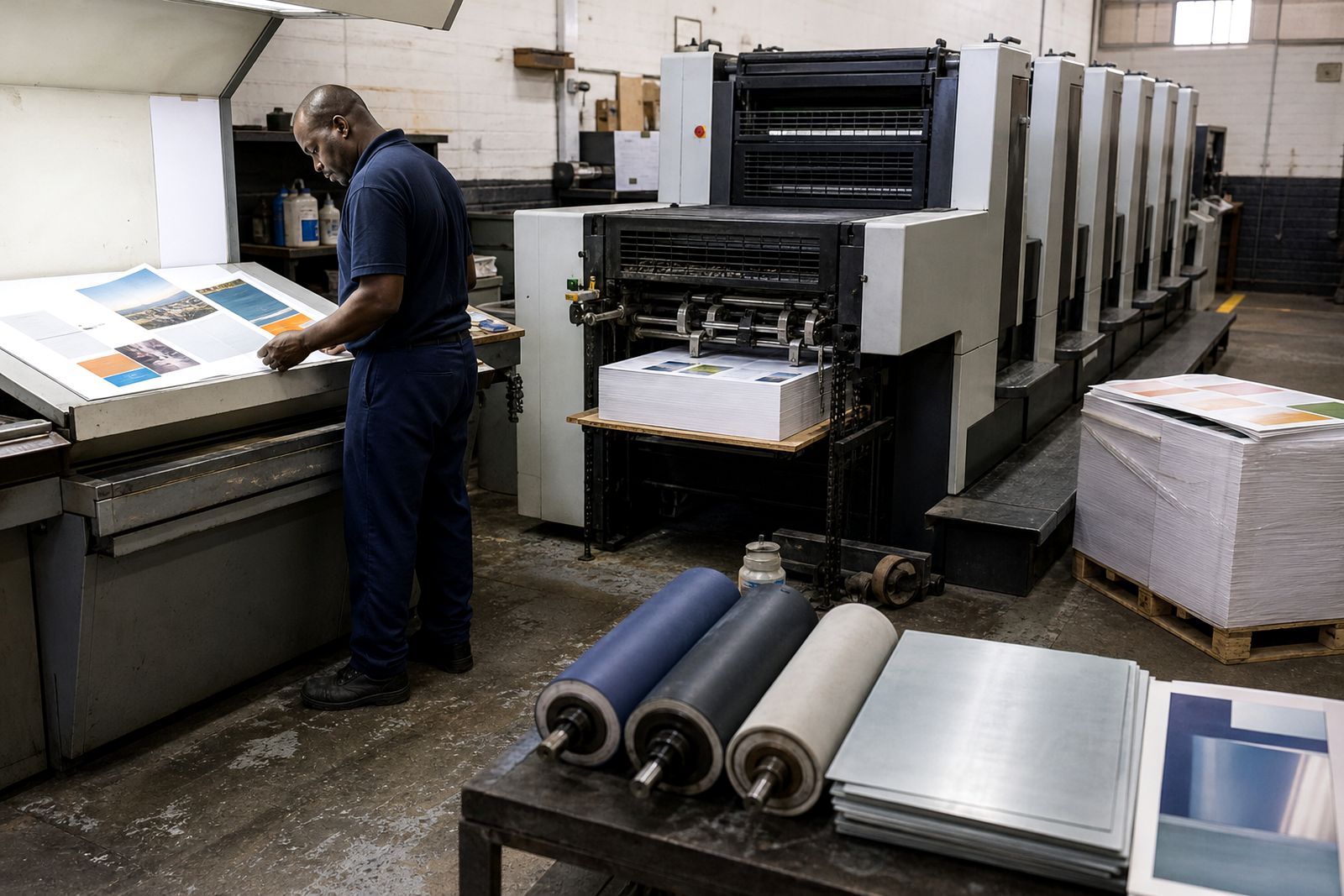
At Midrand, make-ready started with stock and finish signed off before the first sheet. The four-unit run was brought up with perfecting engaged, then colour bar photos were taken before lunch while the sheet was still under close watch. Rejects from the opening pulls were kept apart from the good stack and marked for the job file.
Checks retained after sign-off
This job only needed one primary unit route, one check card, and a short makeready note the press lead could keep at the machine. The press lead kept the first good sheet as one approved point, so later questions could be checked against it. In Gauteng conditions, that simple record matters when paper behaviour shifts through the day.
- Primary unit route fixed early
- Check card approved at first good sheet
- Colour bar photos sent before lunch
- Makeready note kept with ticket
After sign-off, the plant kept the card and note with the job paperwork rather than relying on memory from the shift. That helps when a later rerun needs the same unit order, packing reference, and first acceptable sheet image. Small records prevent long arguments at the feeder end.
Brief notes for a Midrand rerun
Include place, stock, finish, and the intended unit sequence on one page. Add one sheet photo if the job has a sensitive solid or image area, especially where perfecting can show variation between sides. Keep the brief narrow enough for the plant to test against a single card.
For this Midrand print window, the useful notes were not elaborate. The team confirmed stock and finish before startup, then tied the first good sheet image to the same record used on WhatsApp and the ticket. That gave the press lead one reference for colour bar position and sheet condition.
Browse Units, Runs, and Makeready before the call so the language matches. Send a message through our contact form.
What remained at the machine
The plant retained the check card, the first good sheet photo, and the reject pocket label at the press bay. Marketing took the Midrand pack shot only once colour and register were holding on press. That order matters. When photos are taken before density settles, the waste appears later in the job costing.
If another Midrand run needs the same setup, note any change in stock, finish, or image balance before the sheet reaches the press. Even a small shift can alter how the perfecting pass reads against the earlier card. We would rather receive a plain ticket than a polished brief that leaves out press-critical details.
What our Offset Printing customers say
Verified Google reviews
Also worth a look
Tell us what your press room is running
Send a note through our contact form with your press make and format, the stocks and run lengths you handle, the plates, chemistry or blankets you use and your town, and we will come back with practical advice and a quote.
Open the contact form