

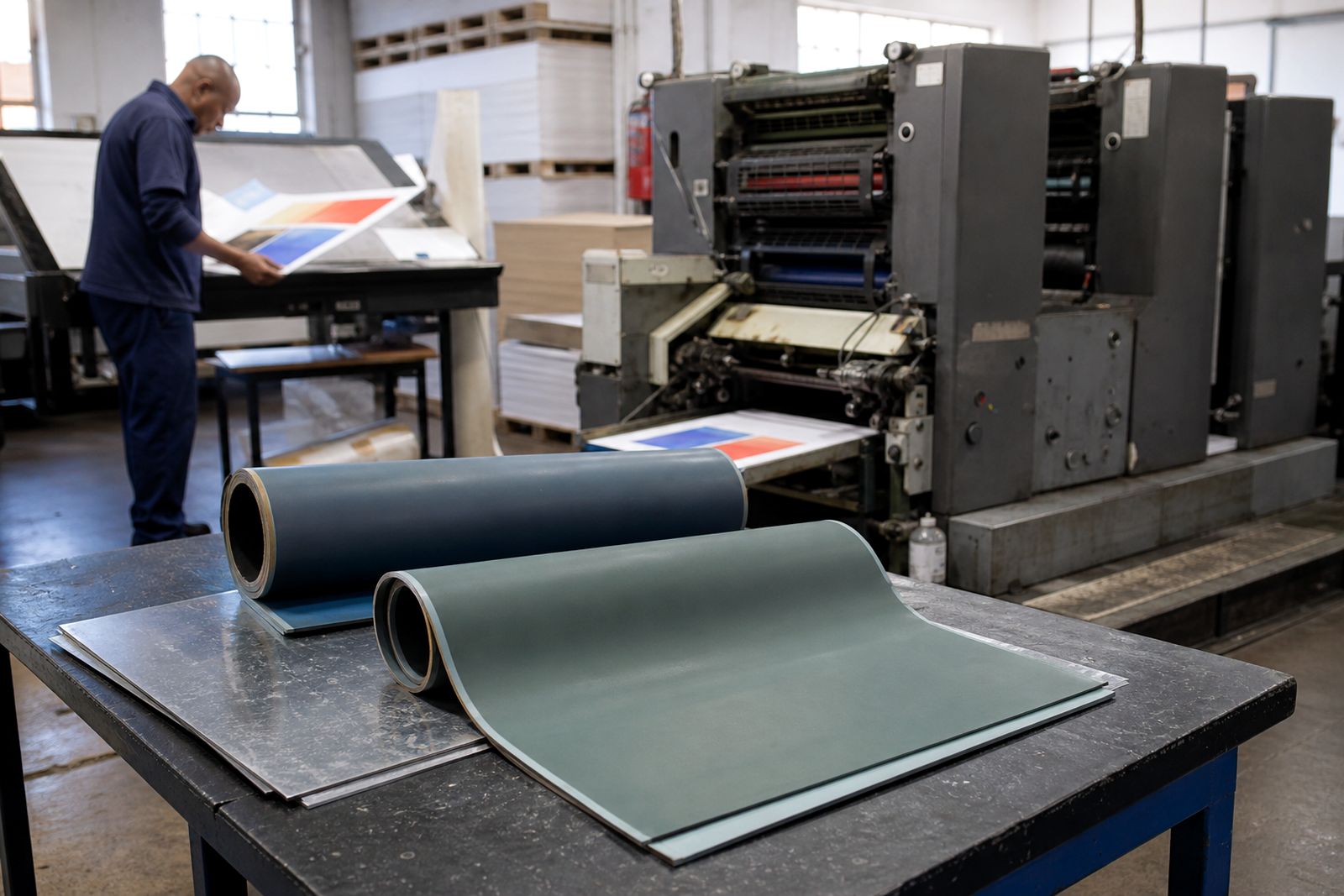
Underlay sheet pack
Underlay sheets for fine packing adjustments.
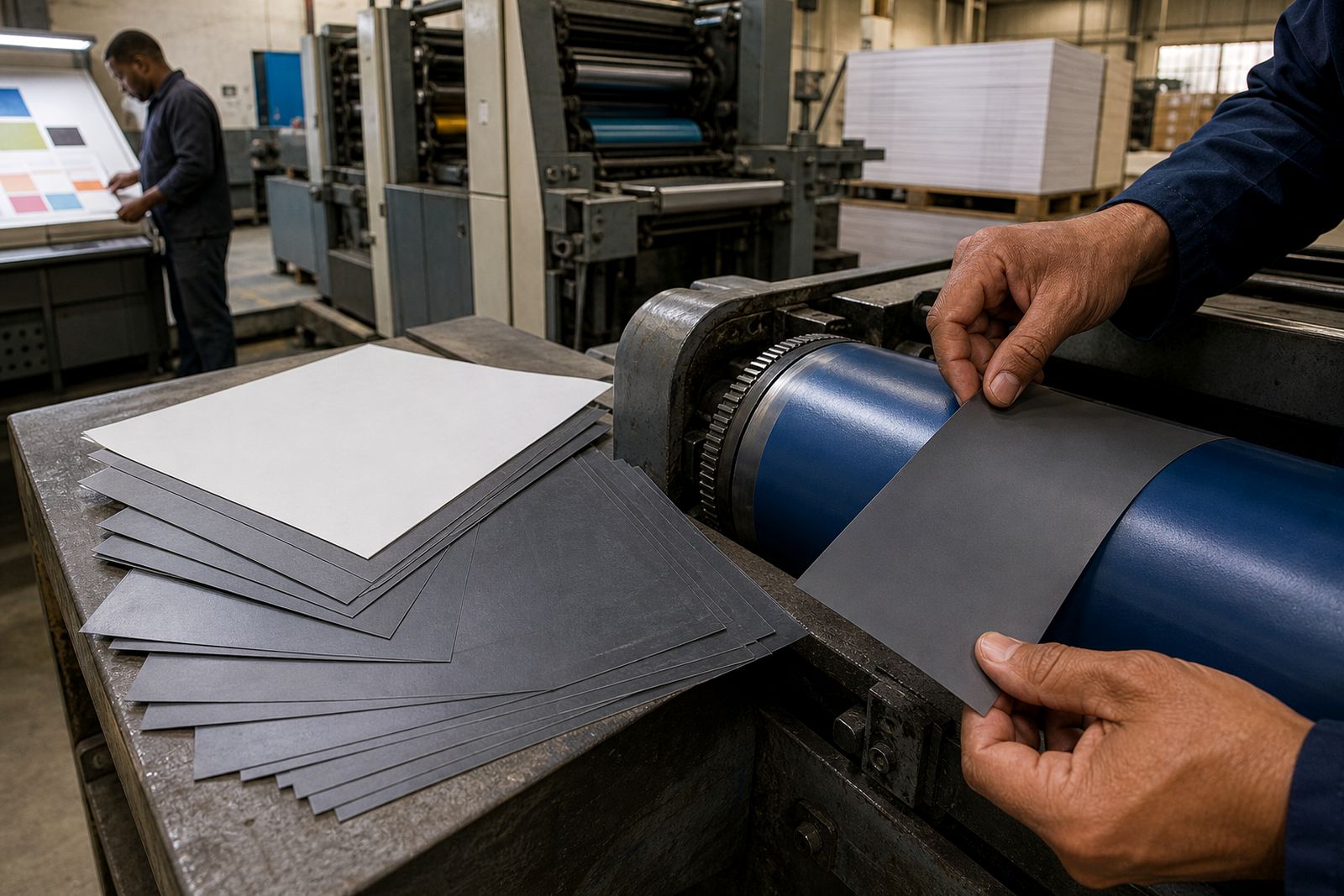
Packing gauge and sheet choice
Send the packing gauge reading through our contact form. Include the press model, blanket type, and the thickness you are trying to correct.
Underlay sheets for fine packing adjustments. These fixtures keep blanket and packing cells honest when the press already owns the floor. Order through our contact form with the press model and packing gauge. We prefer clear photos of the current packing height.
Use these sheets with a measured blanket build, not as a guess. Where the blanket stack relates to a wider change on press, note that beside Blanket cylinder pack so the bay record stays consistent.
Check the total packing height at both ends before ordering. Underlay sheets are meant for fine correction, not for hiding a worn bearer or a damaged channel. In Durban and other humid coastal plants, keep unused sheets flat and sealed so they do not pick up moisture and curl.
Makeready checks before fitting
- Gauge reading noted in millimetres
- Side and drive-end thickness compared
- Packing stack cleaned before insert
- Dry impression checked after change
For the right sheet set, include the press model on the contact form. A clear side-on photo of the packing stack helps, with the gauge visible against the bearer edge. Notes about unit position and whether the issue shows on solids or fine screens are useful in South African commercial rooms.
When underlay will not help
A sheet pack will not fix blanket slip, a damaged bar, or incorrect bearer setting. If dot gain is coming from excessive squeeze across the unit, the answer may be cylinder setting rather than more packing. Shops sometimes keep adding thin sheets until the problem moves elsewhere on the form.
Read the paired Makeready note on packing and the Resources packing log.
Highveld dust and coastal swell
Highveld dust can sit in the packing stack and alter a fine adjustment over time. Coastal moisture changes the feel of paper and blanket, which can make a previously acceptable build read differently on the next shift. Power cuts also interrupt wash-up and restart routines, so packing notes need to be simple and visible at the unit.
Read the gauge beside the open cylinder gap before removing anything. Then send the reading through our contact form with the present build and the correction you want to make. A rough note with the actual number is more useful than a long description without the thickness shown.
If the adjustment belongs to a recurring makeready pattern, cross-reference it with Blanket cylinder pack and Runs. Keep the note to sheet thickness, unit number, and whether the change sits under the blanket edge or across the full width. That format works well in busy commercial rooms.
What our Offset Printing customers say
Verified Google reviews
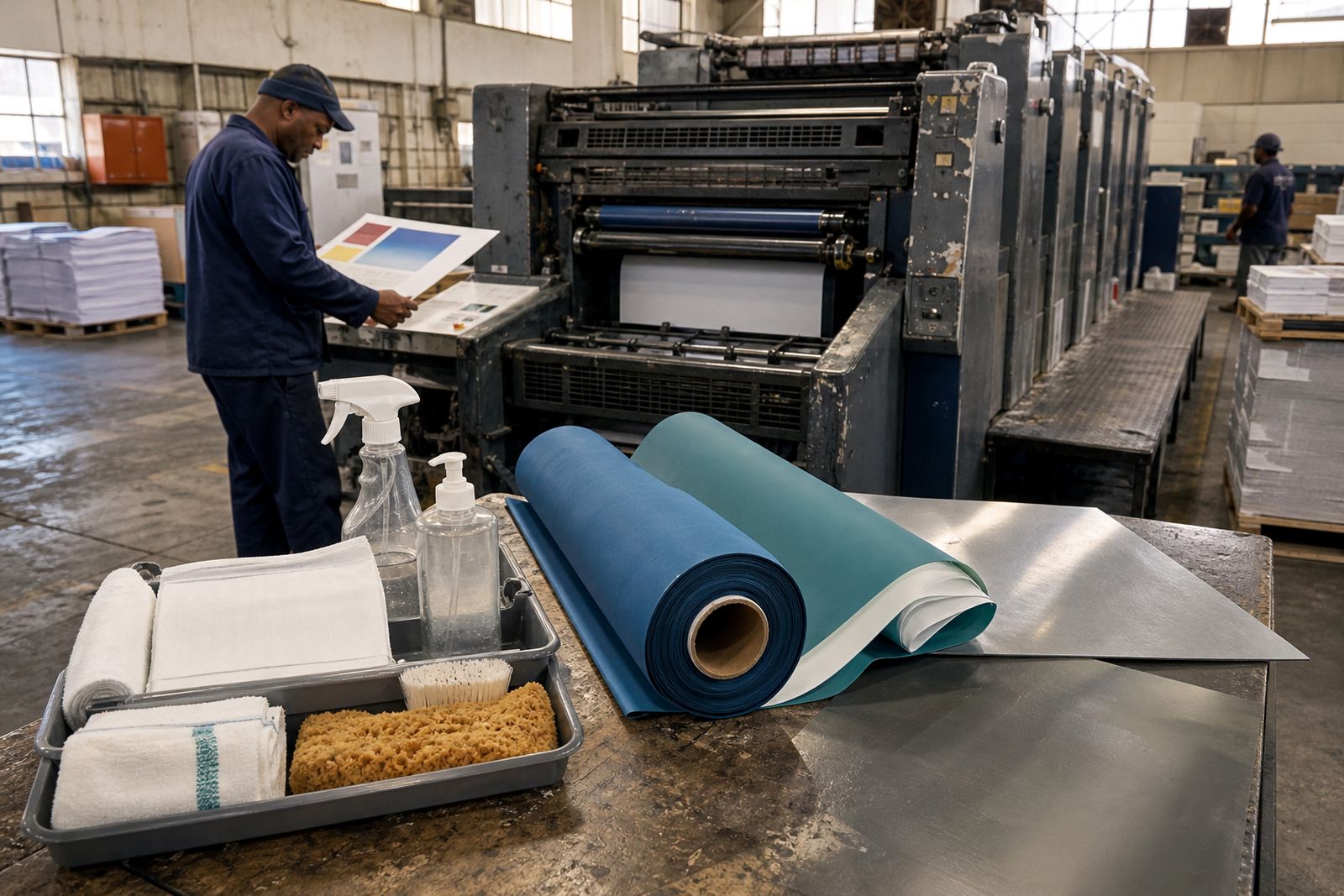
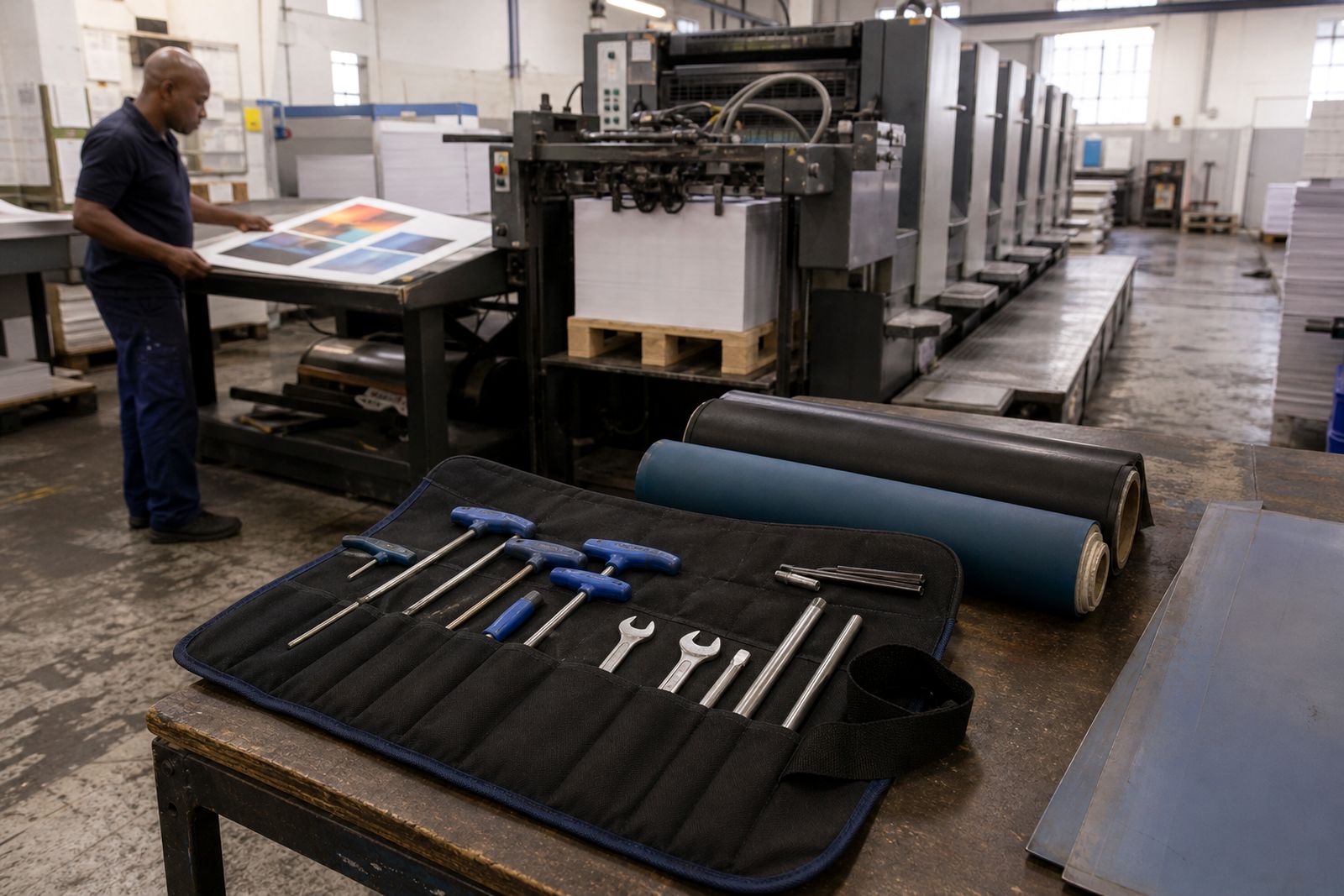
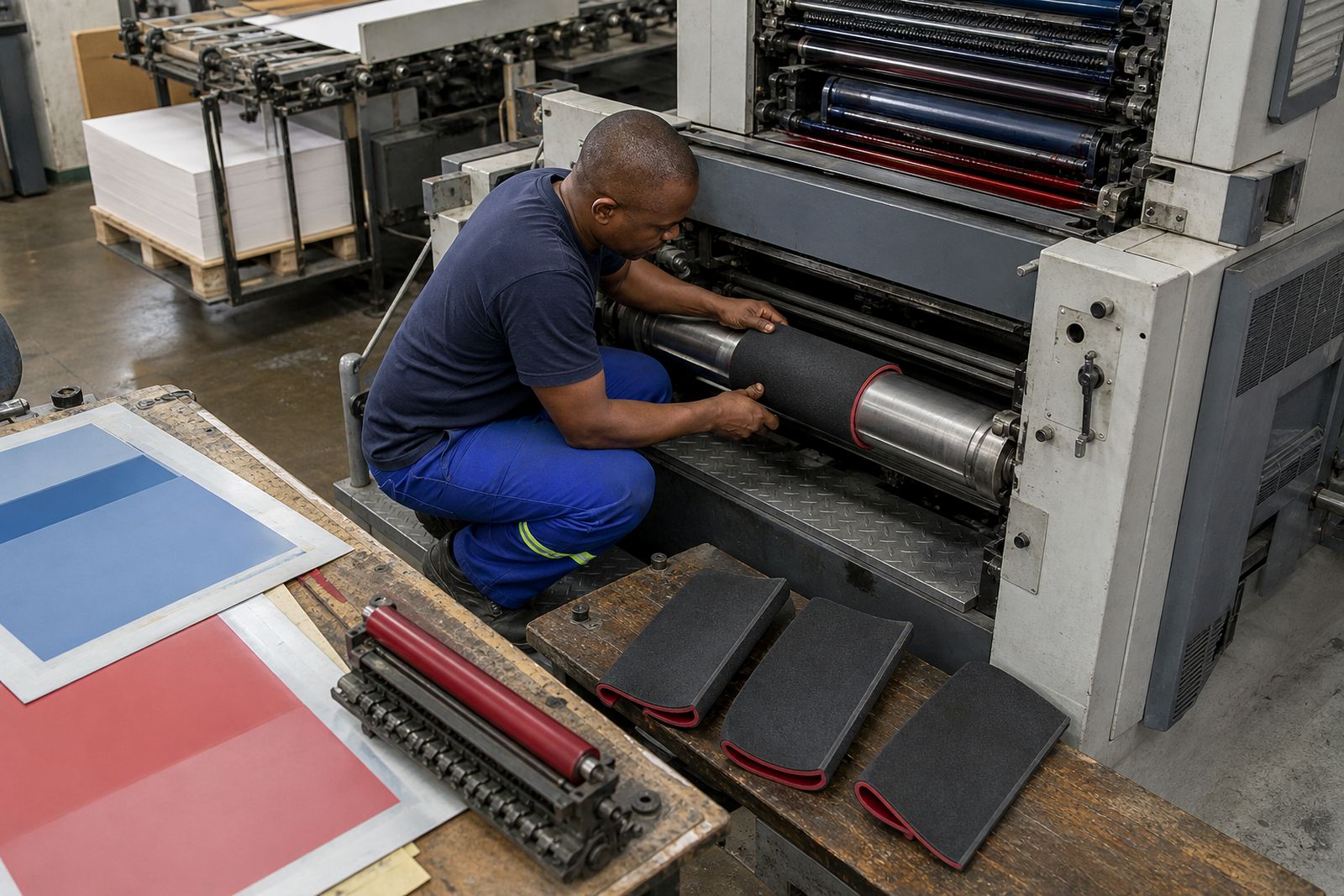
Tell us what your press room is running
Send a note through our contact form with your press make and format, the stocks and run lengths you handle, the plates, chemistry or blankets you use and your town, and we will come back with practical advice and a quote.
Open the contact form