

Firm solids blanket
Firmer face for heavy solids and poster sheets.
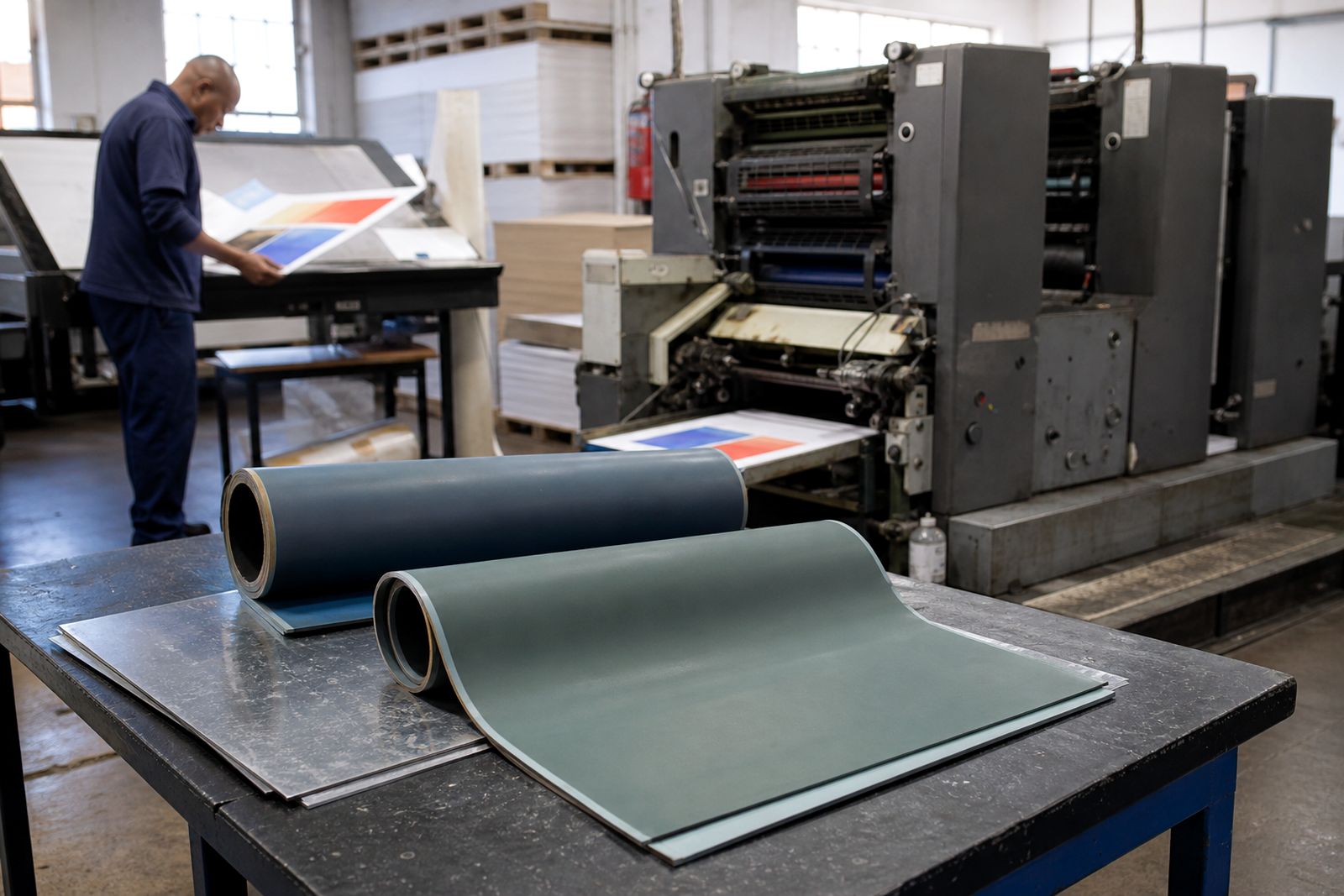
Heavy solids blanket for sheetfed units
Send the press model, blanket size and packing gauge through our contact form. A firm solids blanket is usually chosen where dense solids, poster work or broad tint areas need a harder print face than a general duty blanket gives.
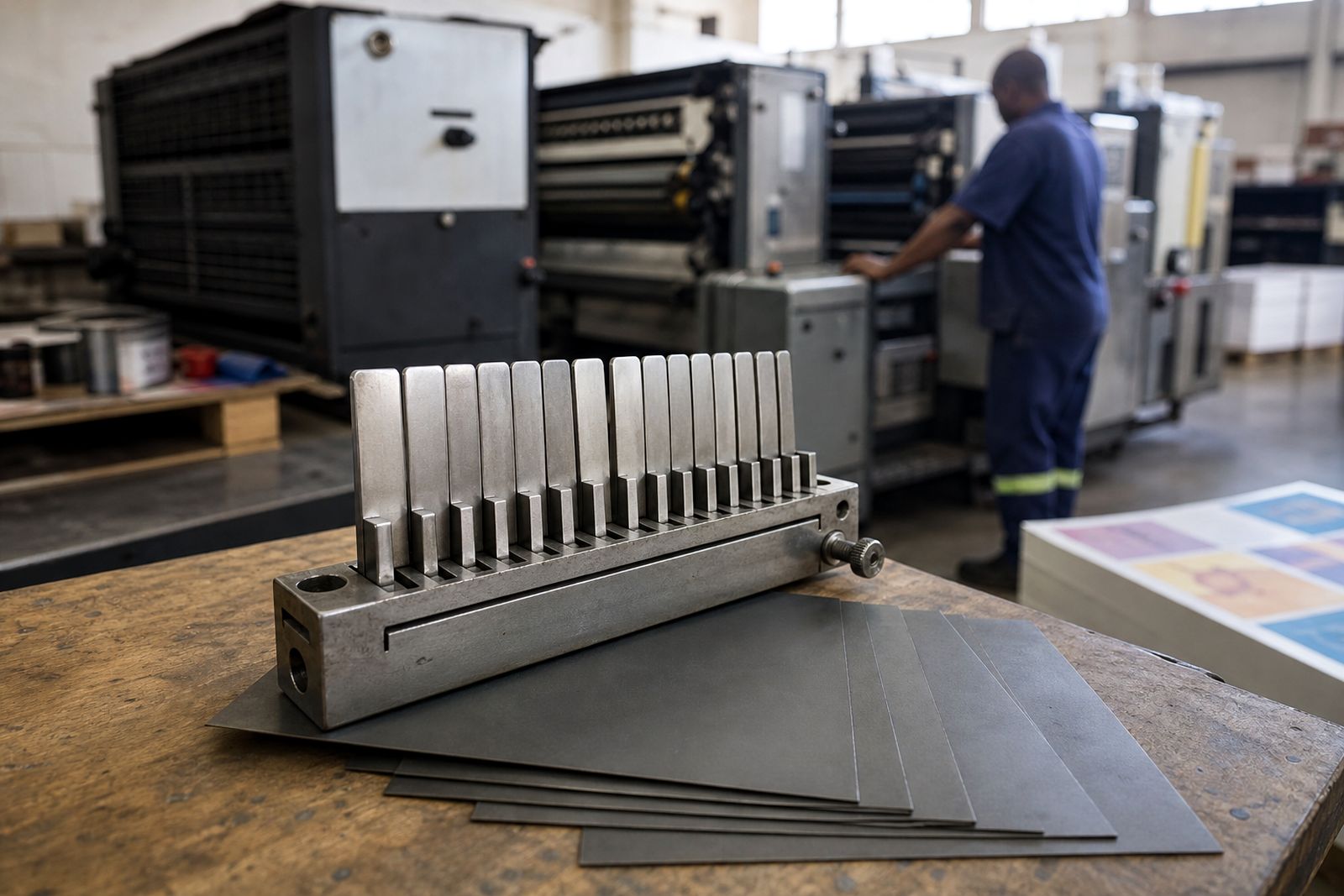
Firmer face for heavy solids and poster sheets. These fixtures keep blanket and packing cells honest when the press already owns the floor. Order through our contact form with the press model and packing gauge. We prefer clear photos of the current packing height.
Use a firmer blanket face where large dark areas are scumming, plugging or showing uneven lay across the sheet. When one unit is being corrected after damage or wear, match it against the existing bearer and packing build, then check it with the blanket cylinder pack before the first production pull.
Check undercut and total packing, not only nominal blanket thickness. A hard-faced blanket that sits too high will mark fast on board stock, while one that sits low can lose edge density on solids. In Durban and other humid coastal plants, keep wrapped blankets on a core so the face does not take a storage bend between changeovers.
Packing and impression checks
- Undercut and gauge noted
- Blanket stored on core
- Compatible wash checked first
- Dry revolution before ink up
Use the contact form and include the press model, sheet size and current packing figure. Clear side views of the blanket edge, bearer area and gauge reading help more than a distant photo of the unit.
Jobs that need a softer face
A firm solids blanket is not the first choice for every form. Fine screens, delicate stock or work needing extra conformability can call for a more forgiving surface instead. If the trouble is poor packing build, worn bearers or incorrect squeeze, changing blanket grade alone will not sort the sheet.
Read the paired Makeready note on packing and the Resources packing log.
Conditions in South African pressrooms
Highveld dust can work into clamp areas and affect seating if the cylinder is not cleaned properly before fitting. Coastal moisture changes how paper behaves through the shift, so solids may need a fresh look at pressure after the room has warmed up. Power cuts also shorten wash and reset time, which makes good packing records worth keeping at the unit.
Photograph the gauge beside the fitted blanket, then take another image after the job if solids begin to open or mark. Send both through our contact form when you need us to compare the packing build against the print result. A simple note with the stock, unit number and ink coverage is useful.
If the problem repeats on one colour only, compare the unit build with the blanket cylinder pack and your usual runs sequence before ordering the next change. Keep the packing note tied to that press, not to general stock room memory. That approach suits many commercial offset rooms across South Africa.
What our Offset Printing customers say
Verified Google reviews
Tell us what your press room is running
Send a note through our contact form with your press make and format, the stocks and run lengths you handle, the plates, chemistry or blankets you use and your town, and we will come back with practical advice and a quote.
Open the contact form