

Soft powder spray
Soft powder spray helps keep heavy ink sheets from blocking while the back of the pile stays cleaner.
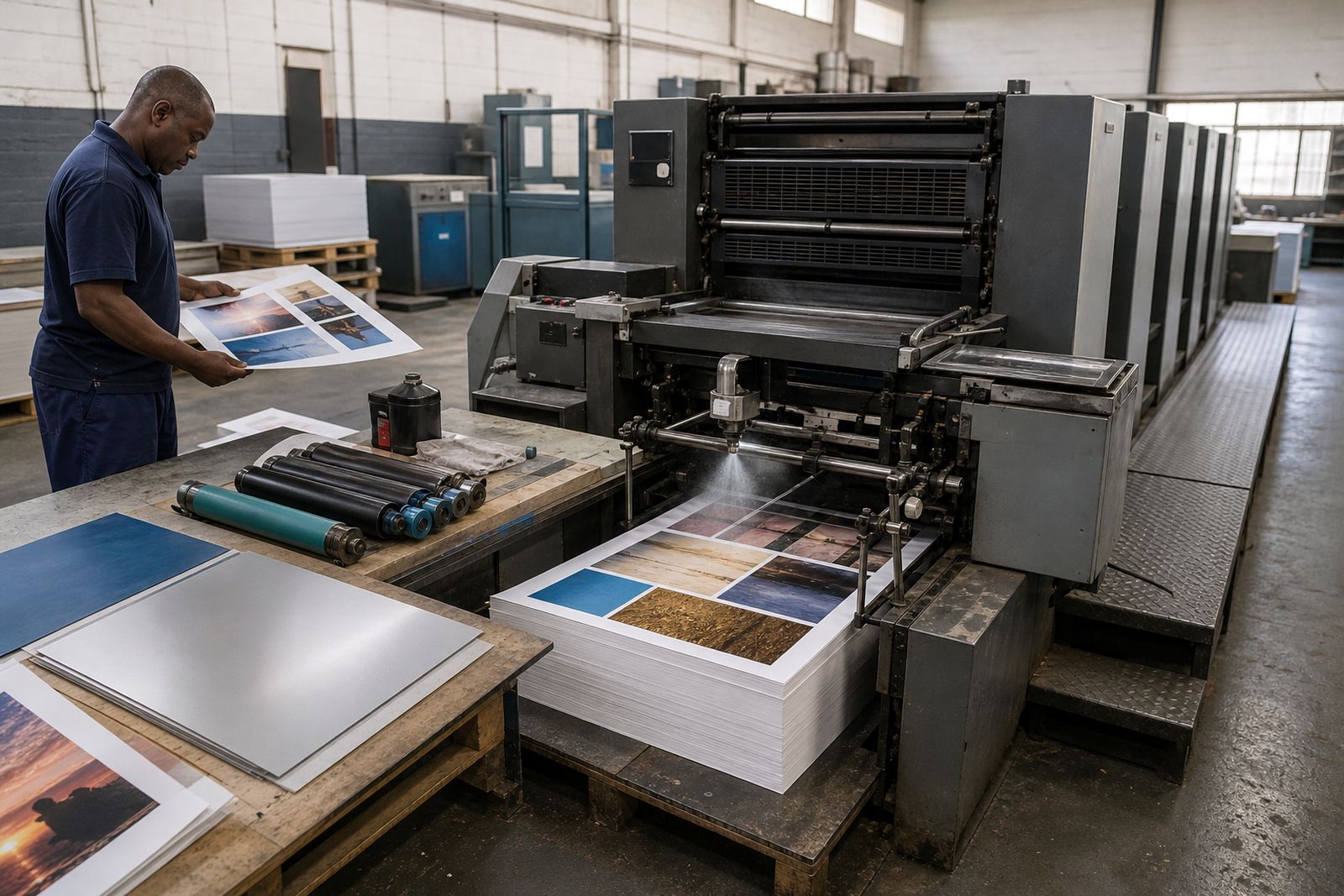
Soft spray for heavy solids
Soft powder spray is used where the sheet leaves the last unit carrying a wet, heavy ink film and the back must stay presentable in the pile. On South African commercial presses this usually means solid cyan, black floods, rich backgrounds and coated cover running fast enough for setoff risk to climb. The softer grade lays a gentler spacer between sheets than coarse anti-setoff powder, which helps when the job still needs a cleaner finish on the reverse.
Stock choice matters more than press speed alone. Gloss and silk coated sheets often take this spray best when the delivery is not over-fanned, while lighter uncoated work can mark if the feed is too open for the powder volume. For perfecting jobs, keep the gripper edge and turning edge under review because soft powder can hide a delivery issue without fixing it.
Check the first settled pile, not only the first good sheet. A sheet can look fine at delivery and still offset in the stack ten minutes later once pressure builds under heavy solids. In many Cape Town and Gauteng plants, that second look saves more waste than any adjustment made at the feeder.
What this spray covers
A soft anti-setoff powder suits commercial offset units, especially where solids are broad and the reverse side must remain clean enough for finishing. The note to pair it with IR dryer on coated stock is important because heat assists surface setting before the pile gains weight. If another route suits the job better, see Runs.
Use this setting as part of the full run plan, not as a stand-alone fix for slow drying ink. Read the matching guidance under Makeready before changing powder volume, air, delivery height or IR output, because those four points affect each other on press. When using our contact form, include stock grammage, coated or uncoated, sheet size, and whether marking shows at the tail or across the whole back.
- Inspect the pile after ten minutes
- Best on coated sheets with solids
- Reduce excess fan before adding more powder
- See Runs and Makeready for pairing
Pressroom conditions affecting spray
Highveld dryness can make powder appear lighter while static keeps sheets clinging in delivery, so operators often need to judge the stack rather than the visible cloud. Coastal humidity around Durban and Cape Town may slow surface set on coated sheets, which is where IR support becomes more useful. During power cuts recovery, recheck the pile before restarting at full speed because the top sheets may have sat under heat and pressure.
Dust control around the delivery end is worth watching with this softer grade. If blankets, guards and delivery sensors are carrying paper dust, powder can gather where crews expect clean release. Where a plant runs mixed flyer and cover work in one shift, keep separate notes for powder volume on each stock instead of carrying one setting through every changeover.
Working notes for soft powder
| Format / band | Soft powder grade |
|---|---|
| Screen / role | n/a |
| Notes | Pair with IR dryer on coated |
Format band is specified for this unit, while screen role is not applicable here because the spray is selected for sheet separation rather than screening behaviour. The key checks are powder volume, delivery air, pile height and whether IR is active on coated work. For a bay sketch or press-specific note, use the contact form and name soft powder spray clearly.
Related pages
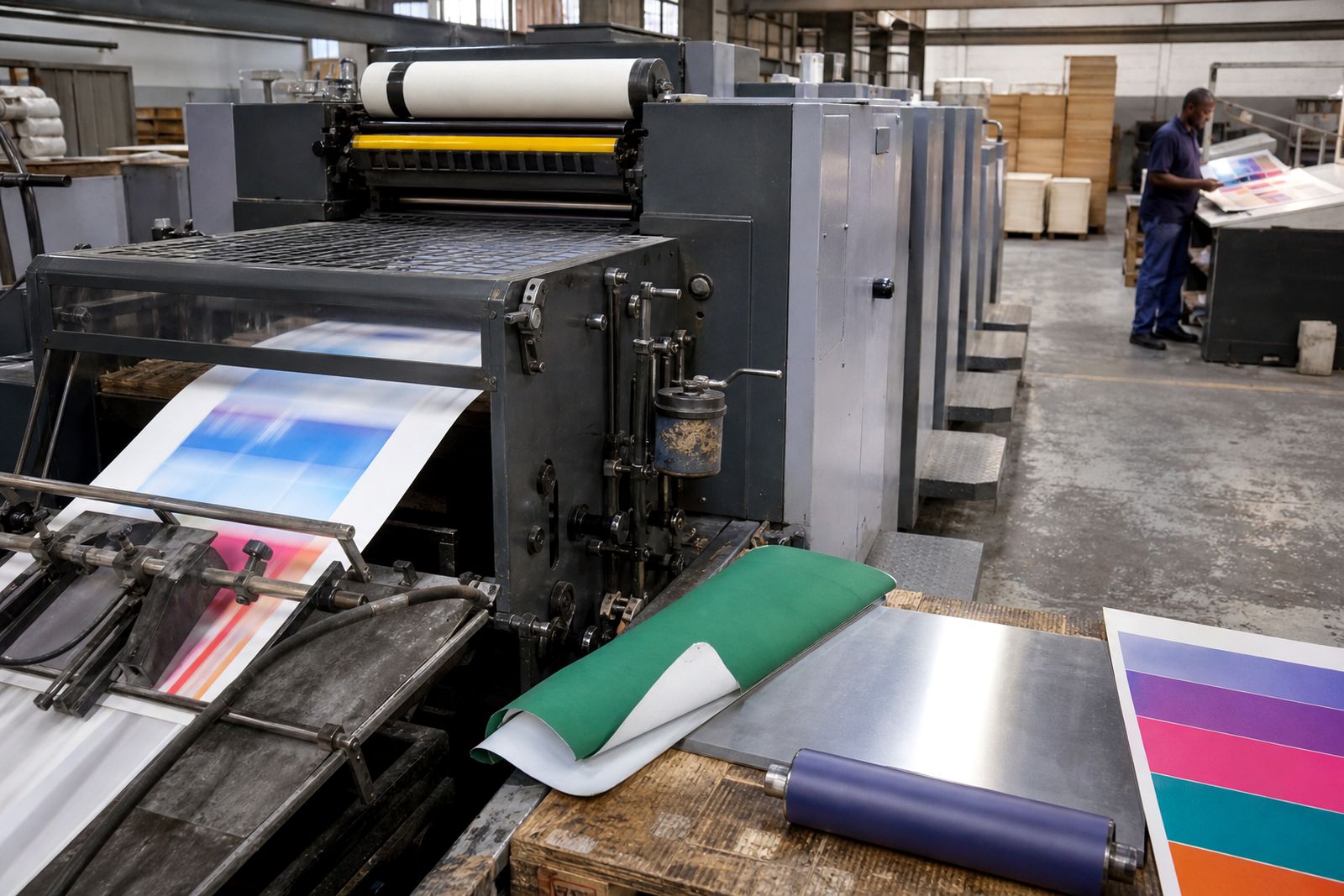
Powder Spray Soft process
Powder Spray Soft notes on grade choice, delivery placement and use with coated work on commercial offset presses.
Read more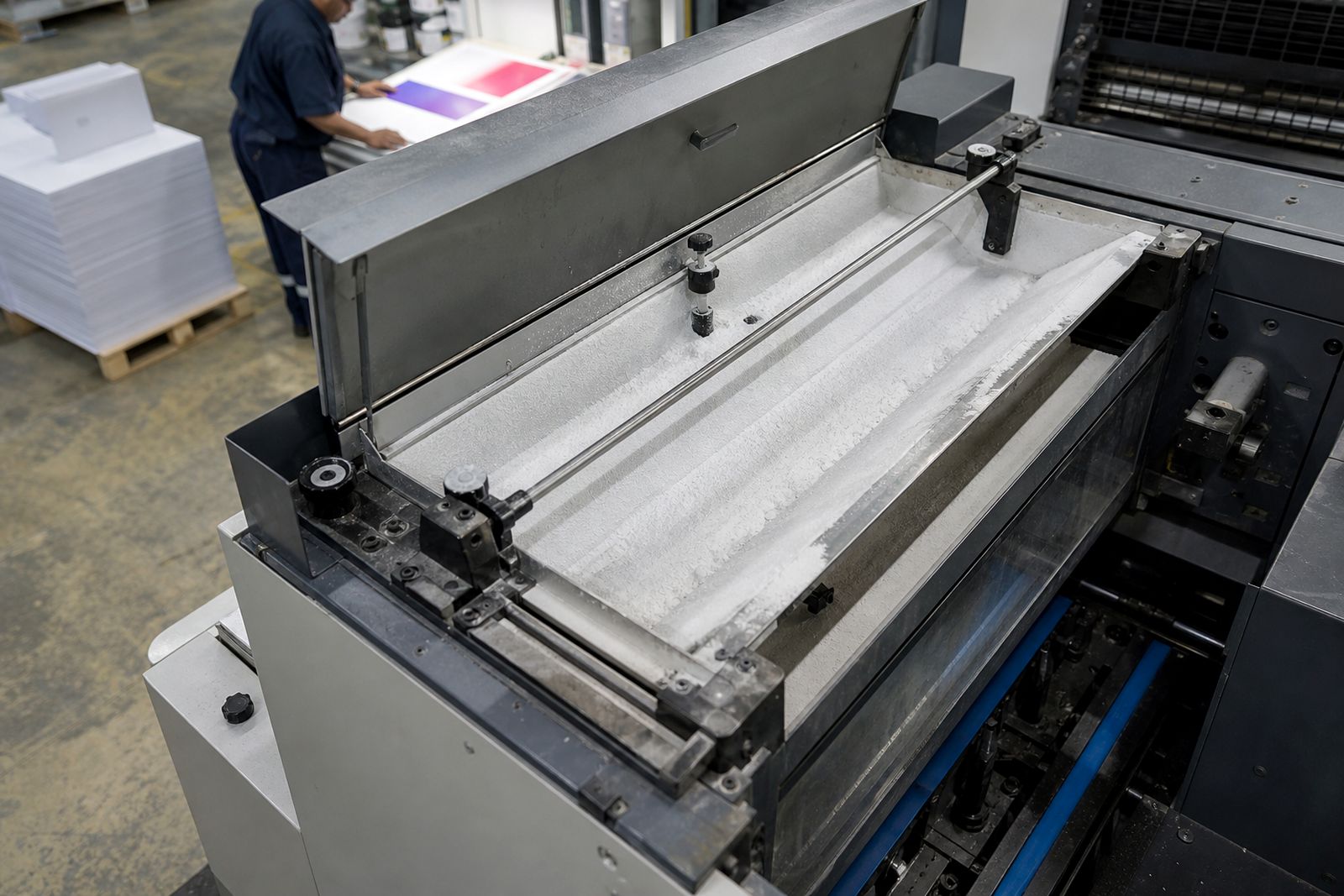
Powder Spray Soft service
Soft spray service guidance for hopper cleanliness, clumping, static and even coverage from the powder spray unit.
Read more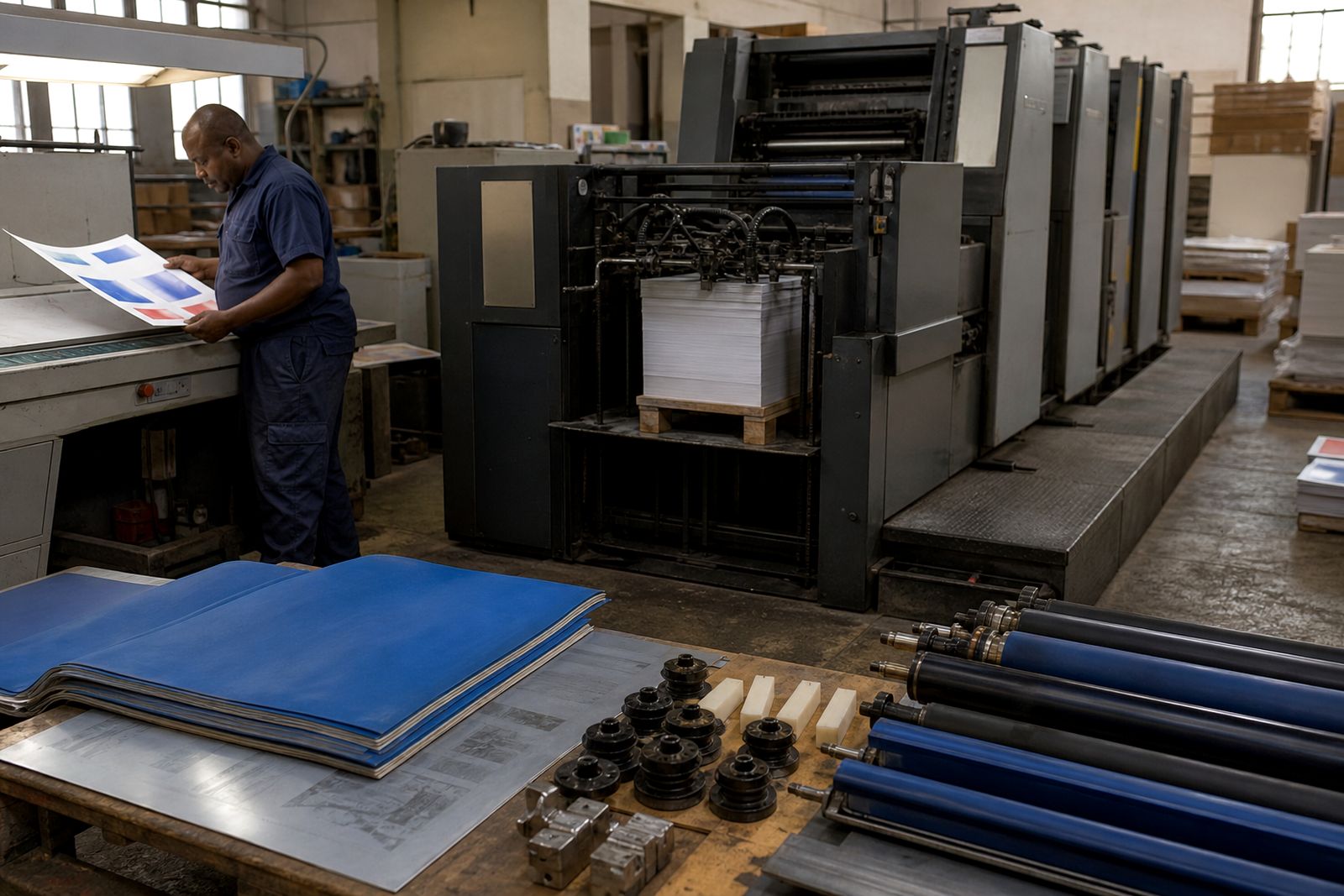
Pressroom spares kit
Quarterly spares kit for blankets, suckers, and clamp pads on busy SA presses.
Read moreWhat our Offset Printing customers say
Verified Google reviews
Tell us what your press room is running
Send a note through our contact form with your press make and format, the stocks and run lengths you handle, the plates, chemistry or blankets you use and your town, and we will come back with practical advice and a quote.
Open the contact form