

Delivery Stack Guard process
Delivery stack guards and jogger pads for clean stacks on long brochure runs.
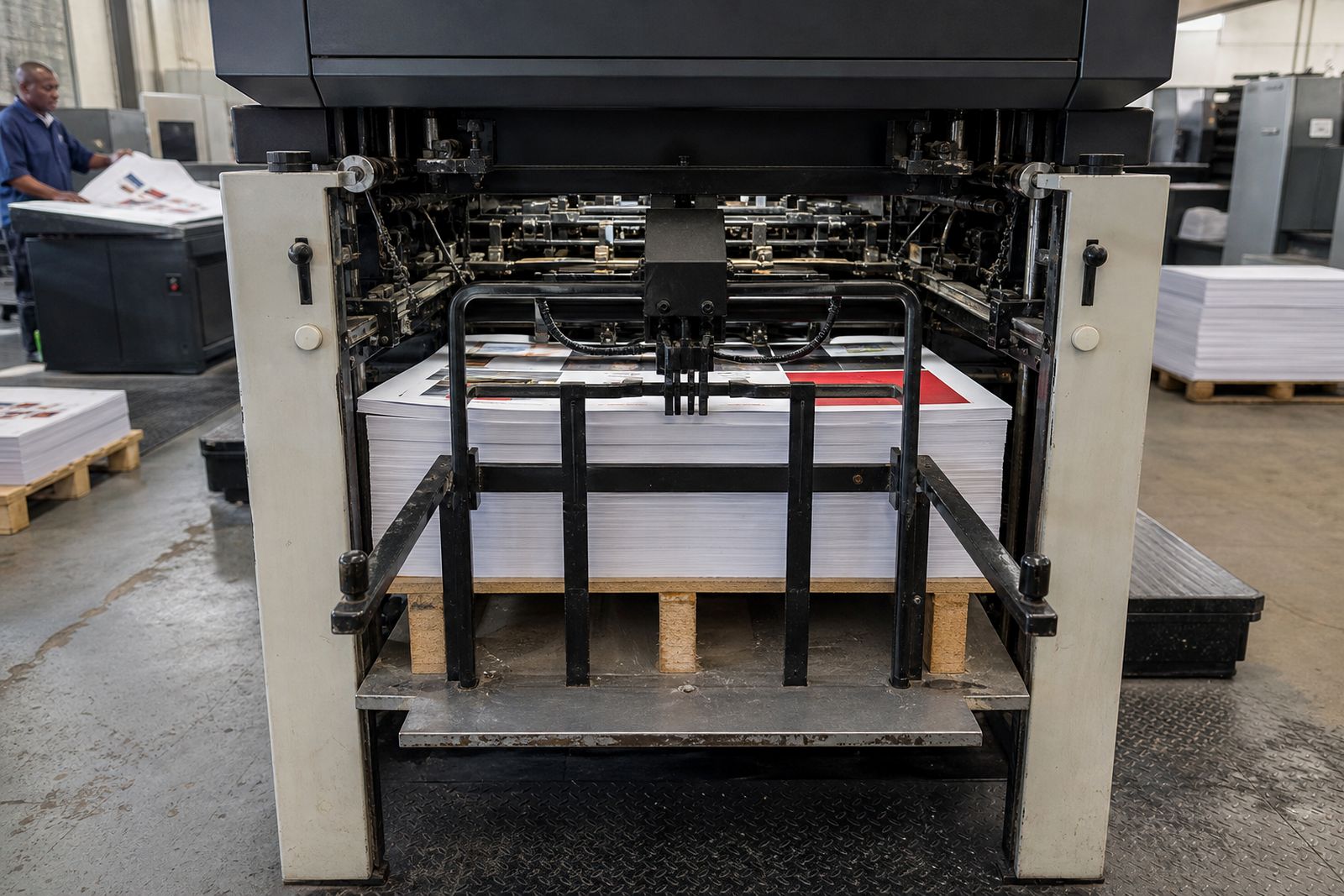
Delivery stack guard on real shifts
| Format / band | Jogger + guard |
|---|---|
| Screen / role | n/a |
| Notes | Reduces edge mark on coated stock |
| Typical runs | See Runs linked to this delivery setup |
For bay dimensions or guard position sketches, use the contact form and include the delivery size and stock weight. The figures are working bands for setup, then fine-tuned at the machine once pile height, jogger action, and sheet curl are visible.
Keep one marked sample from the first clean pile with the shift card after the guard is set. On coated sheets in summer, note any fan air or jogger change when edge scuff starts showing near the tail.
Delivery stack guard matters when sheets leave the last unit clean but pick up marks as they settle in the pile. The process is there to control contact at the delivery, especially on glossy coated work, long folded sections, and jobs running fast enough for the pile to shuffle. We write these notes for South African pressrooms dealing with Highveld static, Cape humidity, and power interruptions that force a stop and restart on the same stack.
Start with sheet size, stock weight, and whether the ink film is still soft at delivery. A guard that works on 150 gsm gloss can be too aggressive on light uncoated text, while the jogger setting on long landscape forms often needs easing to stop corner bruising. Keep the focus on where the guard sits, when to use jogger pads, and what to check before the pile marks.
Take a photo of the first stack that lands without edge marking, not just the first printed sheet. Include the delivery side guide area and pile edges in frame. That image helps the next operator restore the same guard height and jogger position after a stoppage or pallet change.
Guard placement at delivery
The setup note should give the crew one delivery arrangement that matches the stock and pile behaviour. Include guard position, jogger pad use, and any fan air reduction that kept the edges clean. If another press route suits the run better, follow the link to Runs and pair it properly.
Read the delivery note together with the paired Makeready card before changing more than one setting at once. Start with stock, pile height, and press speed when you send details through our contact form, then add what happened at the delivery edge or tail. If the pile settles differently after a stop, record whether the guard moved, the joggers were backed off, or the air was cut.
- First clean pile sample kept with shift card
- Guard height matched to stock bulk and curl
- Jogger pressure checked after speed changes
- Related: Runs and Makeready for this setup
South African pressroom conditions affecting delivery
On the Highveld, dry air can leave light sheets lively at delivery and make pile alignment less predictable. In coastal plants, moisture and softer ink surfaces can increase the chance of edge rub where the pile builds. These notes keep the focus on what the crew can adjust at the delivery without chasing every mark through the whole press.
Dust around the delivery fan section changes how often guards and pads need cleaning. Power cuts stops matter too, because a restarted pile may not settle like the one before the outage. If your plant is working beyond basic delivery checks, say so in your email and note whether the issue sits with pile aeration, jogger timing, or simple stack support.
Checks for stack quality
| Format / band | Jogger + guard |
|---|---|
| Screen / role | n/a |
| Notes | Reduces edge mark on coated stock |
The delivery stack guard process is for the delivery end only: guard use, jogger support, and stack condition during the run. The figures should fit on one sheet for the press crew and maintenance team to check together. If you need a layout sketch for the delivery arrangement, use the contact form and name it clearly.
What our Offset Printing customers say
Verified Google reviews
Also worth a look
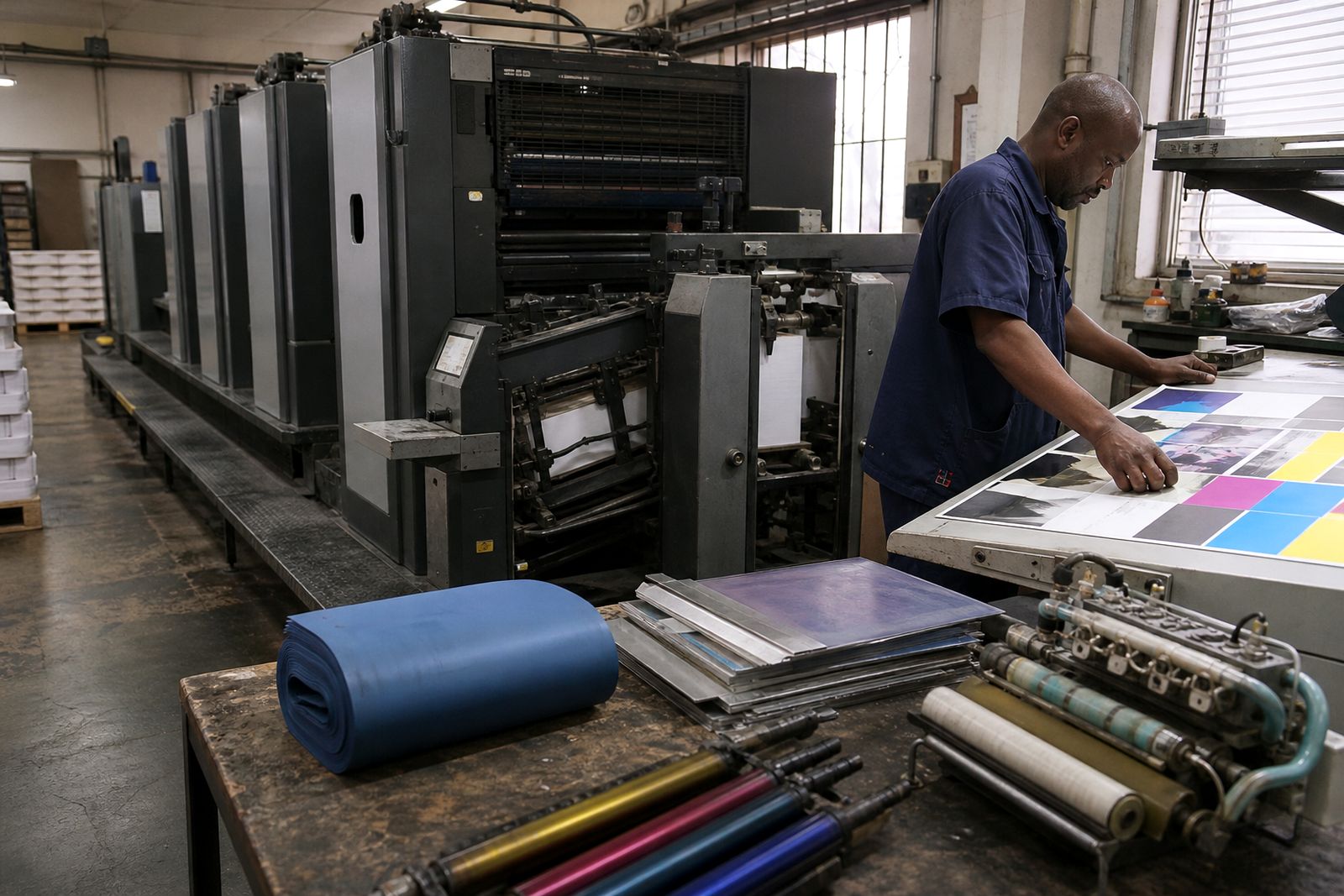
Tell us what your press room is running
Send a note through our contact form with your press make and format, the stocks and run lengths you handle, the plates, chemistry or blankets you use and your town, and we will come back with practical advice and a quote.
Open the contact form