

Blanket Cylinder Pack process
Blanket cylinder pack with packing gauges for clean transfer on coated and uncoated.
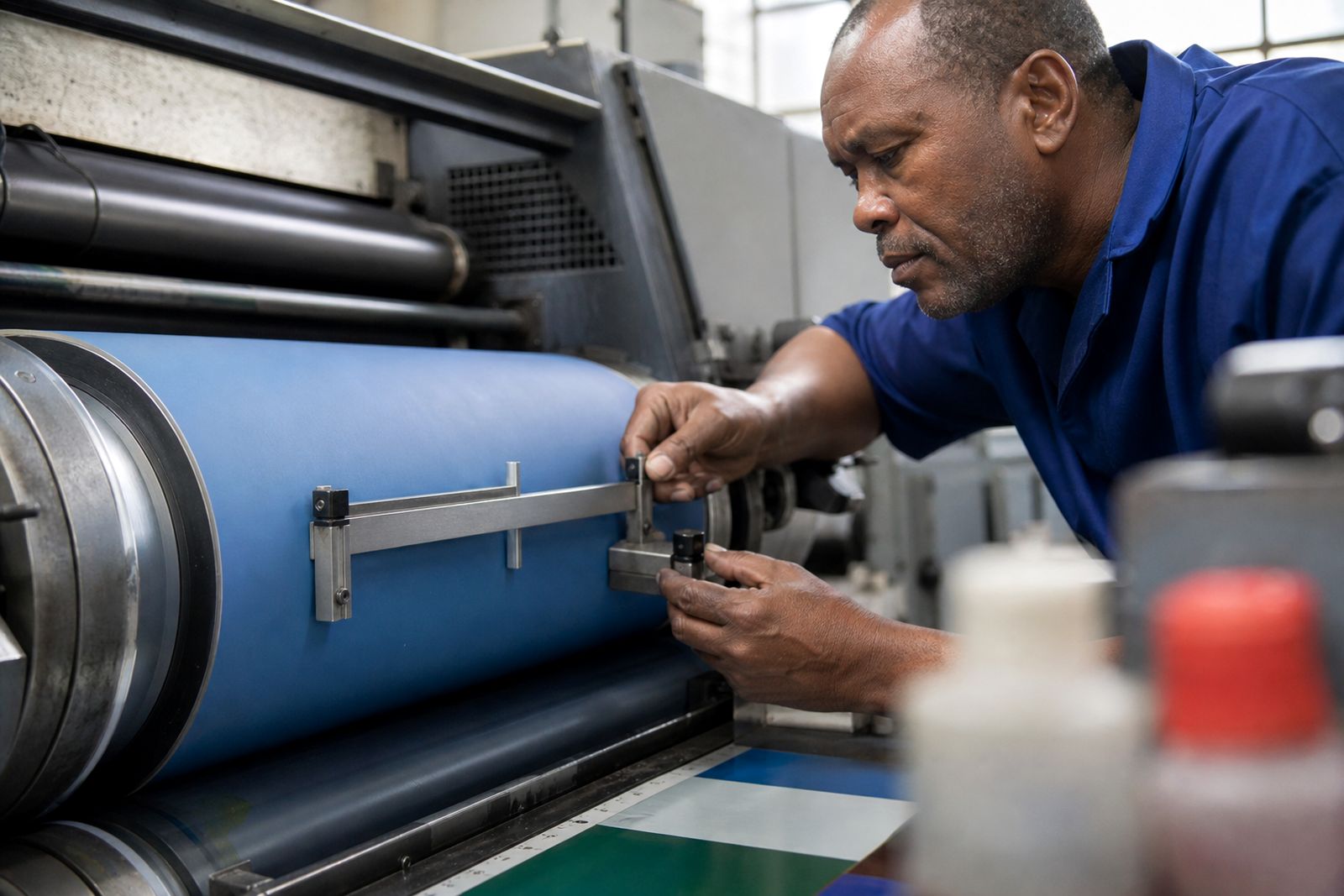
Blanket cylinder pack on real shifts
| Format / band | Packing gauge set |
|---|---|
| Screen / role | n/a |
| Notes | Coastal humidity changes packing feel |
| Typical runs | See Runs linked to this packing path |
Need a cylinder or bearer-side sketch for the blanket pack? Use the contact form and include press size, blanket type, and whether the unit is on coated or uncoated work. Treat the figures as working references, then verify with your gauge set on press.
Keep a photo of the first sheet passed for density and slur with the shift paperwork. When solids start to widen or fine type loses edge in summer heat, note the blanket pack change before touching ink keys.
Blanket cylinder packing decides how the image leaves the blanket and lands on sheet. Too hard and you start seeing dot gain, edge pressure, or sheet marking. Too soft and solids look weak, small reverses plug, and coated stock can show uneven transfer. In South African plants, the feel of the pack changes between a dry Highveld morning and a damp coastal afternoon, so gauges matter more than guesswork.
Start with the stock class, sheet thickness, and blanket construction. A gloss coated flyer on a sheetfed unit does not want the same underblanket stack as an uncoated NCR or bond job. Perfecting work also needs closer attention at the gripper edge because poor pack height shows there first. Keep the checks short enough to use beside the unit between changeovers.
Photograph the first approved sheet with the colour bar and a clean solid area visible. That record helps the next shift compare transfer, pressure marks, and blanket condition after a stop or wash. If the unit restarts after power cuts, the photo gives the crew a fixed reference before waste climbs.
Blanket pack checks on press
Use this process to match the blanket pack to the stock actually running through the unit. It covers gauge use, transfer signs, and the small faults that point to overpack or underpack. If the job note calls for a full run sequence rather than a single unit check, open Runs for the paired route.
Read the related Makeready note before changing packing on a live job. Blanket pressure, dampening condition, and stock surface need to be judged together or the fault gets misread. If you send details through our contact form, include press model, sheet size, stock gsm, and the gauge reading now on the cylinder. Keep a second gauge set ready when switching between soft uncoated and hard coated work on the same shift.
- First passed sheet photographed with colour bar
- Gauge set matched to stock surface
- Transfer checked after every blanket wash
- Related: Runs and Makeready for this unit
Pressroom conditions that change pack
Blanket pack does not stay constant through every South African shift. Cape Town humidity can soften the feel under the blanket, while Gauteng dryness shows up in static, feeding variation, and harsher transfer on thin sheets. The point of the line note is to help crews separate a packing issue from an ink, water, or feeder issue before waste builds.
Salt air and condensation near the coast can change how blankets seat after a wash. Inland dust means more frequent cleaning, and that can alter how quickly the unit comes back to the approved transfer point. During power interruptions, note the last accepted pack reading before shutdown so restart checks are faster. If your plant is running beyond basic unit setup, say so in your email and include any colour bar or scanner control used on the line.
Figures used for blanket packing
| Format / band | Packing gauge set |
|---|---|
| Screen / role | n/a |
| Notes | Coastal humidity changes packing feel |
Use the process figures here for makeready checks at the console. Keep the packing gauge set, blanket thickness, and any underblanket notes on one sheet for the maintenance and press crew. If you need a unit sketch or cylinder layout, use the contact form and name blanket cylinder pack process.
What our Offset Printing customers say
Verified Google reviews
Also worth a look
Tell us what your press room is running
Send a note through our contact form with your press make and format, the stocks and run lengths you handle, the plates, chemistry or blankets you use and your town, and we will come back with practical advice and a quote.
Open the contact form