

Packing log sheet
Log gauge numbers before and after coastal weeks.
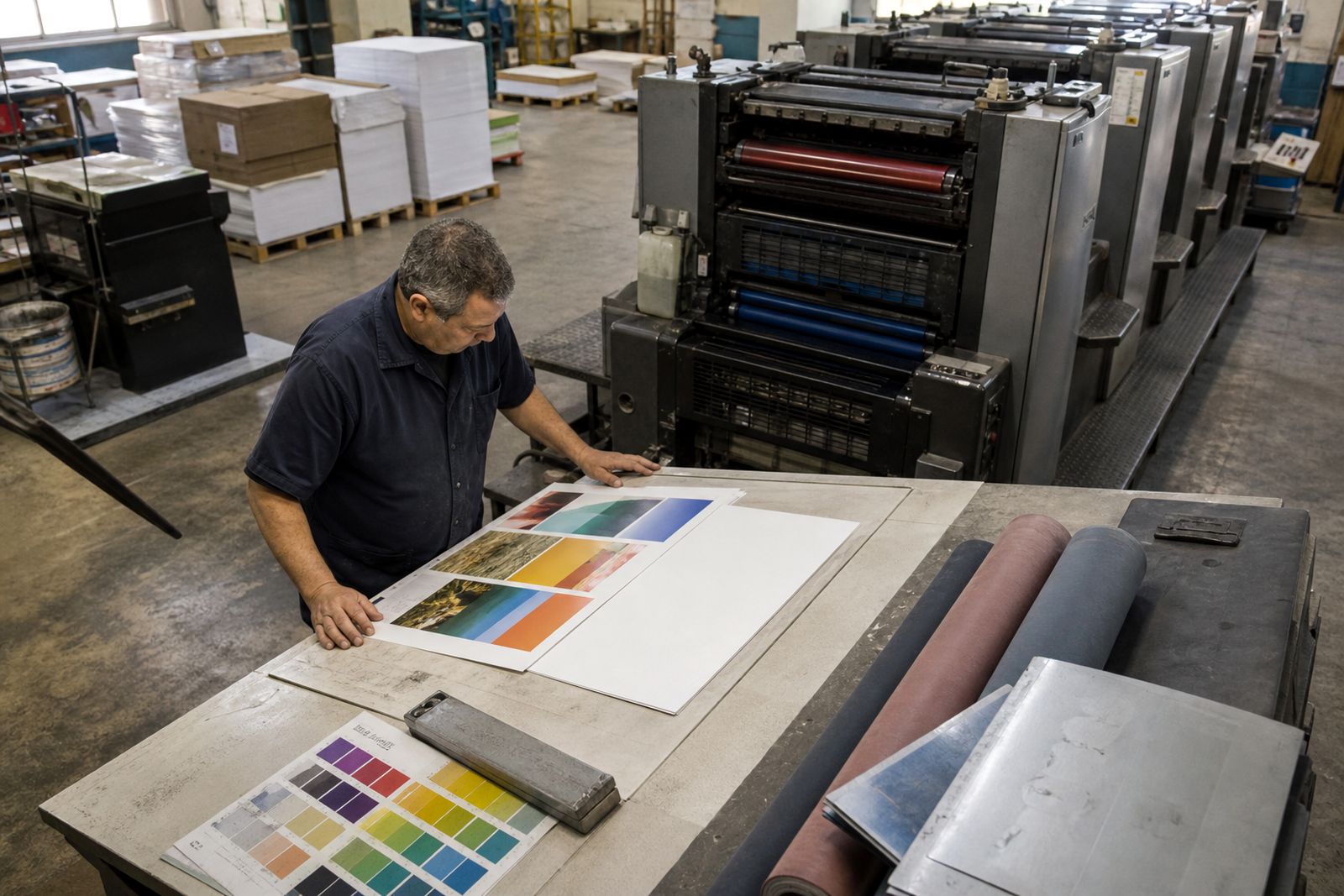
Gauge readings through coastal weeks
Log gauge numbers before and after coastal weeks. Print it, pin it, photograph it. We keep these resources brief so they can still be used beside a noisy press. Use the contact form if your QMS file needs this card in Word or PDF.
This sheet is for recording packing and bearer gauge numbers before the weather turns damp and again after the coastal spell passes. On offset units, a small shift in squeeze can show up first as dot spread, slur, or unstable solids, so the log gives the crew a dated reference at the machine. Use it with your normal press checks, not as a substitute for setting the unit correctly.
Most press rooms trust a page that can be marked with oily hands and read from the feeder side. A packing log works best when it carries the same terms used on your Makeready notes, especially for blanket packing, plate underlay, and gauge position. During humid Cape periods, those before-and-after figures help shift handover stay factual instead of relying on memory.
Details to include on your sheet
List the press, unit number, date, operator, substrate, and the actual gauge readings taken at strip-down or first pull. It helps to leave space for blanket change dates, packing rebuilds, and any note about a coastal week that affected register or density. If your room runs multiple sizes, keep a separate log format for each press family so figures are not copied into the wrong context.
- Press name and unit number
- Before and after coastal readings
- Space for blanket and packing changes
If your QMS requires a controlled document number, put that in the subject line. If needed, the card can carry an empty field for your controlled document number. For a sample brief, we do not add made-up ISO wording.
Common mistakes on press side
Trouble starts when readings are written without the stock or blanket condition, because the next crew cannot judge whether the number still applies. Another weak point is logging only the final setting and skipping the previous figure that showed the drift. Pin one live sheet per press and archive the filled pages with the maintenance file, not loose in the delivery office.
If the sheet must match your unit layout, check Units and Runs first, then send the required fields through the contact form. Include the exact press model and whether the log is for daily checks, post-wash checks, or humid-season comparison.
What our Offset Printing customers say
Verified Google reviews



Tell us what your press room is running
Send a note through our contact form with your press make and format, the stocks and run lengths you handle, the plates, chemistry or blankets you use and your town, and we will come back with practical advice and a quote.
Open the contact form