

Brochure sheet sample
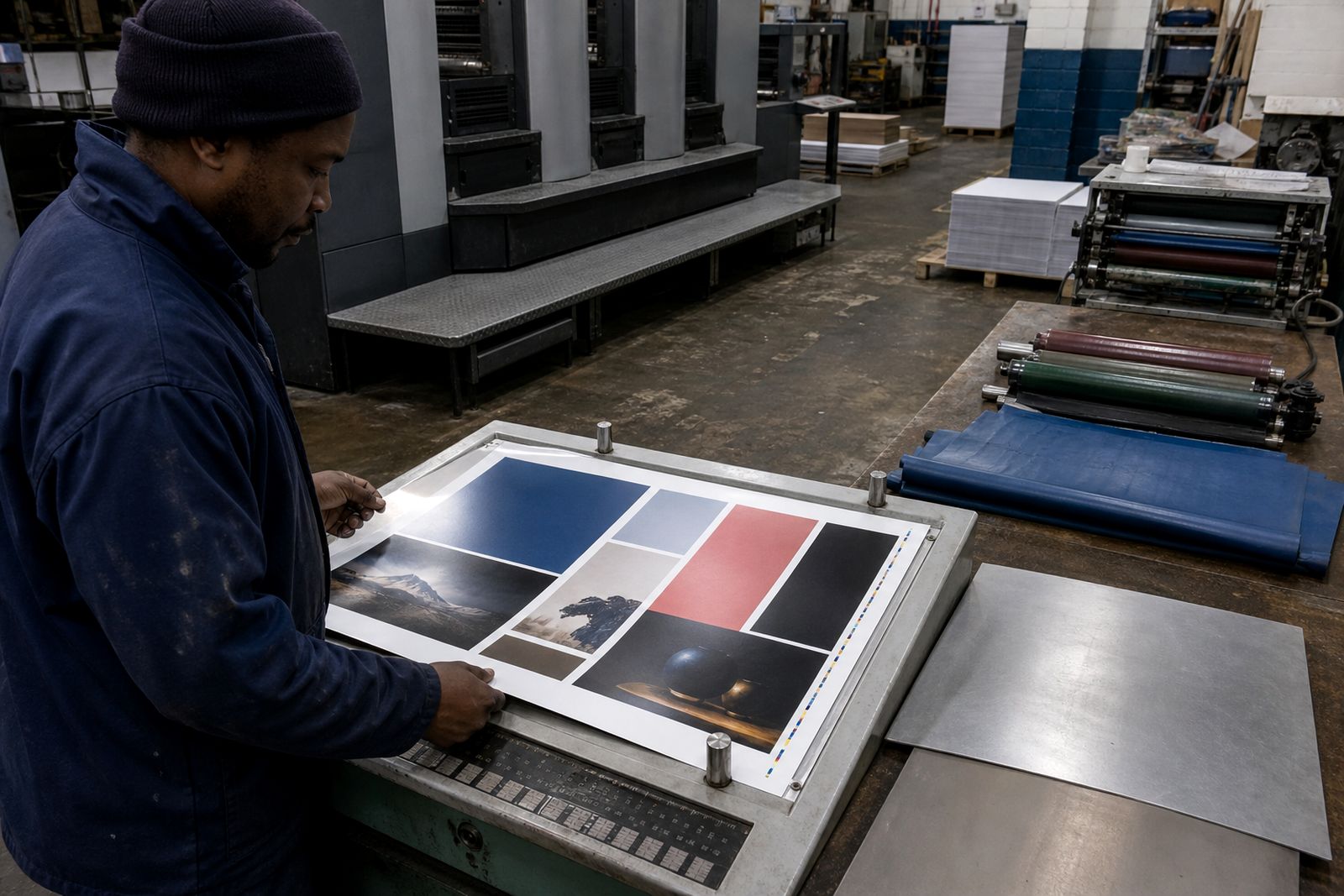
Four-colour brochure with colour bar visible on the lead edge.
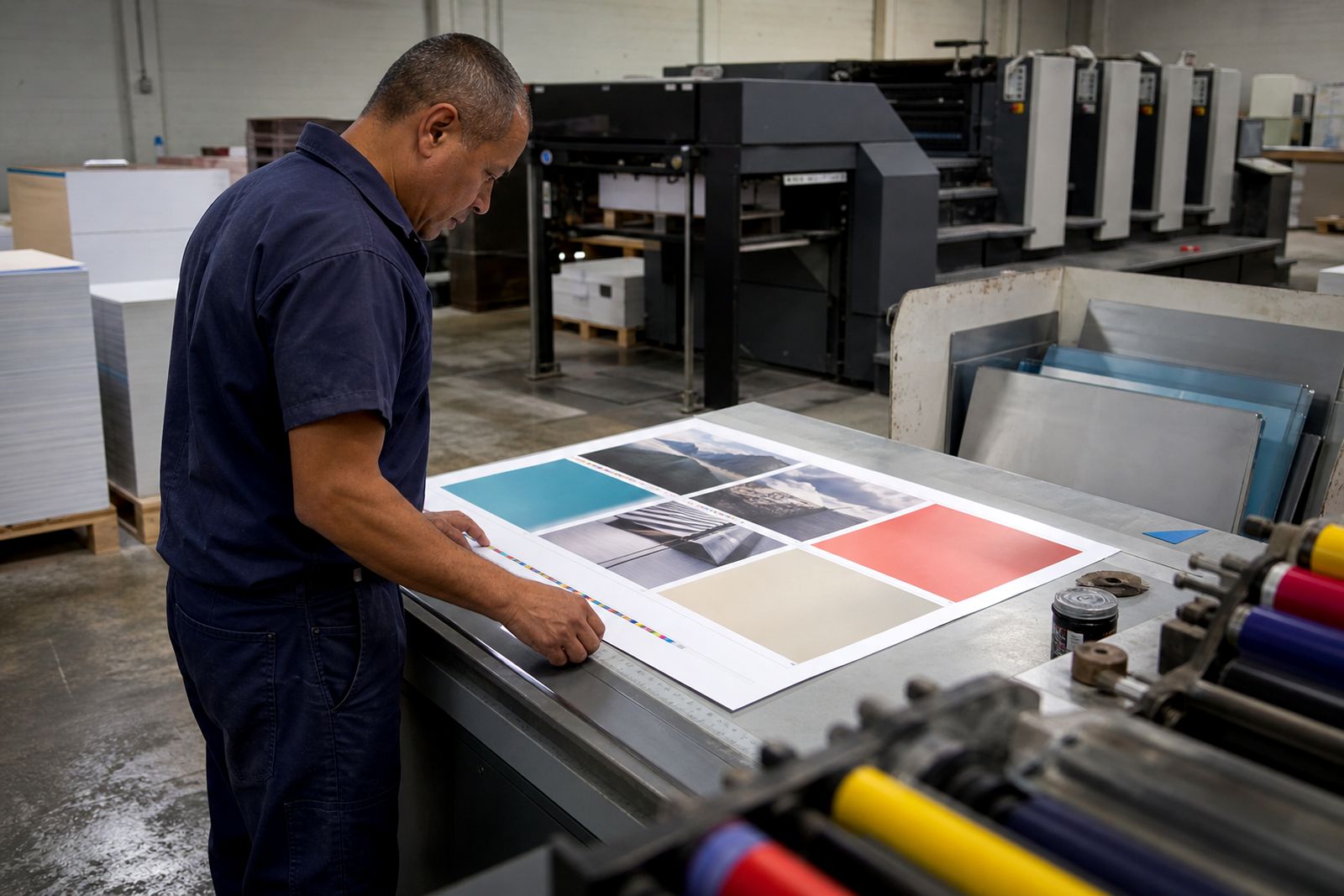
Lead-edge colour bar view
Four-colour brochure with colour bar visible on the lead edge. Gallery pages are visual references for print rooms that want to see stock behaviour, not a sales carousel. Pair the sample with the matching run notes and unit checks before you get in touch through the form.
This gallery image shows a four-colour press sheet before folding, with the control strip left visible on the lead edge. You can judge how the solids hold, how the screen tints sit, and whether the gripper side leaves enough room for stable transfer on a commercial offset press.
Use this reference against your own printed sheet on similar stock, not against a phone screen. Mark the issue in plain press terms such as weak cyan, dirty grey balance, or picking on the tail, then send that note with the comparison image.
In many South African print rooms, the sample gets checked under office fittings that are far warmer than the make-ready station. That shift in light can hide a cast in the skin tones or make the black build look heavier than it is. View the sheet under a daylight source where possible, especially if you are matching from a wall file in Cape Town or Johannesburg.
Using the sheet as reference
This image is a working reference for press crews, not a colour guarantee. It helps you frame the job when you compare stock, ink holdout, and bar position before using our contact form. Treat it as a visual prompt that supports the matching run documents, not as a pass sheet for every machine.
If the colour bar looks strong but the picture area reads weak, check ink water balance before opening keys across the width. When the edge shows set-off or marking, review powder level, delivery pile condition, and whether the stock is too closed for the amount of ink being carried. On lighter sheets, watch gripper bite and side lay marks before blaming plates or blankets.
Reverse card details kept with sheet
The back of a physical sample should record the stock description, sheet size, press units used, and any note about turn or work-and-tumble if that applies. Add the fault being illustrated as well, such as scuffing on solids, weak trap on red builds, or curl after drying. That matters far more in a print room than a loose image saved on a handset.
Keep the marked sample with the current job bag while the form and folding plan remain unchanged. Once the paper, size, or finish changes, remove it so the next shift does not chase the wrong target. If you need a filing layout for sample cards, ask through our contact form and check Resources for related material.
Browse Units and Blankets when the sample points to packing or cylinder work rather than ink keys alone.
What our Offset Printing customers say
Verified Google reviews
Tell us what your press room is running
Send a note through our contact form with your press make and format, the stocks and run lengths you handle, the plates, chemistry or blankets you use and your town, and we will come back with practical advice and a quote.
Open the contact form